
























Champions League Standings, Live Table Drama, and the Next Bracket: UCL League Phase Ends With Arsenal Top and the Knockout Draw Set for Friday

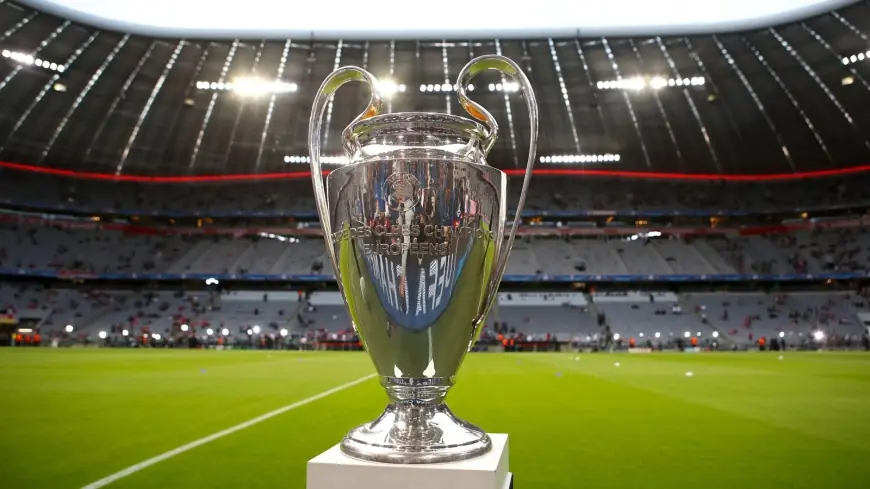
The 2025–26 UEFA Champions League league phase is officially over, and the “live table” chaos that defined the new format delivered exactly what it promised: late swings, simultaneous kickoffs, and big names forced into an extra round. All Matchday 8 games kicked off at the same time on Wednesday, January 28, 2026 at 3:00 p.m. ET, locking every contender into the same pressure cooker.
Now the competition pivots from standings math to bracket reality. The knockout phase play-off draw is scheduled for Friday, January 30, 2026 at 6:00 a.m. ET, setting the two-legged ties that decide the final eight spots in the Round of 16.
Champions League standings: the top eight that go straight to the Round of 16
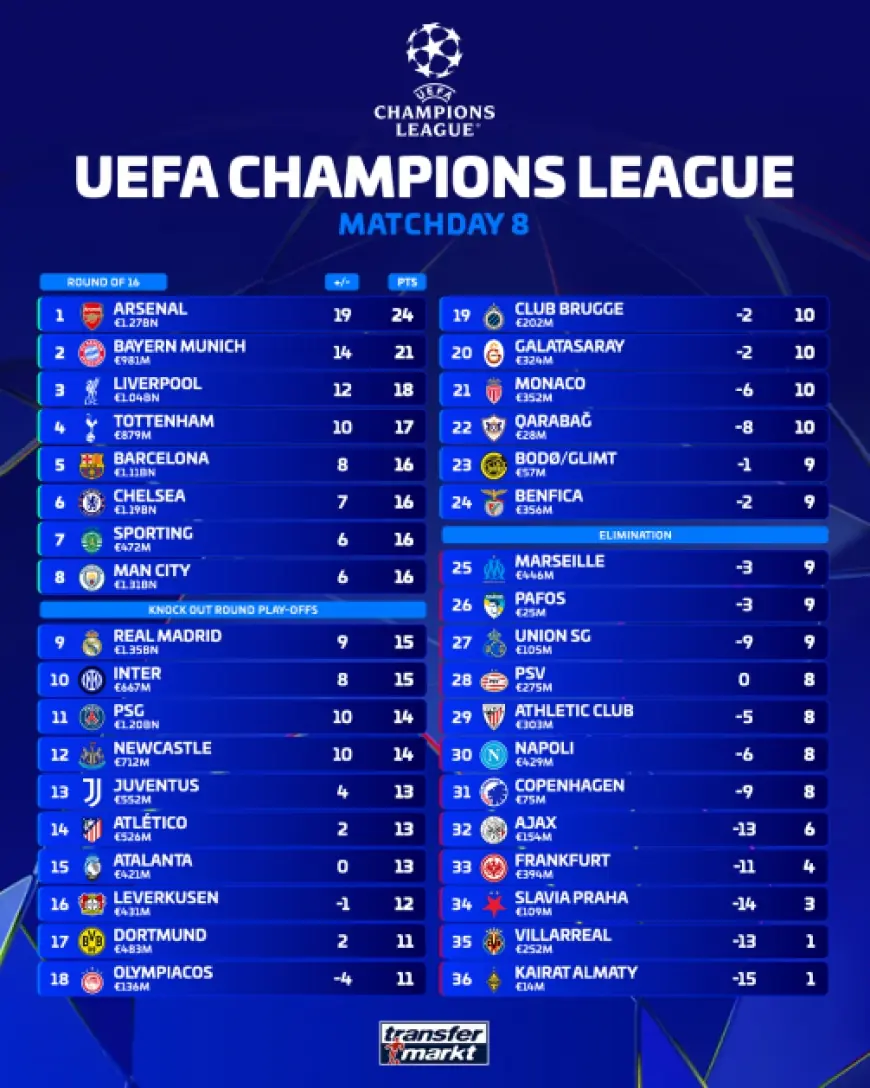
After eight matches each, the top eight teams earned a direct bye to the Round of 16:
-
Arsenal (24 points, +19 goal difference)
-
Bayern Munich (21, +14)
-
Liverpool (18, +12)
-
Tottenham Hotspur (17, +10)
-
Barcelona (16, +8)
-
Chelsea (16, +7)
-
Sporting CP (16, +6)
-
Manchester City (16, +6)
That top line matters because the new format rewards consistency over a longer “mini-season.” Arsenal didn’t just qualify; they set a defensive tone for the whole league phase by conceding only four goals.
Who’s in the UCL knockout play-offs, and why the draw matters so much
Teams placed 9 through 24 move into a two-leg knockout play-off in February. The seeded group is positions 9–16, and the unseeded group is positions 17–24.
Seeded (9–16):
-
Real Madrid
-
Inter
-
Paris Saint-Germain
-
Newcastle United
-
Juventus
-
Atlético Madrid
-
Atalanta
-
Bayer Leverkusen
Unseeded (17–24):
-
Borussia Dortmund
-
Olympiacos
-
Club Brugge
-
Galatasaray
-
Monaco
-
Qarabağ
-
Bodø/Glimt
-
Benfica
The draw is high-stakes because it’s not a traditional “anything can happen” lottery. It’s a bracket-based system designed to reward league-phase placement: teams are paired in groups based on finishing positions, and those groupings funnel into specific opponent bands.
Champions League bracket and draw: how it works in plain terms
Here’s the core logic that will shape Friday’s draw:
-
Teams are paired by league-phase finish to form seeded pairs (9–10, 11–12, 13–14, 15–16) and unseeded pairs (17–18, 19–20, 21–22, 23–24).
-
A seeded pair is then drawn against a specific unseeded pair band:
-
9 or 10 vs 23 or 24
-
11 or 12 vs 21 or 22
-
13 or 14 vs 19 or 20
-
15 or 16 vs 17 or 18
-
-
The seeded team is expected to host the second leg.
That structure turns the “live table” into more than bragging rights. One late goal can flip a team from seeded to unseeded, changing the whole path.
Champions League scores: Matchday 8 moments that reshaped the live table
Matchday 8 had several results with immediate bracket consequences:
-
Benfica 4–2 Real Madrid pushed Madrid out of the top eight and into the play-offs.
-
Napoli 2–3 Chelsea helped Chelsea lock a top-eight berth while Napoli crashed out entirely.
-
Athletic Club 2–3 Sporting CP capped Sporting’s climb into the top eight—an all-or-nothing swing that also highlights why fans kept refreshing the live table until the final whistle.
-
Liverpool 6–0 Qarabağ was the day’s statement win and a reminder that goal difference still matters when points tighten.
Those aren’t just “scores.” They’re the inputs that determine February matchups, travel, rest cycles, and risk.
Behind the headline: why the new format creates more drama and more pressure
Context: The expanded league phase was built to keep big clubs playing meaningful games deeper into January and to create a standings race that feels more like a domestic league sprint.
Incentives:
-
Clubs pushed for top eight to avoid two extra midseason games and reduce injury exposure.
-
Broadcasters and organizers benefit from more high-stakes matchdays and fewer “dead rubber” fixtures.
-
Coaches are forced into tougher squad management: rotate too much and you slip; rotate too little and you burn out.
Stakeholders:
-
Players carry the hidden cost in minutes and muscle fatigue.
-
Fans get more marquee matchups but also more schedule congestion.
-
Domestic leagues feel ripple effects when European ties stack into already tight calendars.
Second-order effects: The play-off round can distort February and March priorities. Teams fighting for a league title may suddenly have to treat midweek European fixtures like finals, raising the risk of dropped domestic points and widening debates about squad depth.
What we still don’t know
-
The exact pairings and home-away leg order until the Friday draw (6:00 a.m. ET).
-
Kickoff times for the February play-off legs.
-
How clubs will rotate with domestic matches packed around the European calendar.
Champions League schedule: the next key dates in ET
-
Knockout phase play-off draw: Friday, January 30, 2026
-
Knockout phase play-offs (two legs): February 17–18 and February 24–25, 2026
-
Round of 16: March 10–11 and March 17–18, 2026
-
Quarterfinals: April 7–8 and April 14–15, 2026
-
Semifinals: April 28–29 and May 5–6, 2026
-
Final: May 30, 2026 in Budapest
The league phase is done. Now it’s bracket season—where one bad half in February can erase four months of table-building.