



Portugal's national team will wear special armbands carrying the names of every squad member and a separate mention of Diogo Jota during their World Cup matches in the United States, Mexico and Canada, the squad confirmed ahead of its opening game.
The tribute arrives before Portugal's first match on Wednesday against the Democratic Republic of Congo at 19.00 Uhr MESZ. The armbands will be visible on the field across Gruppe K fixtures — a deliberate, collective gesture meant to keep Jota's memory present through the tournament.

Midfielder Vitinha said the armbands were a gift from Portuguese Prime Minister Luis Montenegro and that Montenegro made sure the team would be permitted to wear them on the pitch. Vitinha added that the prime minister left the final decision to the players and that the squad chose to wear the bands together.
Vitinha described the bands as including "a special mention of Diogo Jota," underlining that the names of all squad members appear on the same armband. The move turns the tribute into a team statement rather than an individual remembrance.
Jota, who made 49 international appearances for Portugal, died in a car accident in Spain last July together with his brother. At the time of his death he was under contract with Liverpool.
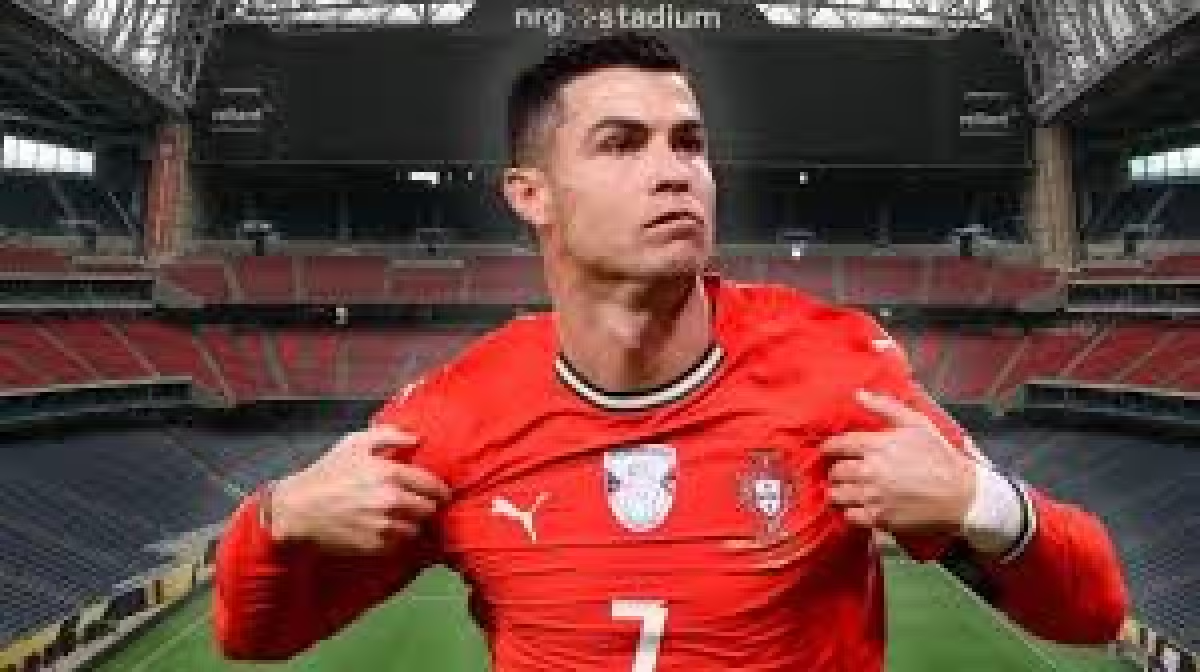
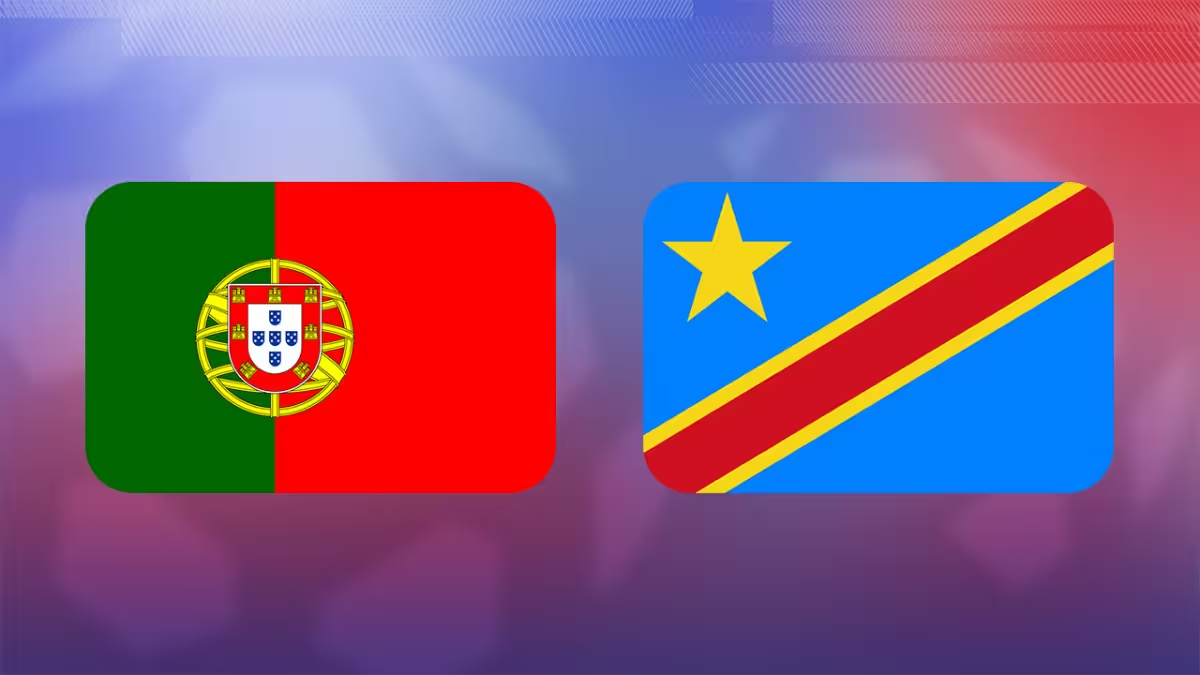
The announcement makes the armbands an immediate visual story for Portugal's matches in Gruppe K, which also contains Usbekistan and Kolumbien. Fans and broadcasters will see the tribute from kickoff on Wednesday in what the team intends as a unified expression of grief and remembrance.
The friction beneath the gesture is simple and specific: the bands arrived as a gift from a political figure, but the players emphasize agency. Vitinha stressed that Montenegro "made sure we were allowed to wear them on the field" and that "he left it to us whether we wanted to wear them," before adding that the squad "were very pleased and decided to wear them together." That sequence — a political present accepted only after player consent — is the clearest tension in the story.
What remains unreported is a practical detail many will look for on Wednesday: the exact appearance of the armbands. Organizers and the team have confirmed their existence, composition and approval, but not their visual design. Spectators and television viewers will see that detail for the first time when Portugal steps onto the pitch.
Portugal's armband tribute is set to be one of the tournament's most visible remembrances. It will be on display not only in the stadium but across global coverage of Group K matches, and it will be judged on the field: as a unifying team statement, as a mark of respect for a player who won 49 caps, and as a reminder of the personal loss behind the national squad's campaign.



