



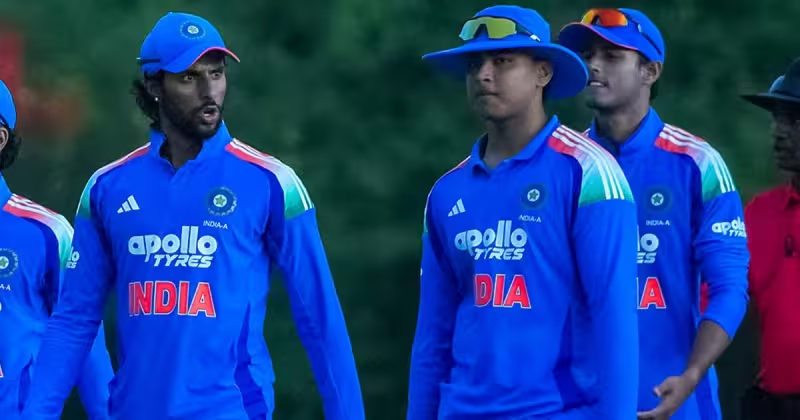
“Sri Lankan players should also be educated on how to behave,” Sairaj Bahutule said on Tuesday, stepping into the row that followed India’s Super Over defeat in Dambulla and mounting a public defence of Vaibhav Sooryavanshi, the 15‑year‑old batter at the centre of the episode.
Bahutule, India’s spin‑bowling coach who has worked with Sooryavanshi at age‑group level and at the BCCI’s Centre of Excellence, said it was difficult to know what provoked the teenager. “It was an unfortunate incident, but we don't know how he was provoked because I know him and Vaibhav is a very composed kid,” he said on the eve of India’s second ODI against Afghanistan, while adding that experienced coaches would guide the youngster.

The episode itself was raw and brief. Television footage showed Sooryavanshi pushing Sri Lankan spinner Vishen Halambage after the Super Over, and senior player Niroshan Dickwella intervened to separate the men before the exchange escalated into a physical confrontation. The trigger appeared to be something said by the bowler and the fielder after they had successfully restricted the Indian batter during the Super Over, and Sooryavanshi was visibly frustrated as he walked back to the pavilion under fading light.
Those facts matter because this is not only a post‑match flareup: it involves a 15‑year‑old with a rapidly rising profile. Bahutule, who also served as Rajasthan Royals' spin‑bowling coach during the 2025 IPL season and has seen Sooryavanshi’s development up close, framed the episode as an aberration that the player will learn from. “He will learn, he is a young kid with a lot of responsibility of representing India. I'm sure he will not repeat it and such incidents can be avoided,” Bahutule said.
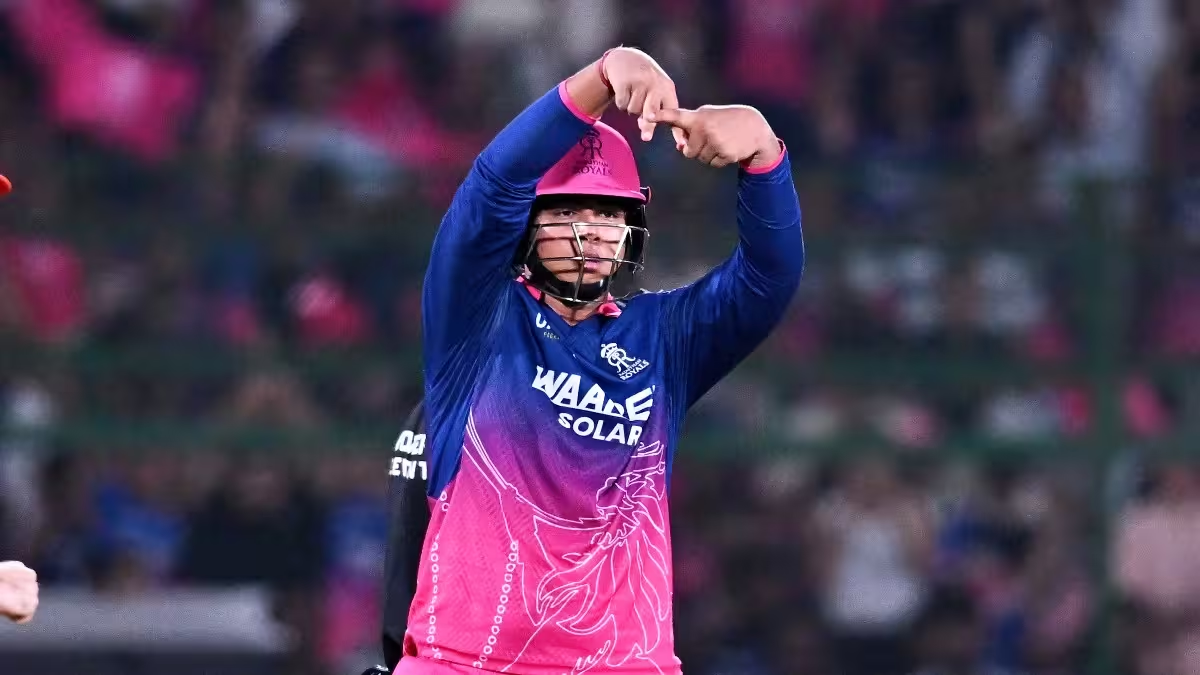
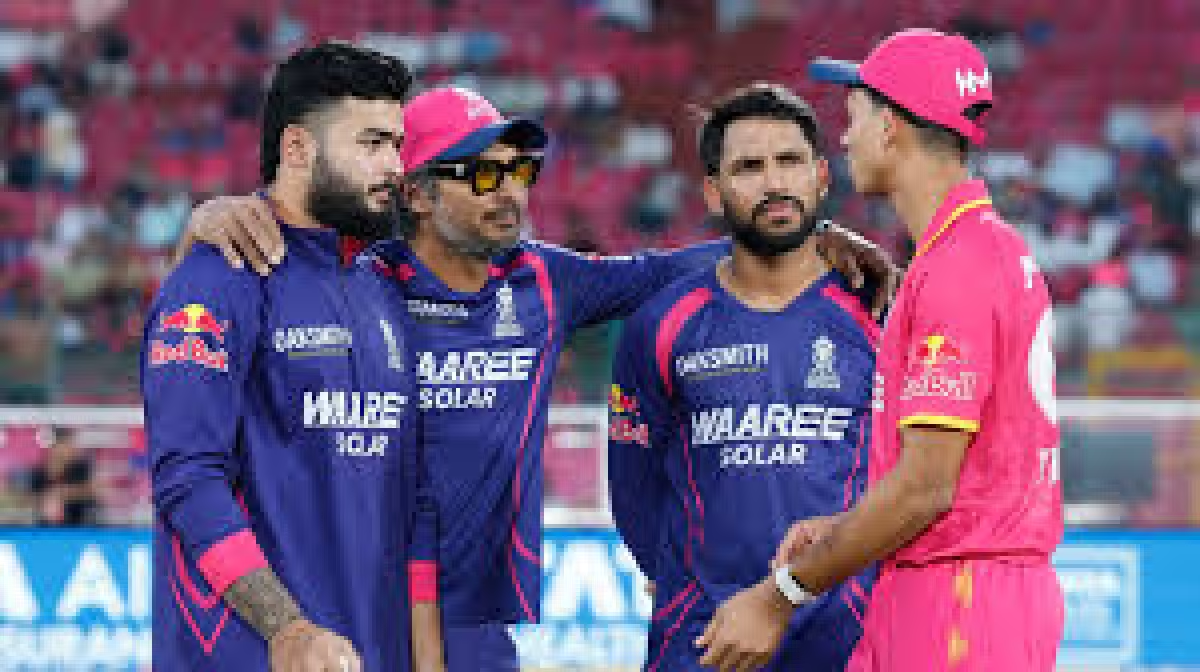
The coach’s intervention does two jobs at once. It protects a young player in front of the media, and it shifts attention back to the opposition’s conduct by insisting other players be taught better on‑field manners. That stance contrasts with the image the footage supplies: a brief shove captured on broadcast cameras. The discrepancy — a mentor describing composure while the tape shows a physical contact — is the clearest friction in the narrative Bahutule offered.
Bahutule denied any readiness to judge Sooryavanshi harshly in public and emphasised mentorship. He repeatedly returned to the idea that the incident was avoidable and that experienced staff would guide the batter. But he also complained about the behaviour of the Sri Lankan players, urging education on how to behave — an atypical public rebuke that places some responsibility for the confrontation beyond the Indian dressing room.
What remains unresolved is small in detail but large in consequence: what exactly was said to provoke Sooryavanshi. The timeline is plain — a Super Over, restriction of a chase, words exchanged, a push, then separation — yet the missing piece is the provocation itself. Without that clarity, any decision on discipline or remedial action must be made in an evidentiary vacuum.
For now, Bahutule’s defence shapes the immediate narrative and the likely response: mentorship rather than headline‑making punishment. Sooryavanshi returns to team duties with coaches expected to counsel him; whether that will end the matter or prompt formal action depends on what, if anything, surfaces about the trigger. The next public test of this approach will unfold not in statements but on the field and in the conversations inside the team room as India prepares for its second ODI against Afghanistan.



