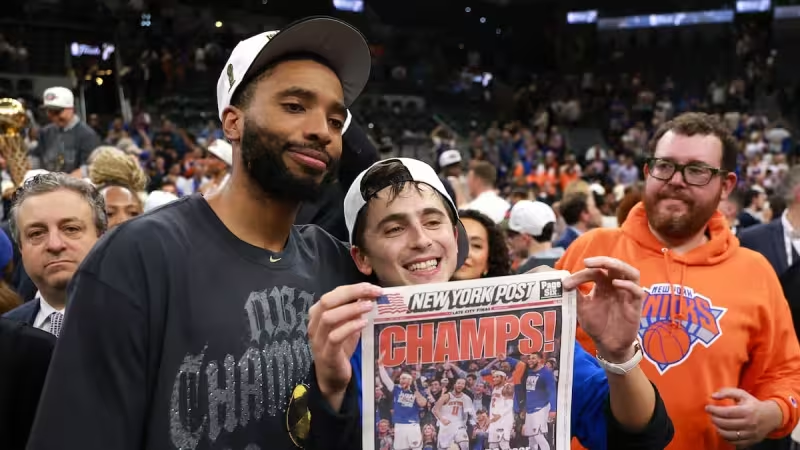
Mikal Bridges told followers on Instagram Live that Kendrick Lamar’s song "Count Me Out" and the album Mr. Morale & The Big Steppers pulled him through a dark stretch after he lost Game 7 of the 2022 Western Conference Semifinals to Dallas.
Bridges was blunt about how low he felt: "I was really depressed, bro," he said, describing the days after that defeat while he was in Phoenix. He credited Lamar’s record with becoming the background to his routine — the soundtrack to workouts that kept him moving when otherwise he might have shut down.

Bridges described the mechanics simply and vividly: the album dropped after the loss, and he found himself lifting "bis and tris, ches" to the music, saying the record "got me through it" and that he would "never forget this album ever." Those lines turned a private struggle into a public acknowledgment from an NBA player about music as therapy.
The scale of what Bridges revealed is small in numbers but large in consequence: a playoff Game 7 loss, a star player admitting depression, and a contemporary rap album named as a survival tool. For fans and teammates, the admission reframes how athletes talk about mental health and what they reach for when results and routine no longer suffice.


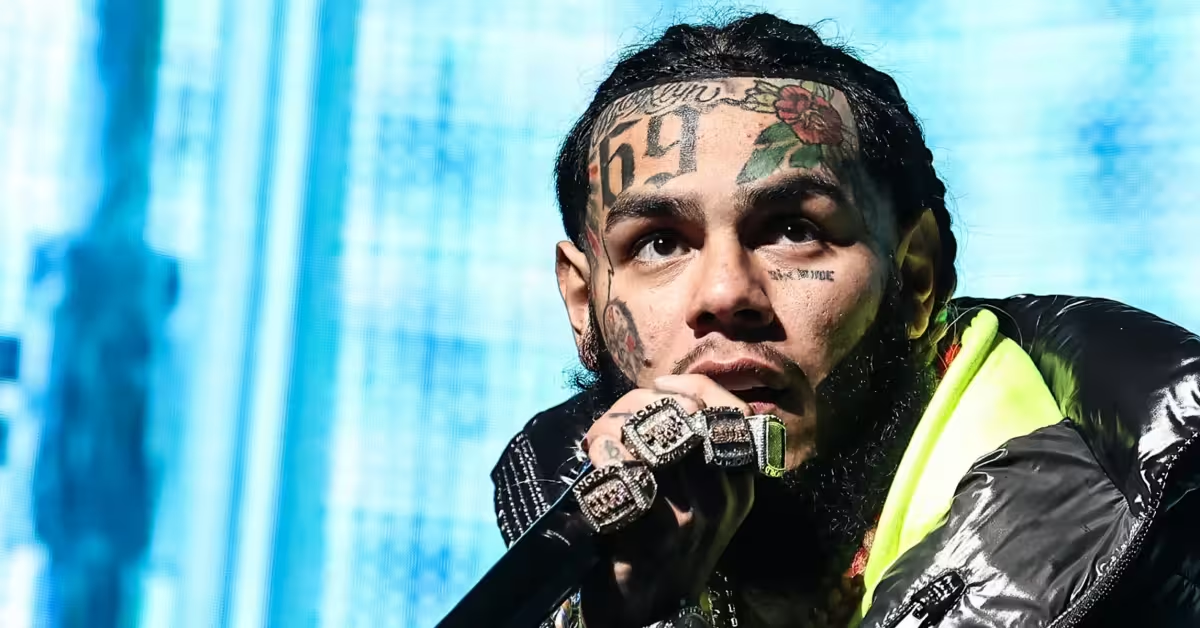
The reveal also intersects awkwardly with Kendrick Lamar’s own account of making the record. In a 2022 interview, Lamar said he seriously considered shelving Mr. Morale & The Big Steppers because he was guarding his private life — "I’m a private person. It was tough for me," he said — and only released music he felt could exist in its "rawest, truest form."
That tension — an artist almost keeping the work to himself and the same work later easing an athlete’s depression — underlines how private choices can have public consequences. Lamar has said he was glad the album could encourage openness, describing the satisfaction of hearing people use honest expression rather than violence to communicate; Bridges’ testimony is a direct instance of that outcome.
What Bridges did not do was unpack why "Count Me Out" in particular connected with him. He named the song and the album, described his depression and the routine the music accompanied, and insisted the record mattered, but he didn’t explain what lyric, passage or feeling cut through the fog. That gap — the difference between naming a lifeline and describing what it felt like to hold on to it — is the story’s clearest unanswered question.
Bridges’ Instagram Live turned a private recovery into a public line: a player remembering a Game 7 loss, a cultural touchstone that followed it, and an artist who almost never released that work. Bridges credited the music; Lamar’s reluctance and eventual choice to put it out meant someone could be reached. Bridges hasn’t mapped exactly how the song worked for him, though, and until he offers more detail the album’s power remains immediate and personal rather than explained.