




“The Social Network was about how Facebook was invented, and The Social Reckoning is what it’s become,” Aaron Sorkin said, and he meant it literally: for the first time he has signed up for Facebook and spent about a year and a half inside the site while writing and now directing the sequel that opens in theaters on October 9.
Sorkin’s film is built around the whistleblower account that surfaced in the investigation known as The Facebook Files. The Social Reckoning stars Mikey Madison as Frances Haugen, Jeremy Allen White as Jeff Horwitz and Jeremy Strong as Mark Zuckerberg; it dramatizes how Haugen filed complaints with the Securities and Exchange Commission and disclosed tens of thousands of internal documents that revealed Facebook’s awareness of harmful societal effects and, critics say, a failure to act.

On the record, Sorkin described the new film in plain terms: “It was David and Goliath, where Goliath has invited us to a party and then spiked the punch.” He also framed his protagonist differently than the original: “And David is a mid-level Facebook engineer with a conscience.” The writer who won his first Oscar for The Social Network has deliberately shifted the frame from invention to consequences, and his research included actually using the platform — he jokes that his Facebook algorithm “ended up being filled mostly with pictures of dachshunds.”
That shift matters because the original 2010 movie, which starred Jesse Eisenberg as Mark Zuckerberg and was directed by David Fincher, made Zuckerberg the axis of a legal and cultural drama. Sorkin had once said he would only do a follow-up if Fincher returned to direct. When Fincher did not sign on, Sorkin decided to direct himself, a move that gives him control over tone and emphasis and leaves the new film set 17 years after the events of The Social Network.
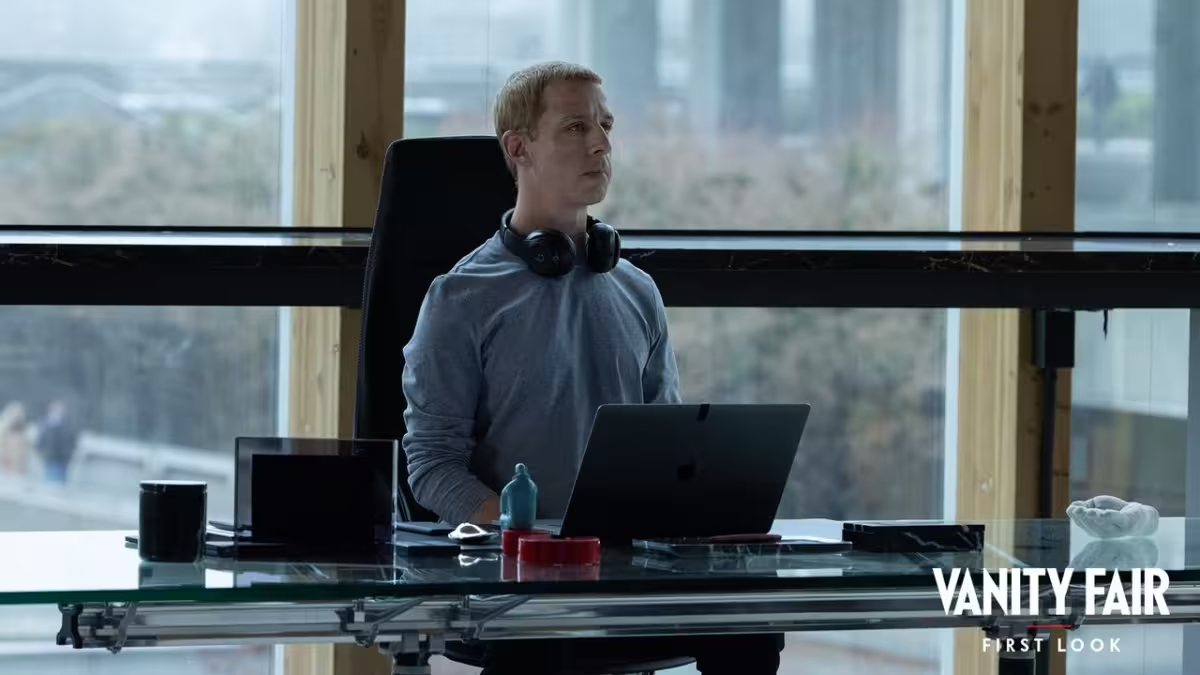


The cast and the way they worked underline the film’s distance from an intimate study of Zuckerberg. Speaking at a New York premiere, Jeremy Allen White said, “Jeremy and I spent zero time together filming — we were totally separate.” He added, “So the first I heard was the trailer with you guys, but it’s incredible.” White praised Strong’s work — “He’s so talented. He works so hard” — and said the project hardened his own take on social media: “I don’t know if it changed. I think I have always held similar feelings to what we’re trying to provoke with the film, so I don’t think it changed my mind in any way. But it definitely strengthened my opinions.”
Mikey Madison, who plays Haugen, called her subject “a truly brave hero” and added, “She is someone who risked everything for the greater good of people she didn’t even know but still deeply cared about.” Those lines steer the film toward moral reckoning rather than a personality-driven retelling: the dramatic engine is internal documents and their fallout, not a reprise of the litany of Zuckerberg’s choices on screen.
The tension built into the sequel is both personal and structural. Sorkin’s own change of plan — publicly insisting he would only return if Fincher did, then taking the director’s chair when Fincher did not — raises the question of whether this will read as a genuine enlargement of the first film or as Sorkin’s solo corrective. The answer the film appears to offer is categorical: it moves away from the inventor-as-hero narrative and toward the systems and consequences revealed by Haugen and the reporting that inspired the movie.
The immediate fact for audiences is simple and concrete — The Social Reckoning opens October 9 — but the larger consequence is clearer now than it was in the trailer. Jesse Eisenberg’s portrayal of Zuckerberg remains a cultural reference point, but this sequel treats Zuckerberg as a presence in a larger moral landscape: Jeremy Strong plays him, and the story centers on the leaked documents, the whistleblower who brought them to light and the platform’s ripple effects. If you want a new portrait of Zuckerberg himself, this film will show him through the fallout he helped create, not as the sole subject of scrutiny.



