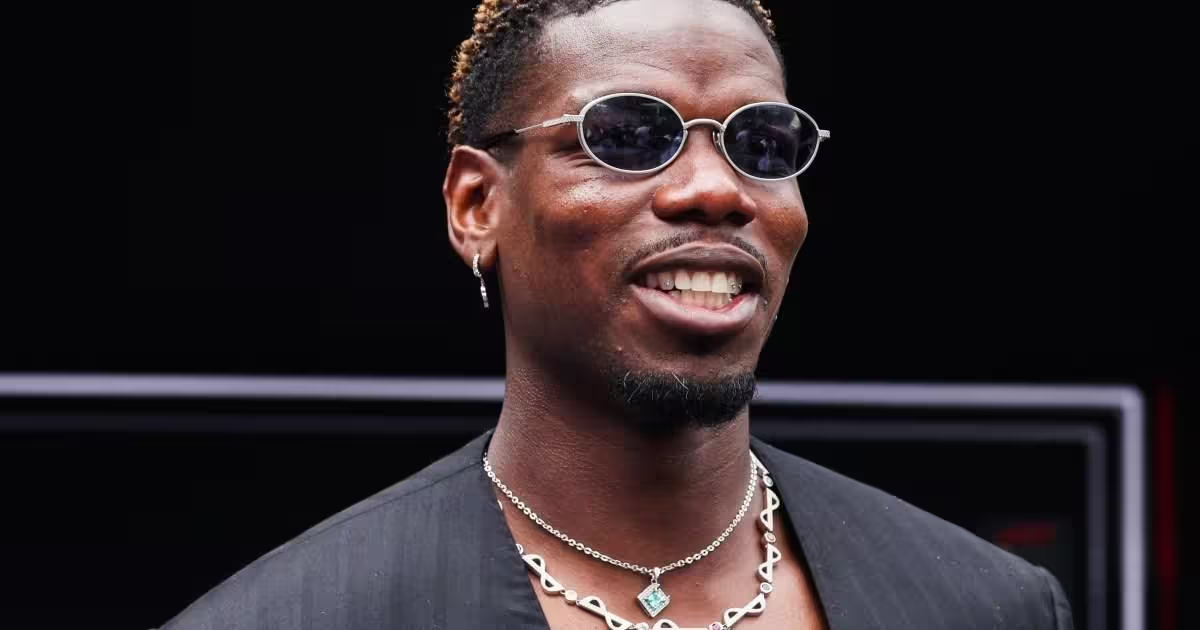
Paul Pogba has described his post-World Cup years as among the toughest he has lived through, and the numbers underline why. The midfielder who put France 3-1 up in the 2018 World Cup final has since been felled by a series of off-field and on-field shocks — a positive doping test in 2023, an initial four-year ban later reduced to 18 months, an alleged blackmail attempt involving his brother, and a 2025 move to Monaco that produced just 115 minutes of football last season.
Those details matter because they turn a career-defining moment in Russia into an uneasy afterword. Pogba’s goal in the final is a fixed point in football history; the episodes that followed have rewritten the map of his professional life. A reduced suspension and a terminated contract at Juventus brought him to AS Monaco for a fresh start, yet the club-listed minutes show how far his on-field influence has ebbed.

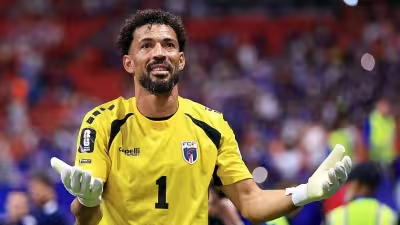
Benjamin Mendy’s arc has been sharper and more publicly bruising. Once the world’s most expensive defender when he left Monaco for Manchester City for 57.50 million euros, Mendy was charged in 2021 with several alleged sexual offences. He was cleared after a lengthy trial and returned to the game with spells at Lorient and FC Zurich, and last season with Poland’s Pogon Szczecin — but the acquittal did not restore the market that had valued him in the tens of millions.
Mendy’s market value has collapsed to roughly 400,000 euros and his contract in Poland runs only until the end of June. The legal verdict removed criminal liability, but clubs and the market treated the headlines as permanent ballast on his reputation. That gap — not guilt or innocence under the law, but the market’s unwillingness to forget — is the clearest fracture line among the 2018 winners.
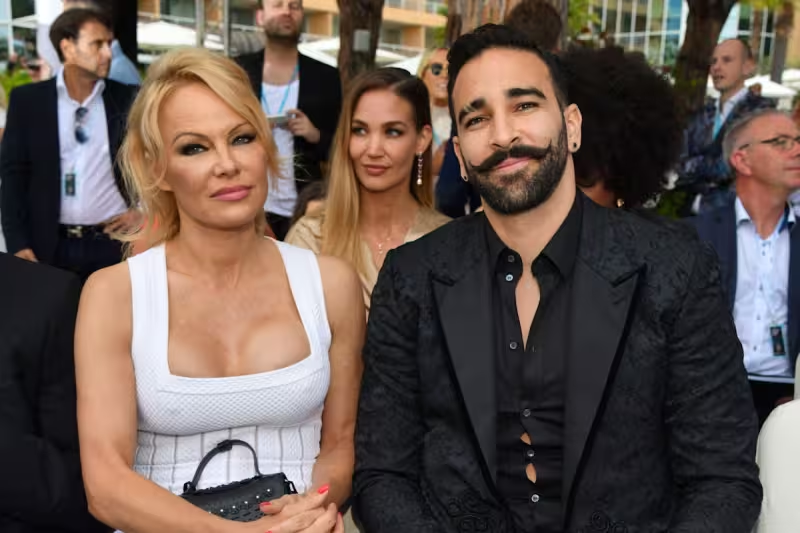
Adil Rami’s post-World Cup life took a different shape: he never played a minute in Russia as France’s fourth centre-back and has argued his contribution was keeping the dressing-room atmosphere positive. On the pitch his Marseille career ended in 2019 when the club terminated his contract for gross misconduct after he called in sick to training and took part in a film shoot. Off the pitch he has been a polarising presence, denying serious allegations made publicly by Pamela Anderson and later finding visibility in television, eventually winning the French show Les Traîtres.
Rami has not retreated from blunt remarks. He criticised a younger player for a lifestyle he saw as showy and immature, complaining about late nights, jewellery and an American-style swagger; the remark underscored how his public persona has shifted from defender to provocateur and entertainer.
This is not a tally of misfortune as much as a single truth: a World Cup medal did not immunise these men from injuries, legal entanglements or the market’s memory. For Pogba, the medical, disciplinary and personal episodes erased momentum that might have followed a champion’s career. For Mendy, the court’s clearance failed to erase the long shadow over his market value. For Rami, the path led away from top-flight football into media and reality television.
The immediate question left standing is concrete and urgent: what next for Benjamin Mendy when his Pogon Szczecin contract expires at the end of June? That choice will be the test of whether a player whose legal record is cleared can persuade clubs — and fans — to trade risk for potential. Pogba’s future is similarly tentative; Monaco offered a route back, but 115 minutes is not a comeback. How clubs answer those questions will decide whether these World Cup winners rewrite their narratives or remain remembered chiefly for a single night in 2018.