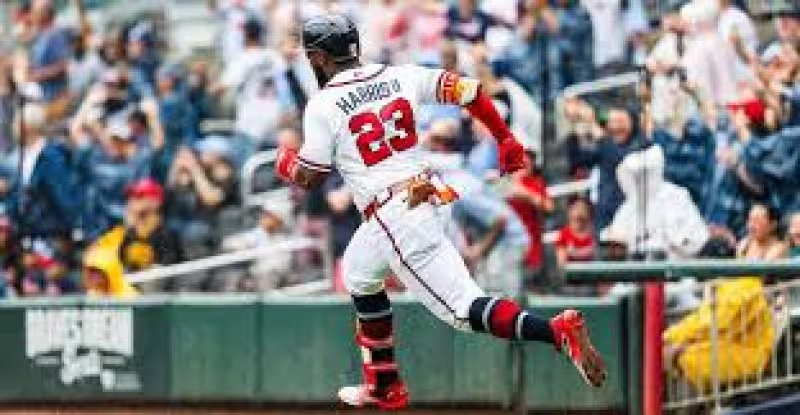
Michael Harris II was removed from the Braves–Giants game at Truist Park on June 16, 2026, ahead of the top of the second inning after the club reported he was dealing with lower back tightness. The update came at 8:00 p.m. ET during a soggy night in Atlanta, and Harris did not return to the field.
The loss of Harris in the game's opening minutes is immediate and specific: the Braves are down a starting outfielder for the remainder of that contest and will need to adjust their lineup and outfield defense on the fly. The team identified the issue as lower back tightness when announcing the removal, a description that arrived while the field remained wet enough to be called “soggy” by on-site observers — a condition teams say can raise the chance of muscle strains and tweaks.

Harris had encountered the same lower back problem earlier this month, a recurrence the Braves acknowledged when they took him out. FilmoGaz has previously followed Harris’s season-long swings in role and performance, including coverage of his promotion to a prominent batting slot and a recent game where he broke a slump with a homer and a steal, both linked in team coverage.
The immediate practical consequence was simple: Atlanta shuffled its roster for the game. Beyond that, the removal carried another dimension. Team officials framed the exit as lower back tightness, but one informed interpretation circulating inside the park was that it could have been a precautionary move designed to prevent the issue from worsening during the contest. That possibility leaves a gap between the medical label and the club’s in-game decision-making.
That gap matters because it changes how the Braves and their trainers will manage Harris over the coming days. A precautionary pull suggests a short-term rest plan and monitoring; a true acute flare would likely require treatment and a clearer timetable for return. The club has not offered a projected absence or placed Harris on any injury list, and no further diagnostic information was released after the initial announcement at 8:00 p.m. ET.
What happens next is the central unanswered question: will Harris need more than rest and observation? The Braves, who removed him during wet conditions at Truist Park after a recurrence earlier this month, will have to decide whether to pursue further testing or a conservative treatment plan. That decision will determine whether this remains a brief in-game withdrawal or becomes a longer-term absence that forces roster moves.