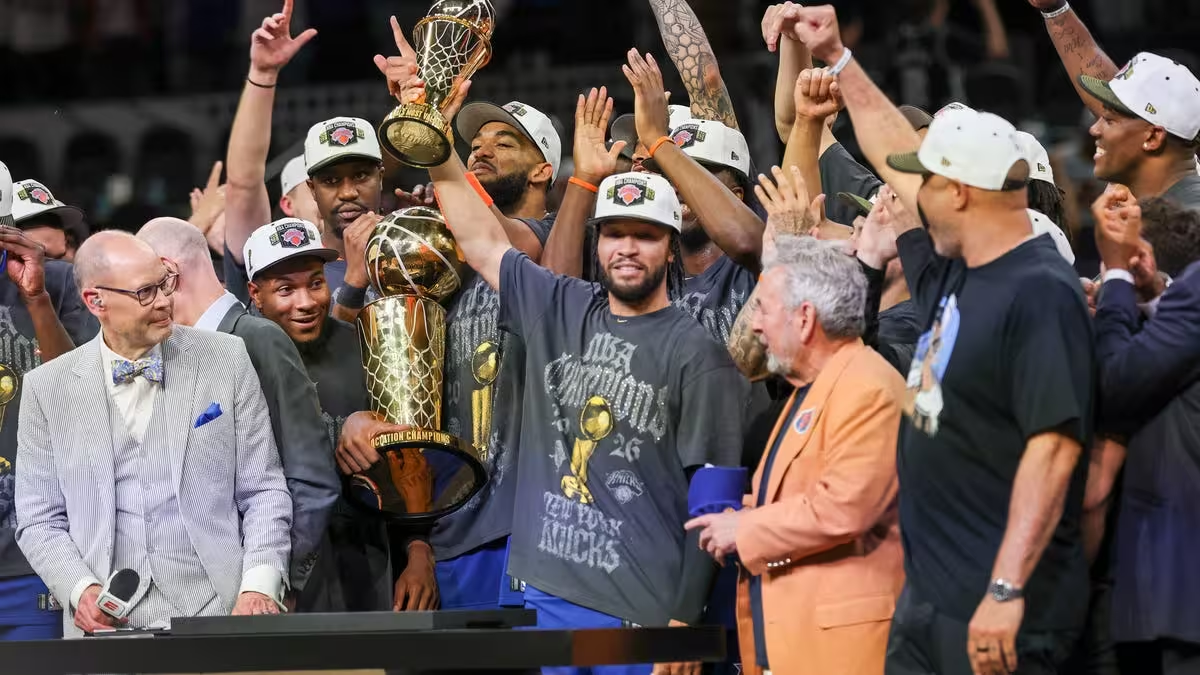
There has been no official announcement confirming whether the New York Knicks accepted or declined a White House invitation after they won the NBA Finals 4–1, ending a 53‑year title drought and claiming the franchise’s third championship.
The uncertainty matters because White House visits are a long-standing American sports ritual and because the political backdrop of this Finals added an unusual glare. The Knicks closed the series with a 4–1 victory over the San Antonio Spurs, their first championship since 1973 and the team’s third overall. Yet neither the White House nor the Knicks organization has publicly confirmed an invitation or the team’s decision about attending.

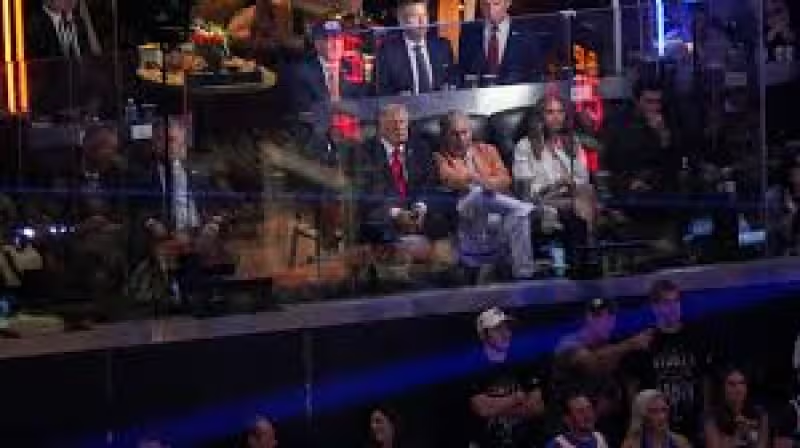
The immediate trigger for the conversation was Game 3 at Madison Square Garden, when a sitting president attended a Finals game for the first time. President Donald Trump was in the building, appeared on the jumbotron during the national anthem, and was met with loud, sustained boos from the home crowd. New York lost that game 115–111, a result that snapped the Knicks’ 13‑game playoff winning streak. In the weeks since, some fans pushed the idea of a so‑called ‘curse’ tied to the president’s presence and social media reports claiming the Knicks declined a White House visit began to circulate.
Those reports sit against a longer pattern. Championship teams in the United States are typically invited to the White House; NBA champions have been part of that tradition since at least 1963. But in the late 2010s several NBA champions either declined invitations or were not formally invited amid political tension — with the Golden State Warriors and the Toronto Raptors among the teams involved. That recent history set a precedent for a politicized choice rather than an automatic, uncontested stop at the White House.
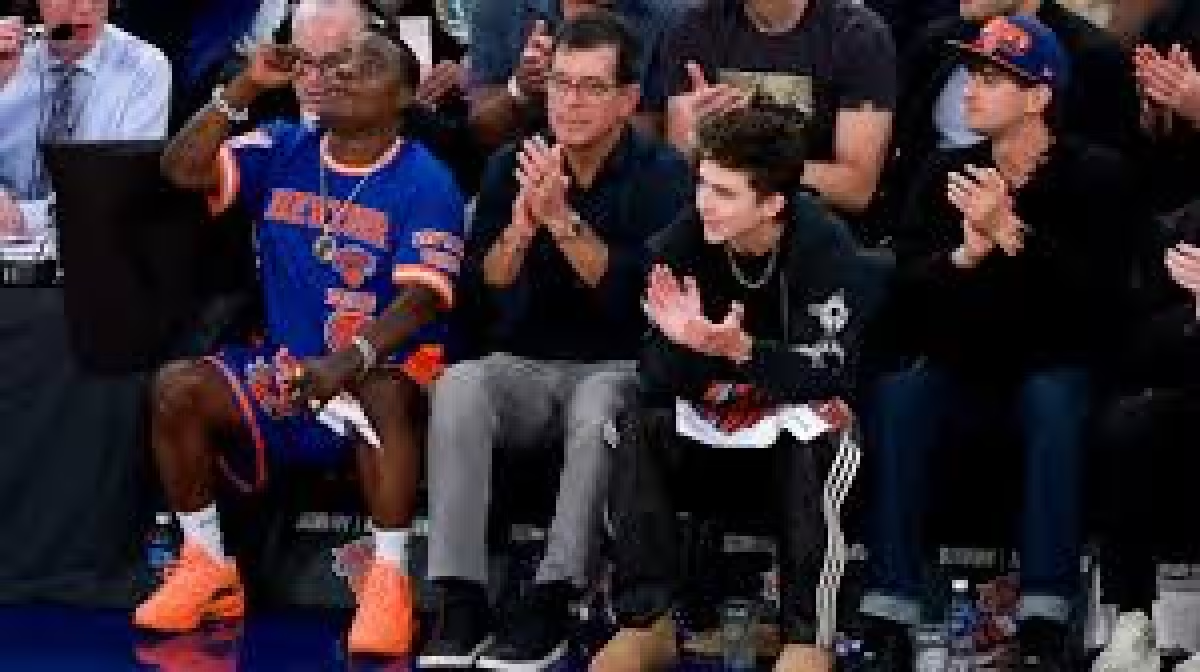
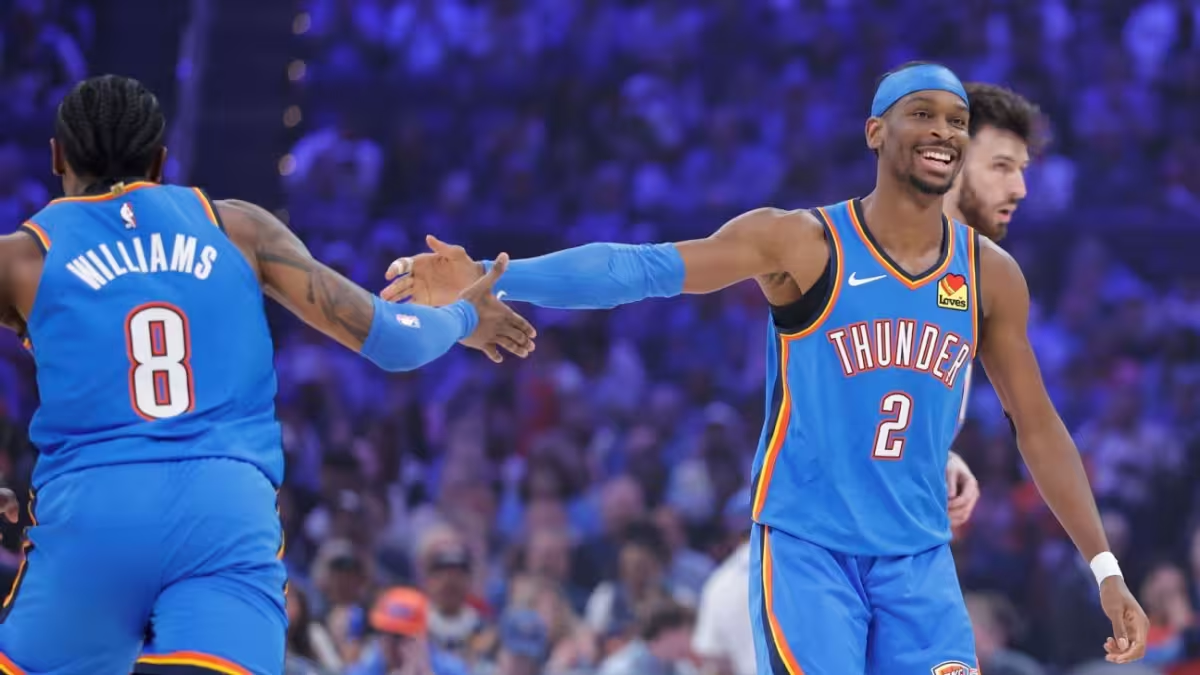
The mechanics of the Game 3 episode have fed the present ambiguity. Heightened security around Madison Square Garden forced canceled watch parties and long entry delays, disrupting the normal playoff routine for fans and creating a political overlay to what had been a sports story. Players and coaches did not publicly lean into the political narrative after the series; they pointed to turnovers and officiating when explaining the Game 3 loss. The president later characterized the crowd as very enthusiastic, a contrasting note to the booing reported inside the arena.
The friction is straightforward: a ritual that once read as civic celebration has become optional and contested. Teams weigh the optics of a White House appearance against their fan base and internal priorities, and past champions have shown they will sometimes forgo the traditional visit. For the Knicks, the decision is complicated by the intensity of reaction at Madison Square Garden and by the fact that no formal invitation has been acknowledged in public.
Practically, nothing will change until one of two things happens. The White House would need to issue a formal invitation, or the Knicks would need to make an explicit statement accepting or declining one if it is extended. Until either happens, headlines or social posts that assert the Knicks decline White House visit are unverified claims rather than confirmed news.
The most consequential unanswered question now is not whether fans want a photograph at the White House but whether team leadership will treat a visit as part of the franchise’s civic duties or as an avoidable political spectacle. The next confirmed development to watch for is a clear announcement — from the White House or from the Knicks — that settles whether New York will participate in the decades‑old championship tradition.