
Nat Sciver-Brunt retired out on 48 as England chased Ireland's 118-9 in the Women's T20 World Cup match at Southampton, leaving the hosts with just eight runs required and Dani Gibson and Freya Kemp at the crease.
The scoreline carried weight: England had slumped to 35-3 after Jones, Wyatt-Hodge and Capsey fell cheaply, while England's own Ecclestone finished as the pick of the bowlers with figures of 3-22 as Ireland rallied to 118-9 — including a late burst of 17 off the final over that pushed the total to a defendable finish.

Sciver-Brunt's 48 framed the chase. She battled past three figures of tight bowling — Alice Tector conceded only two runs from her first four deliveries before Sciver-Brunt drove a full ball to the ropes — and the captain looked set to see England home. Then she walked off, leaving a short, sharp question hanging over the match: was it a calculated withdrawal or a precaution prompted by a knock?
The uncertainty around Sciver-Brunt's departure is the match's defining friction. Team updates were ambiguous on whether she retired to give a teammate batting time or because of a physical issue; her mother, Katherine Sciver-Brunt, said the captain is typically measured and plans for the long haul of a tournament, adding that she would not risk anything that jeopardised her availability for future matches. Katherine also expressed hope the decision was simply a shrewd move rather than anything more serious, and she pointed out that Sciver-Brunt had been left to manoeuvre several full tosses that she could only hit down the ground for singles rather than the maximums she might have preferred.
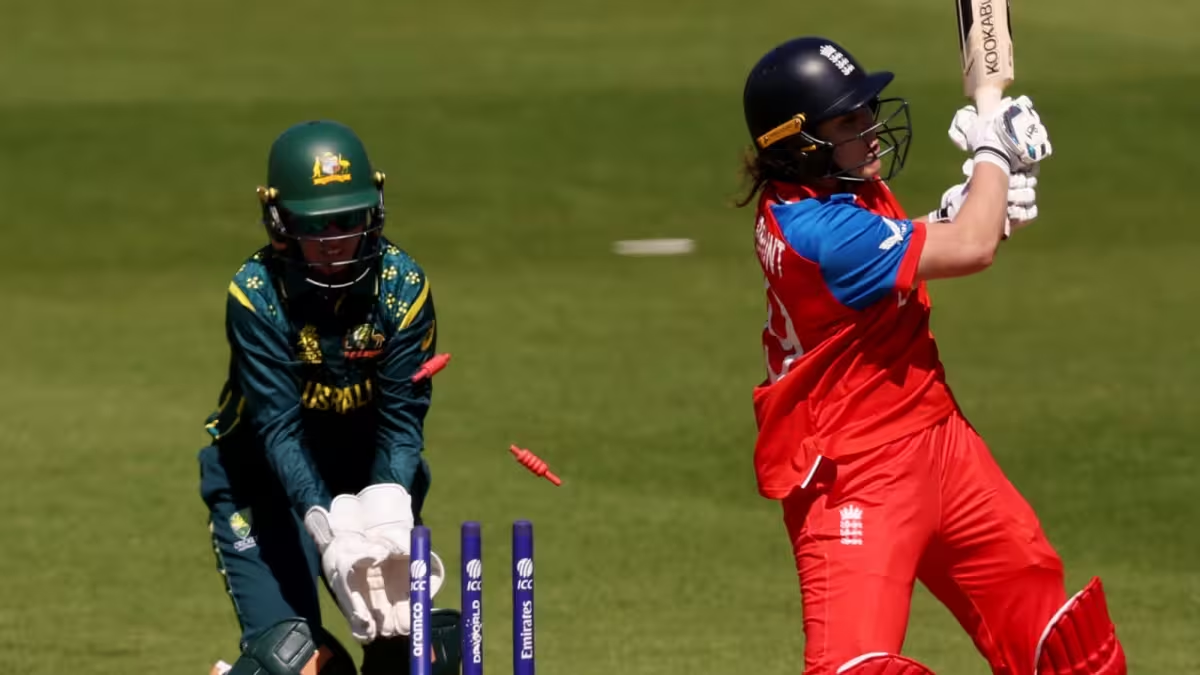
Those details change how the 118 target looks. Ireland's total, built in spite of losing nine wickets, became competitive because of the final over and disciplined bowling from the visitors' attack. England's early collapse to 35-3 underlined that 118 was far from straightforward; had Ecclestone not taken 3-22, Ireland's late rally might have been even more decisive.
What followed Sciver-Brunt's exit tightened the narrative. With eight runs required, the match moved into a different tactical phase: whether England would nurse remaining hitters across the line or hand the chase to lower-order batters judged fit to finish. Dani Gibson and Freya Kemp were at the crease when play reached that point; the report does not confirm the final result, so the outcome of the chase and any immediate tournament implications remained unresolved in the update.
The practical significance today is twofold. First, a captain retiring out in the middle of a chase — especially on 48, with the finish in sight — invites scrutiny about team management and on-field priorities at a World Cup. Second, an unexplained retirement amplifies selection and workload questions for England: if Sciver-Brunt is protecting a minor problem, that is one calculation; if it was purely a tactical move to rotate responsibility, that is another. Either interpretation changes how the innings will be read in a tournament setting.
There is a crisp next step for England and for observers: clarify the motive. The single most consequential unanswered point is whether Sciver-Brunt's withdrawal was precautionary or strategic. Until the team provides a clearer explanation, her 48 will carry an asterisk — a high-quality, match-defining contribution that nevertheless leaves England's handling of fitness and leadership in the tournament under a small but persistent question mark.