



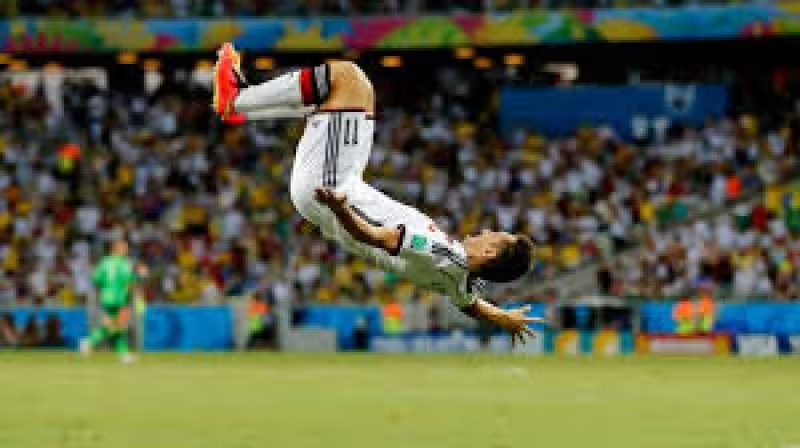
A major broadcaster published a World Cup quiz on day five asking readers to name the leading scorer for each of the top 20 countries in FIFA's global rankings.
The quiz is built around two concrete figures — "day five" of the tournament and the "top 20" national teams by FIFA rank — and it frames its challenge as a test of readers' knowledge of national scoring records rather than a straight news update. Links on the page point users toward related pieces about star moments and recent milestones, including a feature on how one striker became his nation's all-time top scorer after a win over Senegal and a separate note about another forward making a World Cup debut as Norway faced Iraq.

That supporting material is what gives the quiz weight: it does not stand alone as a pop quiz. The page collects short reads — a behind-the-scenes project tracing the road to France's record scorer, a look back at the 2022 World Cup final between Argentina and France, and a column invoking Olivier Giroud's take on Mbappé and the campaign to win the World Cup — and places them beside the question set. For casual readers this turns a quick trivia exercise into a framed tour of recent scoring headlines across several top teams.
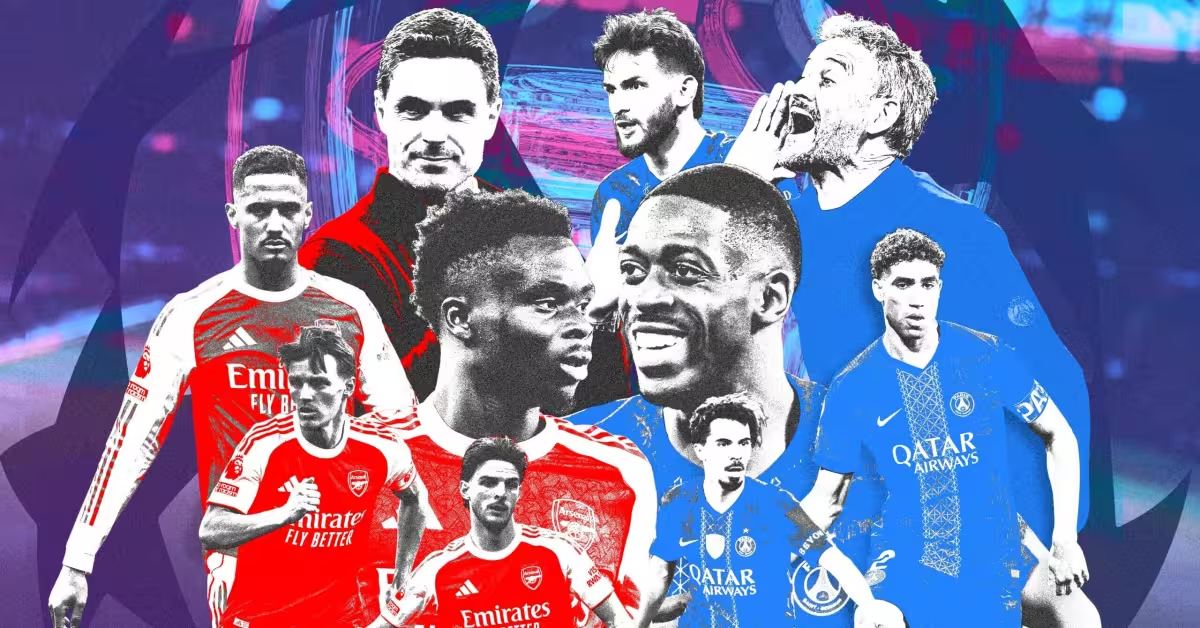
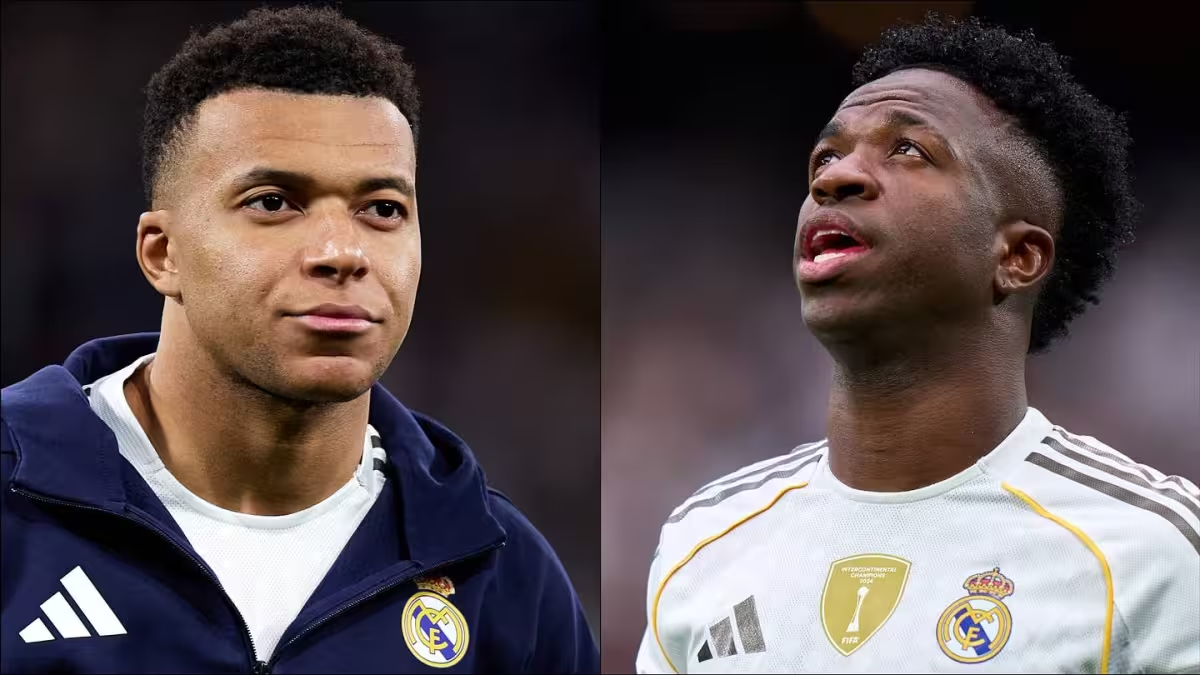
Context matters here: the page is primarily a quiz platform, not a statistical ledger. It asks readers to supply the top scorer for each of FIFA's top 20 nations, but it does not publish a ranked list of all-time World Cup scorers or settle broader queries about the most goals in World Cup history. That distinction — between testing readers on national scorers and answering who leads the all-time World Cup charts — is the simplest way to read the page.
The friction is immediate for anyone who arrived expecting a singular answer to "most goals in World Cup history." The quiz invites national knowledge rather than global comparison, so readers looking for the tournament's all-time top scorer will find no definitive resolution on the quiz page itself. Instead, they are nudged through linked pieces about individual milestones — for example, a striker's rise to become his country's record scorer after the match with Senegal and the note about a high-profile debut when Norway played Iraq — which illustrate narratives but do not replace a compiled all-time list.
That tension is also editorial: a headline that hints at global scoring records funnels traffic into a format designed for engagement, not for closure. The quiz's structure rewards recall — name the leading scorer for each of the top 20 FIFA-ranked nations — and in doing so amplifies curiosity. Readers who complete the set will have tested their memory of national icons; readers who wanted a single answer to the most-goals question will still need to consult a dedicated statistical source.
What happens next is modest and specific: the quiz stands as a day-five engagement piece amid ongoing World Cup coverage. It connects current-match moments and player milestones into a single interactive test but does not, by itself, advance the tournament storylines or publish new statistical records. For anyone chasing the narrower question of who has scored the most goals in World Cup history, the quiz is a starting point that spotlights national scorers and recent headlines — not the final word.



