



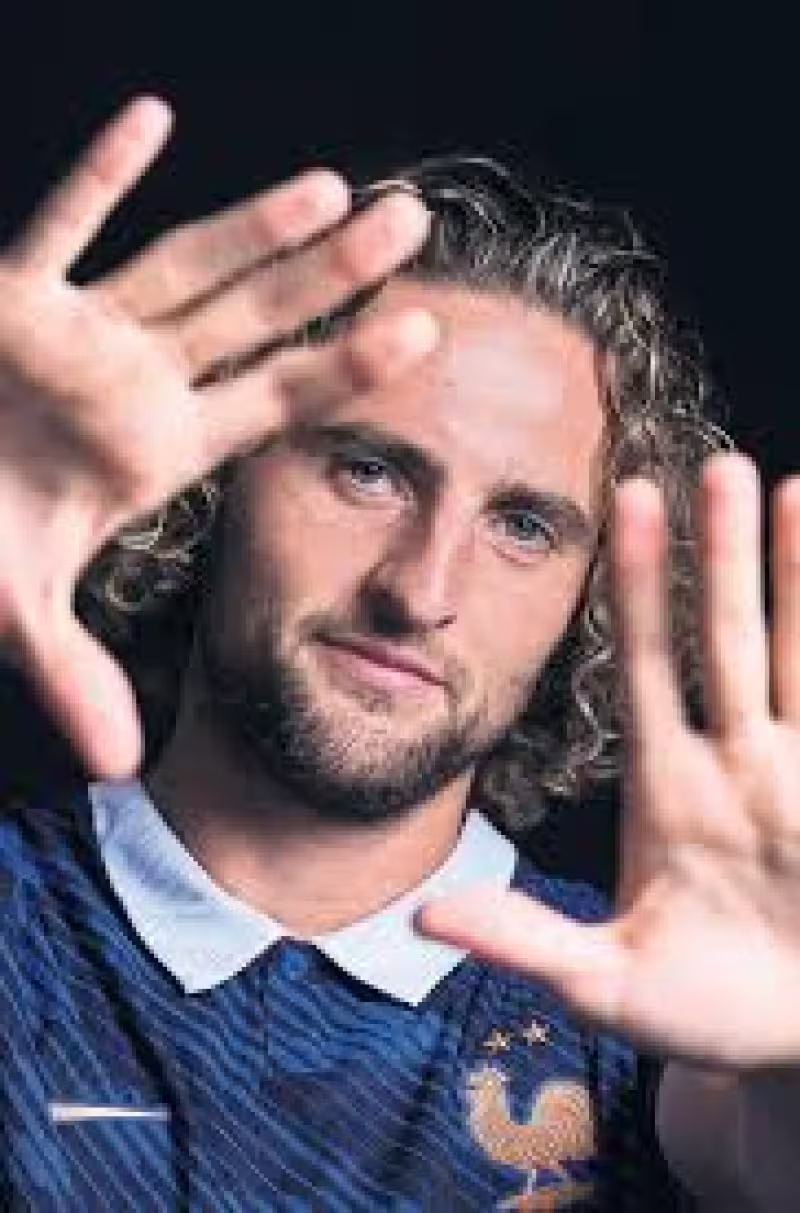
"Naturally, it seems a bit more attacking than usual," Adrien Rabiot said, and then spelled out what that means for him: not headlines, but balance. Capped 59 times by France, Rabiot insisted his job is to do the unseen work so the players ahead and behind him can perform — even as Didier Deschamps has packed his final tournament squad with attacking options.
Deschamps has taken nine forwards to the summer tournament and has spoken of wanting to be "less predictable, less readable." That planned shift helps explain why a new attacking group led by Kylian Mbappé and featuring Ousmane Dembélé, Michael Olise and Rayan Cherki has been described as a new Fab Four; Rabiot said simply, "I think it is good because we have the players for it."

Rabiot also made clear his role for France will not mirror the box-to-box job he plays at Milan. "We all have a role. You have to be humble about that," he said. "I try to do my work as well as possible to allow the players in front and behind to perform as well as possible … attackers and goalscorers are valued more than midfielders or defenders. There is no problem about that." The line sums up the trade-off at the heart of Deschamps’ selection: more firepower up front, more responsibility for midfielders to cover the pitch.
The central friction is obvious on paper and Rabiot stated it plainly. "Nowadays, it can’t just be nine or 10 players defending. You need everyone," he warned. "We need a whole team that knows how to attack and knows how to defend. That’s modern football. You have to recognise that." With so many attacking starters available, France’s balance will depend on midfielders and defenders accepting roles that sometimes erase their own attacking instincts.
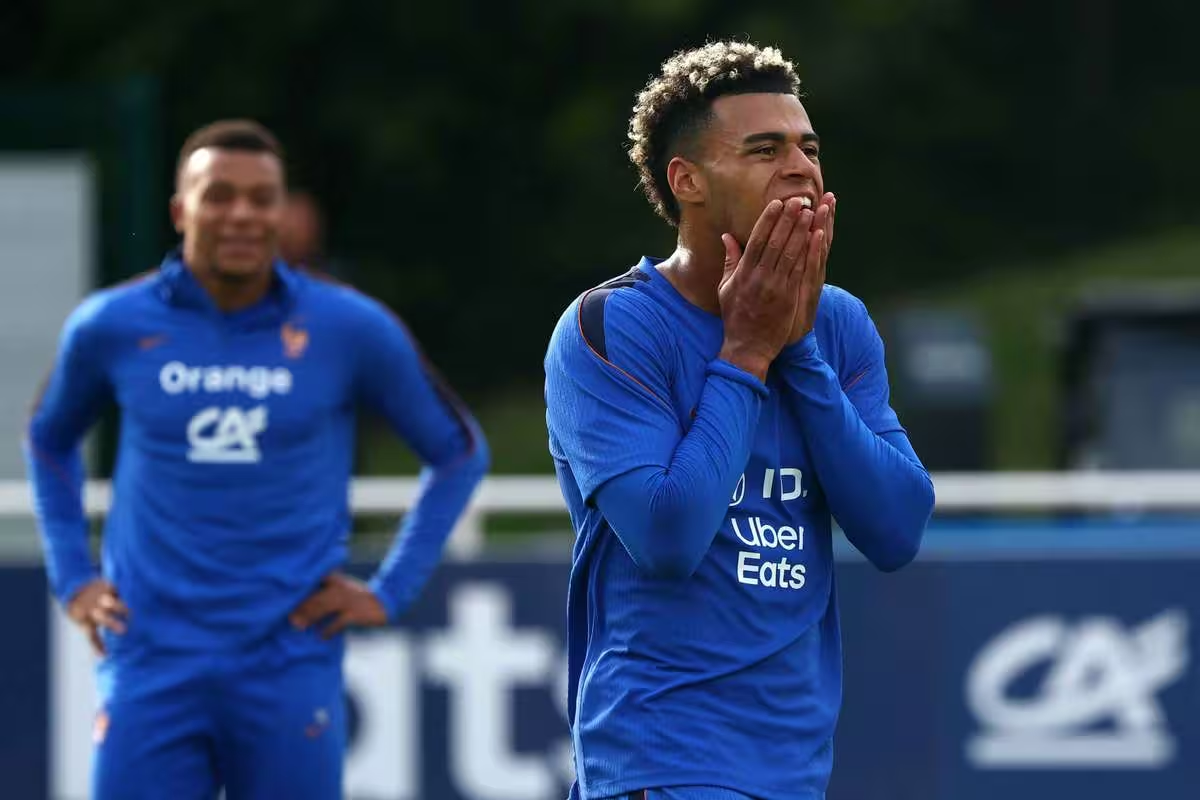
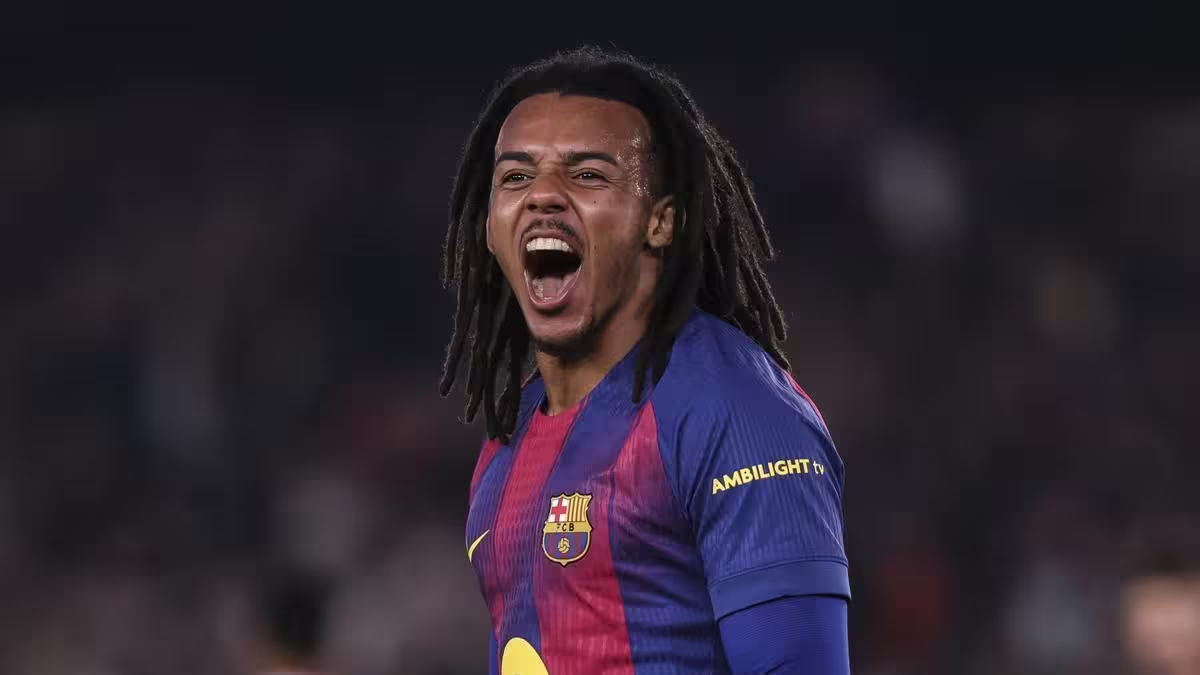
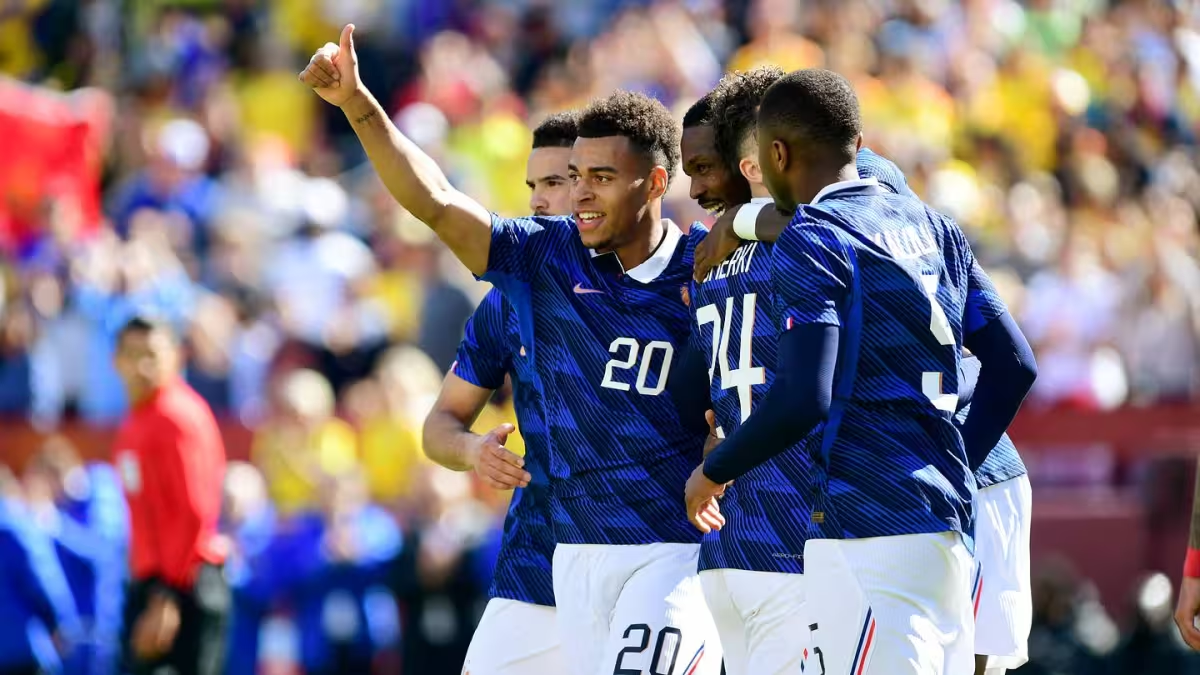
Rabiot singled out the quieter, less glamorous contributions as vital. He praised N’Golo Kanté as "someone who gives everything when he’s on the pitch," noting that some players are "promoted less" while still playing key parts. Kanté, 35 and now rarely a starter, exists in the squad as a form of insurance and an example of effort and positioning that midfield colleagues are being asked to replicate.
There are encouraging signs inside camp. "In training, there is this freshness, this technique, this enthusiasm," Rabiot said, pointing to energy that could smooth a tactical transition. Still, energy in practice does not resolve a manager’s selection dilemmas: how often will Deschamps turn to Kanté’s experience, when will Rabiot be asked to sit deeper, and how will he balance a midfield that must both cover ground and supply service to a remarkable collection of forwards?
Rabiot’s answer is both pragmatic and revealing. He declined to demand a starring role, framing his contribution as the platform for others: "We all have a role. You have to be humble about that." The tests begin when France meet real opponents in the World Cup; those matches will show whether Deschamps’ attack-first blueprint can be kept honest by midfielders doing the dirty work.
The unresolved question is not whether France can score — the squad suggests they can — but how Deschamps will structure his midfield when the temptation to overload attack is strongest. Rabiot has stepped forward as the player willing to cede the spotlight and preserve balance. If France are to be more attacking and remain defensively sound, the outcome will hinge on whether that willingness translates into tactical shape on the pitch.



