




Turkey will begin their 2026 World Cup campaign in Group D — alongside Australia, Paraguay and the United States — with a deliberately young, attack-minded squad and a settled coaching plan, and Arda Guler has been declared fit for the opening match against Australia after a scare a few weeks ago.
The central fact of Turkey’s build is its midfield and forward energy. Two 21-year-olds, Arda Guler and Kenan Yildiz, sit at the heart of an aggressive plan, flanked by Hakan Calhanoglu as the experienced midfield anchor. Vincenzo Montella has installed a flexible 4-2-3-1 designed to control possession and the tempo of games; the selection and structure make clear the team’s intent to dominate Group D rather than sit back and counter.

That blueprint comes with hard numbers and a handful of telling selections. Guler and Yildiz are both 21 years old, Calhanoglu is the elder statesman in midfield, and a likely centre-back pairing of Abdulkerim Bardakci and Merih Demiral gives Montella two tall, aggressive options at the back — even though Bardakci and Demiral have never played together at club level. Those choices crystallise the squad’s identity: youth and forward momentum, with experience sprinkled in the engine room.
Montella sells the idea of cultural fit as part of his authority in the job, saying he feels at home in Turkey and aligns with the camp’s approach. That rapport has produced an unusually tranquil preparation, with the coach pushing a possession-first game that asks his midfield to outwork and outthink opponents across 90 minutes.
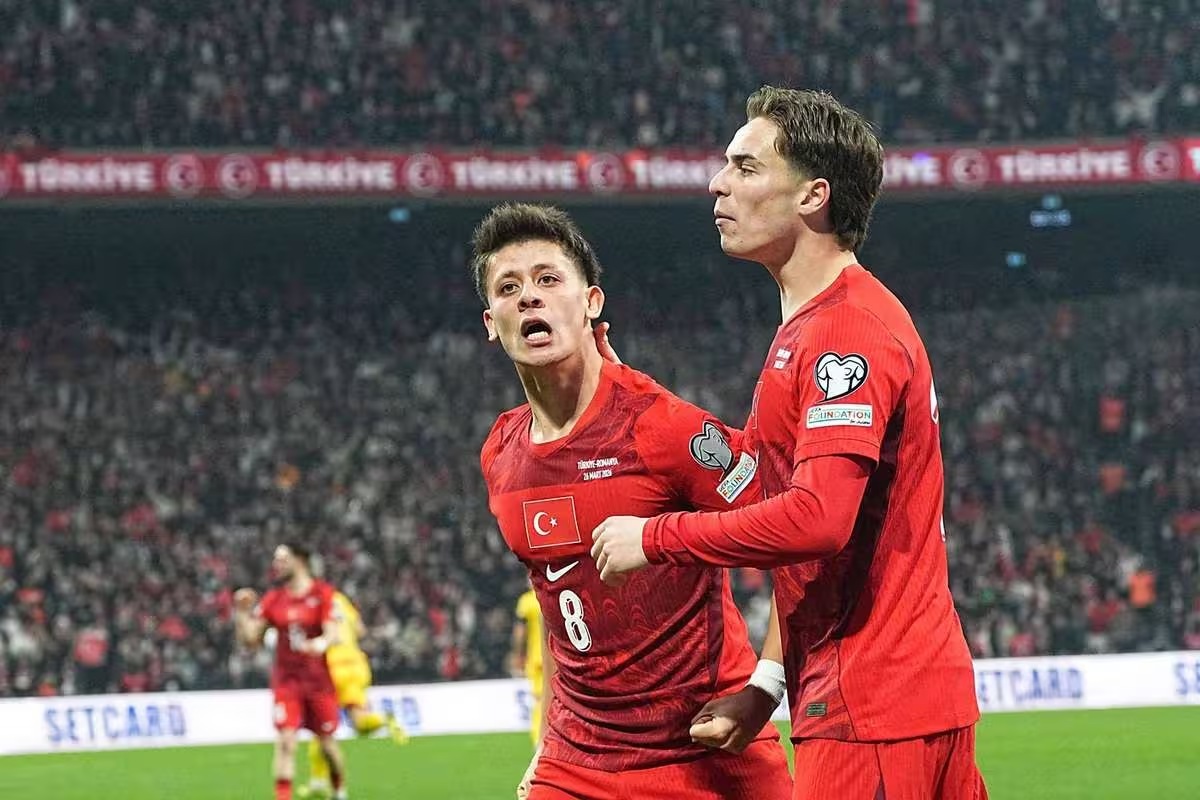
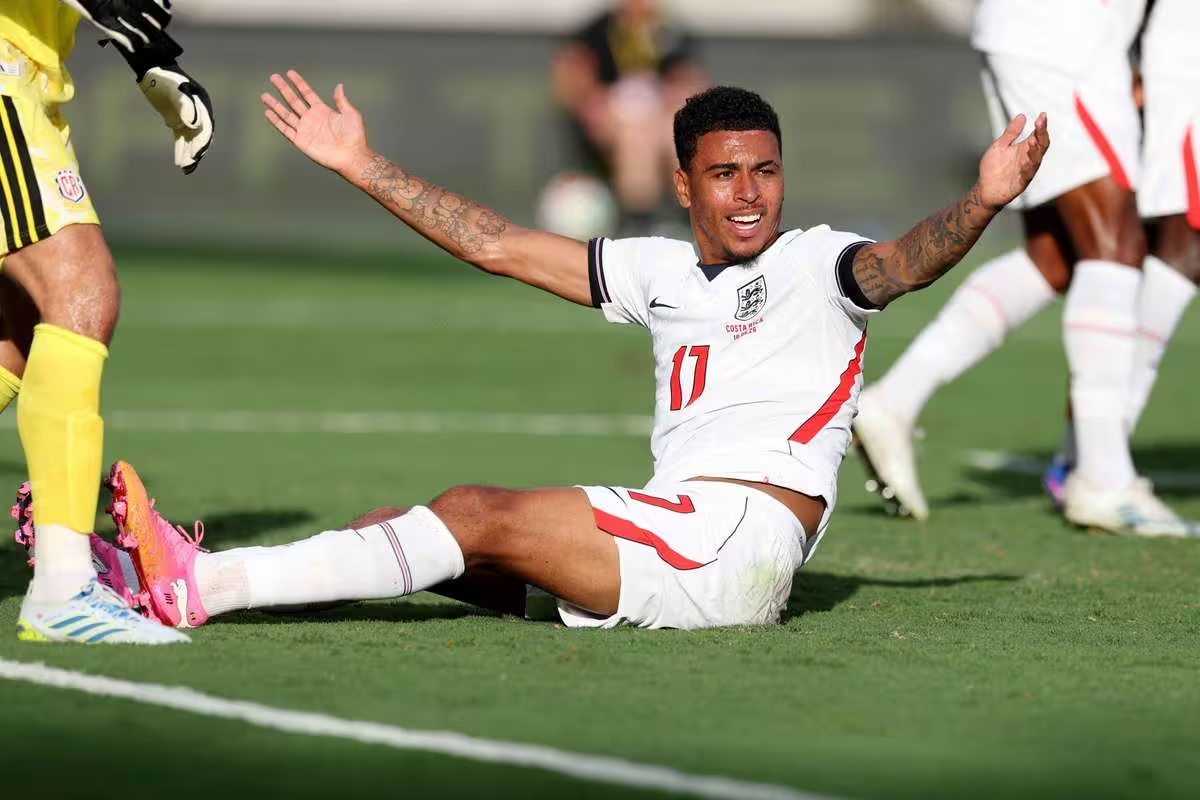
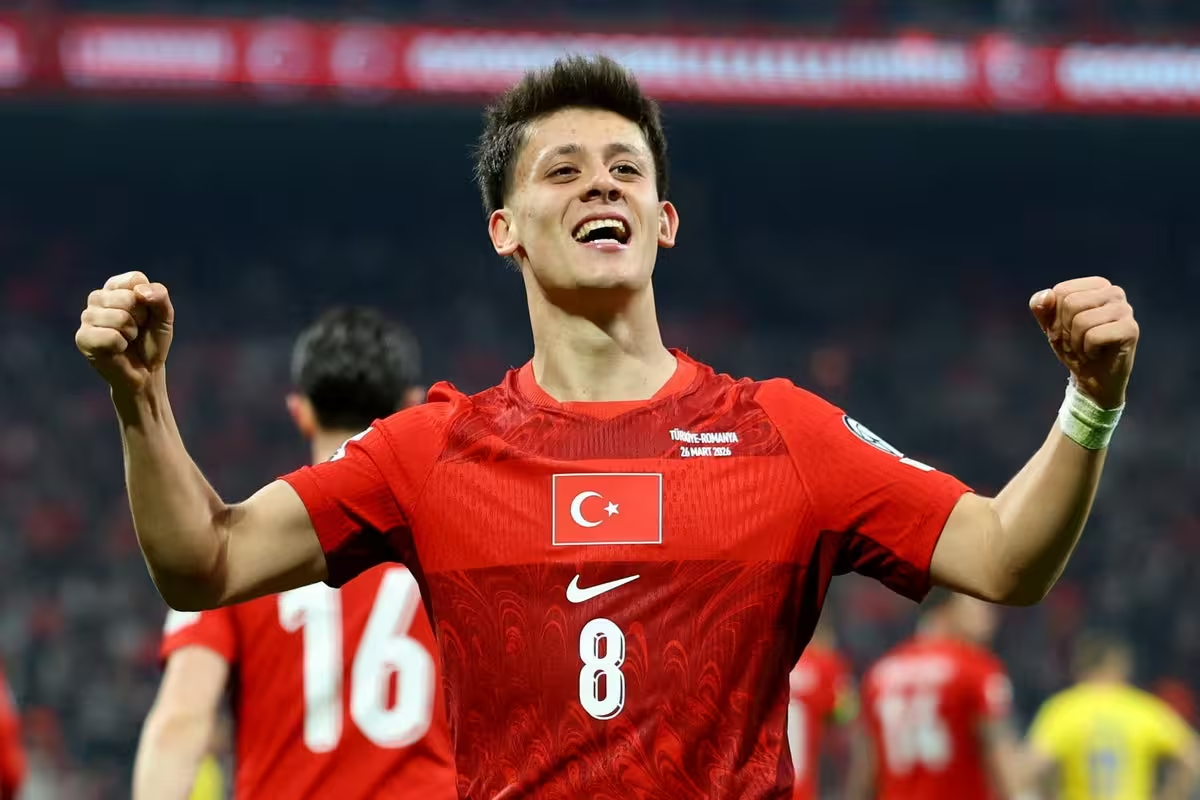
Guler’s availability for the opener matters in two ways. Practically, his recovery removes a selection headache and restores the primary creative outlet in the three behind the striker. Emotionally, his short, simple response underlines his role: when asked about pressure, he said he is ready to take it on. With him available, Montella can run the system as intended from the first whistle.
Turkey’s recent tournament history adds context to the optimism. They last qualified for a World Cup in 2002, when the team finished third — a reminder that Turkish squads can surprise. Montella is not the first foreign coach to lead a team at the World Cup; and while no team has ever won the World Cup with a foreign manager, Turkey’s combination of a foreign coach and a young core brings both fresh ideas and an unwritten risk.
The tournament blueprint produces a clear friction point: midfield and attack are strengths; defence is the worry. The backline has been described as the most unpredictable part of the team and the area of greatest concern. That tag is sharpest when translated into matchups — Bardakci and Demiral offer physical presence, but the pairing’s lack of club-level familiarity feeds questions about organisation and discipline at the back, especially against quick transitions or set-piece chaos.
How that defence holds up is the single practical uncertainty that will shape Turkey’s Group D window. The match-up against Australia in the opener will test whether Montella’s possession model can shield an unsettled back four or whether lapses at the back will hand momentum to opponents. Paraguay and the United States both present different tests: one a more direct South American approach, the other athletic depth and width — neither of which has been fully modelled against this exact Turkish lineup.
What to watch when the tournament begins is straightforward. Look for Turkey to try to control the ball through Calhanoglu’s experience and the youthful legs of Guler and Yildiz; measure success by how often the centre-backs are exposed to counterattacks; and judge Montella by how quickly he adjusts if the defence looks disorganised. The answer to the tournament question — can Turkey’s high-intensity, possession-first side hide a shaky defence long enough to progress from Group D? — will arrive in the opening fixtures, beginning with Australia.



