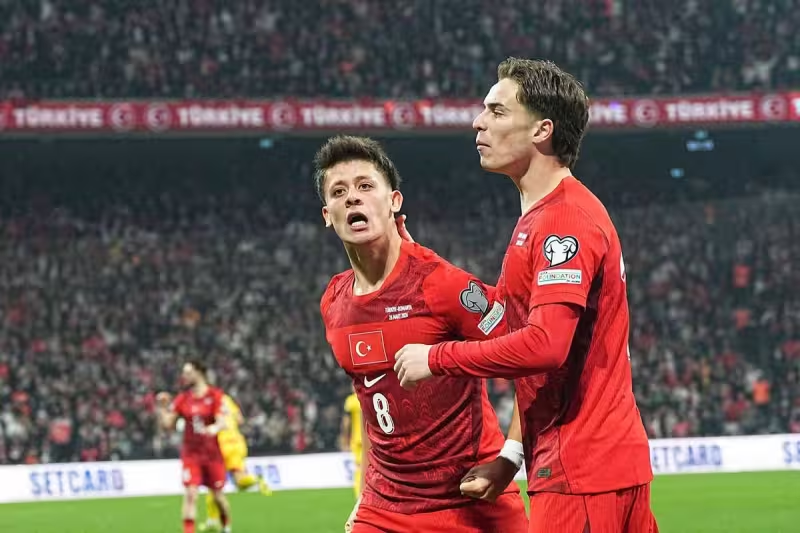
Turkey’s 2026 World Cup roster is built around a young midfield and attack led by Arda Guler and Kenan Yildiz, with Hakan Calhanoglu the experienced presence behind them; Guler has recovered from a recent injury scare and is fit for Turkey’s opening game against Australia in Group D, which also features Paraguay and the United States.
Guler and Yildiz are the headline names: both are 21, and both carry the kind of club form that made Turkey’s midfield its obvious strength going into the tournament. Guler moved to Real Madrid in the summer of 2023 for around twenty million euros from Fenerbahce, then logged 51 appearances in all competitions in 2025/26, scoring six goals and supplying 12 assists; he was also named the 2025/26 Champions League Breakthrough Player of the Season. Carlo Ancelotti has repeatedly highlighted Guler’s ball control and game intelligence, and the youngster has answered with the sort of consistency a coach can build around.

Kenan Yildiz arrives after a breakthrough season of his own. Born on 4 May 2005 in Regensburg, Germany, Yildiz finished the 2025/26 campaign as Juventus’ top scorer with 11 goals in all competitions and picked up a Serie A Player of the Month award in August. Those numbers help explain why Turkey’s lineup leans young but is experienced at the top level: the side contains an unusually youthful core without sacrificing form.
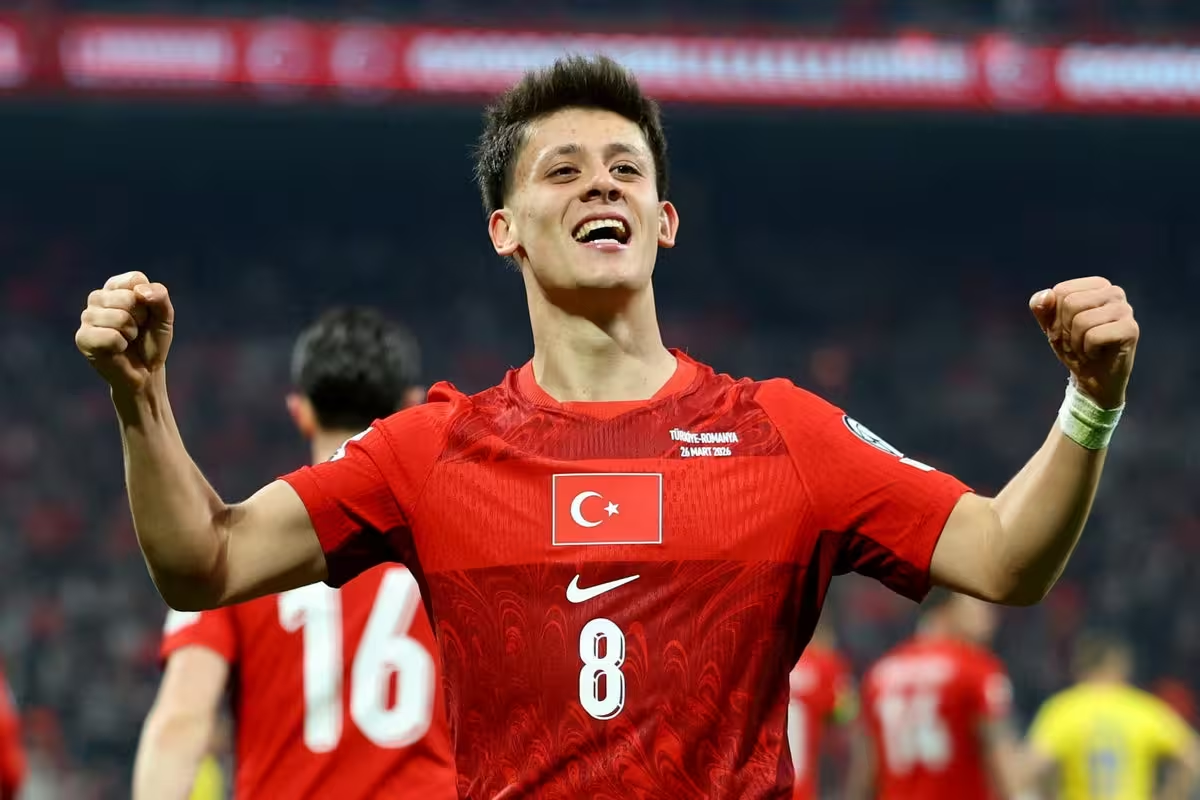

Montella has chosen a tactically fluid, high‑intensity 4-2-3-1 to get the best from that core, with Calhanoglu serving as the senior organiser behind the two 21-year-olds. The shape is designed to overload the centre of the pitch, let Guler and Yildiz drive forward, and rely on movement and quick transitions to unsettle opponents that underestimate Turkey’s attack.
That plan, however, runs into Turkey’s clearest problem: the defence. The backline is widely viewed as the squad’s weakest and most unpredictable area. Abdulkerim Bardakci and Merih Demiral are the likely centre‑back pairing for the tournament, but they have never played together at club level — a lack of club‑level partnership that can show up in moments requiring automatic, split-second coordination. Those moments will matter most in Group D, where sustained pressure from the United States and clinical finishing from Paraguay are reasonably expected challenges.
The friction is simple and immediate: a young, creative, high‑energy midfield and attack versus a defence described as lacking organisation. It is the kind of mismatch that can produce spectacular attacking displays and equally dramatic collapses. Turkey’s coaching staff have set up a system that masks defensive lapses with possession and pressing; whether that will hold across three group matches against varied styles is the tournament’s immediate gamble.
What comes next is concrete and imminent. Turkey open against Australia, with Guler cleared to play; that match will be the first practical test of Montella’s idea — whether the 4-2-3-1 and its youthful attackers can carry the team while the centre‑backs grow into a partnership. The single consequential question left unresolved by the roster is this: can the young attacking core, led by Guler and Yildiz and marshalled by Calhanoglu, overcome an unproven defence when Group D’s opponents press and exploit any organisational gaps?