



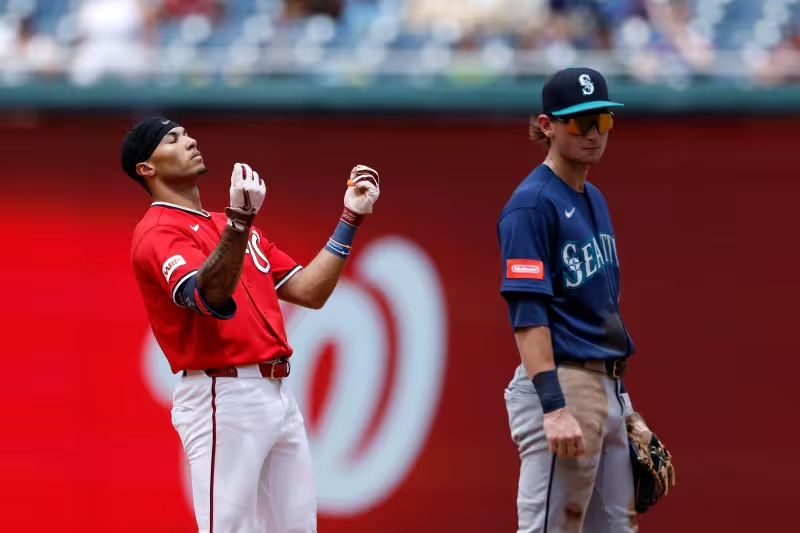
The Washington Nationals opened their three-game series at home against the Kansas City Royals aiming to lock up a fourth straight series victory, riding a June run that has pushed them back into contention for a respectable month.
Washington arrived having taken its last three series, including a come-from-behind triumph over the Seattle Mariners, while Kansas City limped into the matchup in last place in the AL Central at 29-43 and off two consecutive series losses. The contrast is sharp on the standings: the Nationals are chasing momentum; the Royals are trying to stop a skid — even as Bobby Witt Jr. has put together an MVP-level season for Kansas City.

On paper the immediate battle will be decided on the mound. The pairing at the top of the rotation presents a classic contrast: Griffin, the steady arm in Washington’s staff, made his 15th start of the season most recently, tossing six innings and allowing one run against the San Francisco Giants to lower his season ERA to 3.46. Across from him is veteran Wacha, a pitcher whose season lines have hovered in the mid-3.00s every year since 2021 but who has struggled lately, giving up 14 runs in 17.2 innings over his last three starts; scouts and hitters have found the most success against his offspeed offerings.
Kansas City’s depth pieces complicate the matchup. Álvarez, a left-handed swingman, has made two starts in the big leagues this year and in both went fewer than five innings while surrendering two or fewer runs; he also carries more than nine strikeouts per nine innings, a profile that can be disruptive in short bursts. The Royals’ other options raise questions: Spence made a lone appearance for Kansas City in mid-April and allowed six runs in four innings, and his Triple-A resume this year includes a 10-start ERA above 6.50. Those are early-season flags for a club that has struggled to sustain innings from the staff.
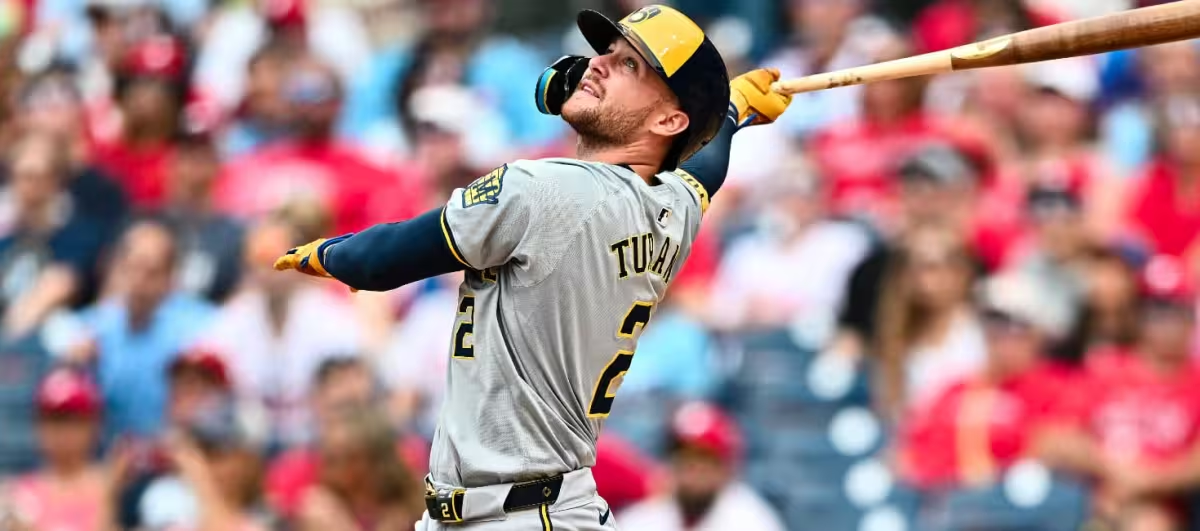


Washington’s bullpen and spot-starter mix have their own storylines. Littell was tagged for five runs in 1.2 innings on June 12 against Seattle after an impromptu rain delay, a short outing that put the bullpen on alert. Avila’s 2026 campaign began shakily out of the bullpen before he turned in a strong May and opened June with two impressive starts — only to be shelled for eight runs by the Astros. Those swings in form make late-inning matchups in a tight game a live matter for both clubs.
Context sharpens the stakes. The Nationals had been swept to open the month but their three straight series wins are the reason they enter this home stand with real traction; the Royals, meanwhile, have an offense that’s been framed as bottom-10 in nearly every major category, which puts pressure on their pitching to do more than it otherwise might.
The friction is plain: Kansas City boasts one of the game’s brightest individual seasons in Bobby Witt Jr., yet the team sits last in the division. That gap — elite individual production inside a floundering roster — makes these matchups more than routine. If Washington’s rotation can turn in length and limit the Royals’ small-ball scoring, the Nationals should extend their string. If Kansas City can get quality length from swingmen like Álvarez or coax a reset from Wacha, it can halt Washington’s momentum.
What matters next is the answer to a clear question: can Wacha stop the recent run of poor starts and give Kansas City enough length to protect a thin bullpen — or will Griffin’s steadiness and Washington’s regained confidence decide the series before the late innings arrive? The starter who lasts longer with fewer runs will probably determine whether this meeting becomes the Nationals’ fourth straight series win or the Royals’ wake-up call in D.C.



