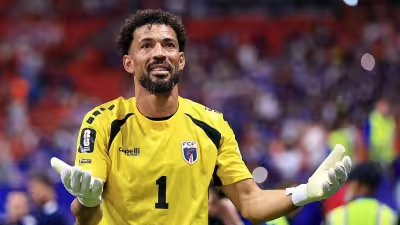
Cine Cassette posted a feature titled "Sebastián Cáceres y su Pasión por el Anime," presenting what appears to be a personal profile of the player but offering only a subscription prompt where the story should be.
The visible page carries the headline and an invitation to subscribe to continue reading; the remainder of the text and any reported details about Cáceres’s interest in anime are not accessible without a paid account. At the time the page was examined the piece existed only as that teaser — headline, paywall, archive access pitch.

This matters for readers seeking the substance behind the eye-catching headline. A profile framed as a glimpse into a subject’s personal passion typically promises anecdotes, specific titles, or a line that connects the hobby to the person’s life; none of those elements are available to confirm or to quote. The only verifiable fact on the public page is that the profile was published and that the site is asking readers to subscribe to read the rest.
Context helps explain why the locked page matters beyond curiosity. In an age when short clips and social posts can turn a pastime into a talking point, a magazine feature can shape how fans and casual observers understand a figure. A titled profile such as this one signals material that could change perceptions or add texture to a public persona — especially if the subject is known primarily for other reasons — but that signal here is interrupted before it delivers any reporting.


The friction is simple and direct: the headline promises a window, the page shows only the sash over it. For anyone trying to learn what, specifically, links Cáceres to anime — whether a childhood habit, a collection, public comments, or an influence on his public image — the answer remains concealed. The page does not supply excerpts, pull quotes, summaries, or even a sample paragraph to indicate the nature or credibility of the reporting beneath the paywall.
Readers looking for parallel coverage will find a separate item from another outlet that touches on unrelated Uruguay coverage; that piece concerns Brian Rodríguez and Uruguay at the World Cup and does not address Cáceres or the anime angle. That makes the Cine Cassette headline the only visible trace of this particular claim about Cáceres in the sources at hand.
The immediate consequence is pragmatic: the only confirmed route to the content announced on the page is the publication’s subscription mechanism. For anyone who wants to know what the profile reports about Sebastián Cáceres’s relationship with anime, subscribing is the next step that will deliver the promised detail. Until that happens, the connection implied by the headline remains an open question — a headline without its supporting copy, visible but unverifiable.
The unresolved, consequential question is not whether the headline exists — it does — but what the full piece actually documents about Cáceres’s interest in anime and how that information matters to his public profile. That gap is sharp and specific: the profile is on the record as published by Cine Cassette, and the page is on the record as paywalled; what is not on the record is the content that would answer readers’ curiosity. Subscribing is the only confirmed path to closing that gap at this moment.