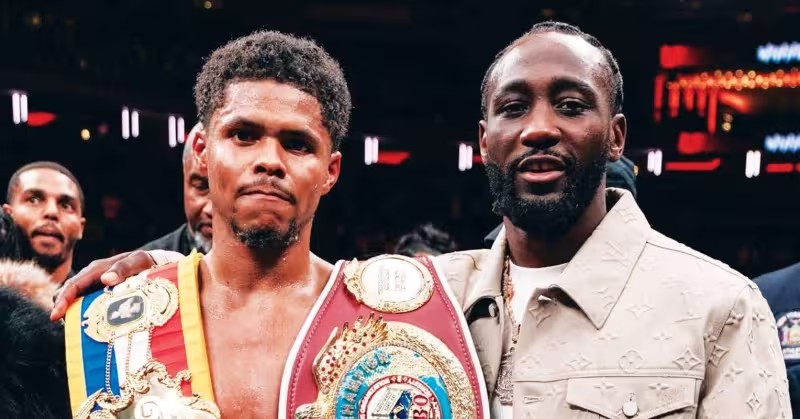
Shakur Stevenson told The Agnew Podcast that if Terence Crawford and Floyd Mayweather Jr. had met in their primes, he believes Mayweather would have been the one fighter capable of beating Crawford — while stressing the matchup itself would be a 50/50 proposition.
Stevenson framed the opinion around styles. He said Mayweather had early-career trouble with southpaws and predicted Crawford would fight as a southpaw in that imagined meeting, giving Mayweather a different kind of puzzle than he usually faced. Still, Stevenson immediately balanced that attribution by pointing out Crawford’s own strengths and history, calling the contest essentially a coin flip.

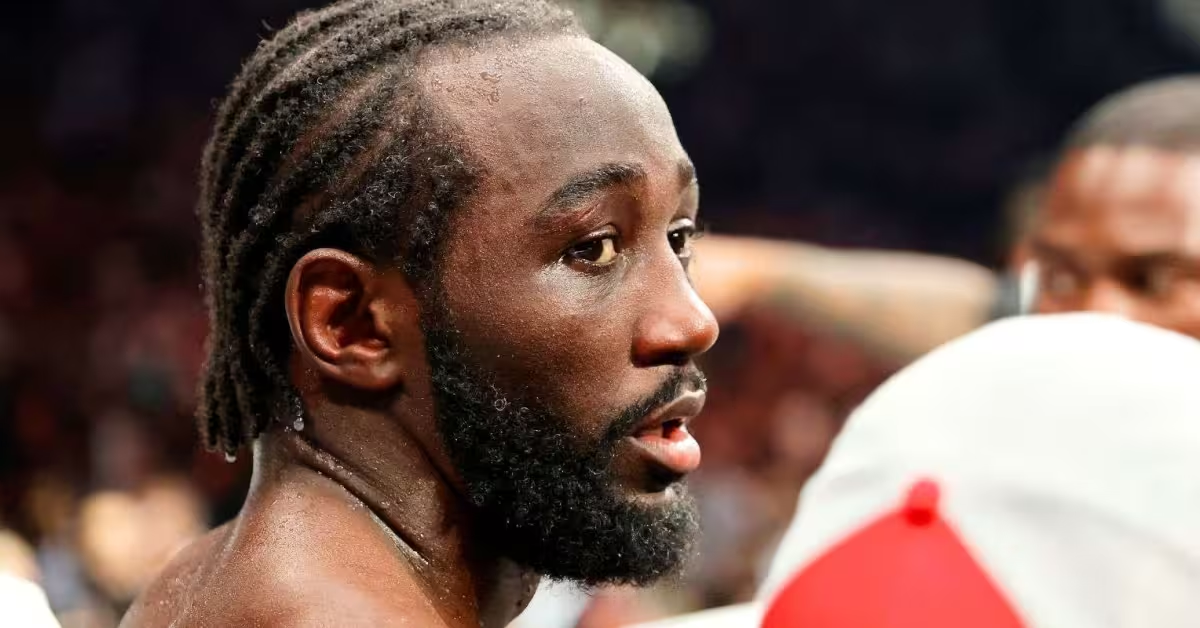
To underline his read, Stevenson cited moments from Crawford’s recent run. Crawford retired undefeated after 42 fights and, in September, became boxing’s fifth five-division world champion with a victory over Canelo Alvarez — achievements Stevenson used to explain why the matchup can’t be written off for either man.
Stevenson did not present Crawford as flawless. He noted that Crawford had “little issues” with Egidijus Kavaliauskas and that Yuriorkis Gamboa had been winning some rounds against him, details Stevenson offered to justify why a matchup with a defensive wizard like Mayweather could go either way.
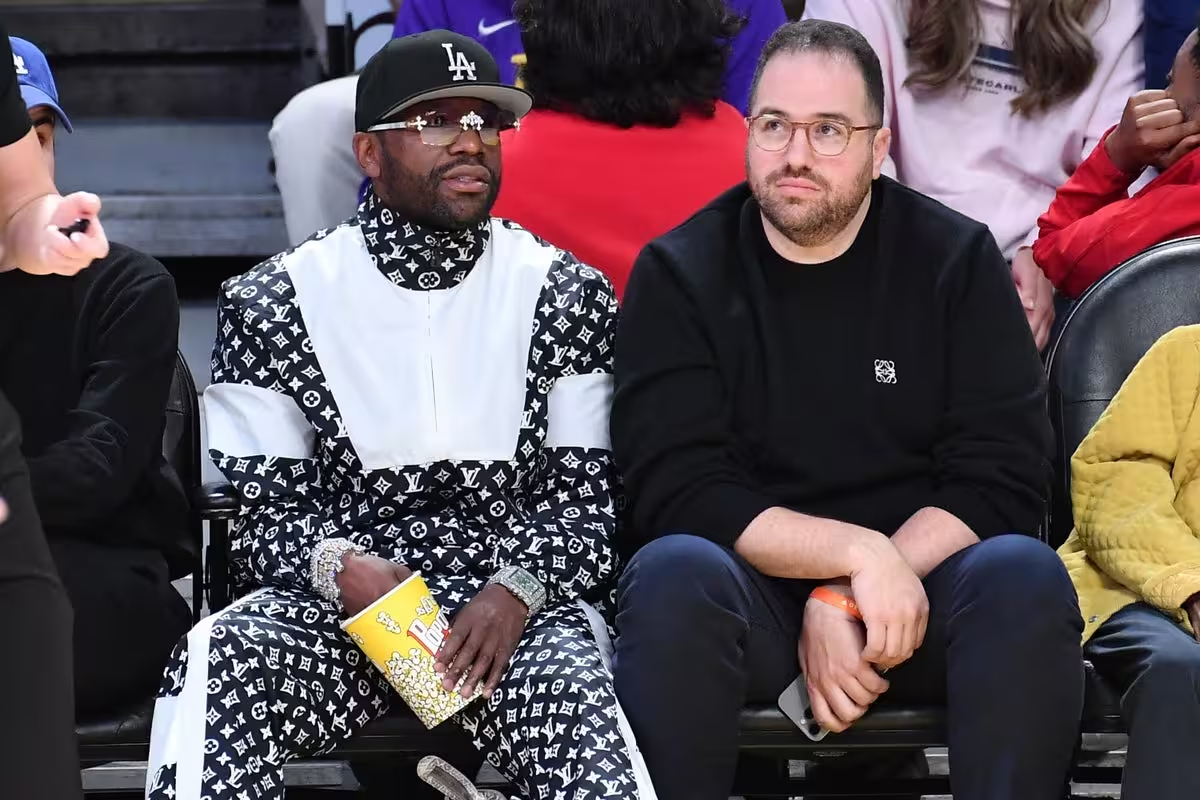
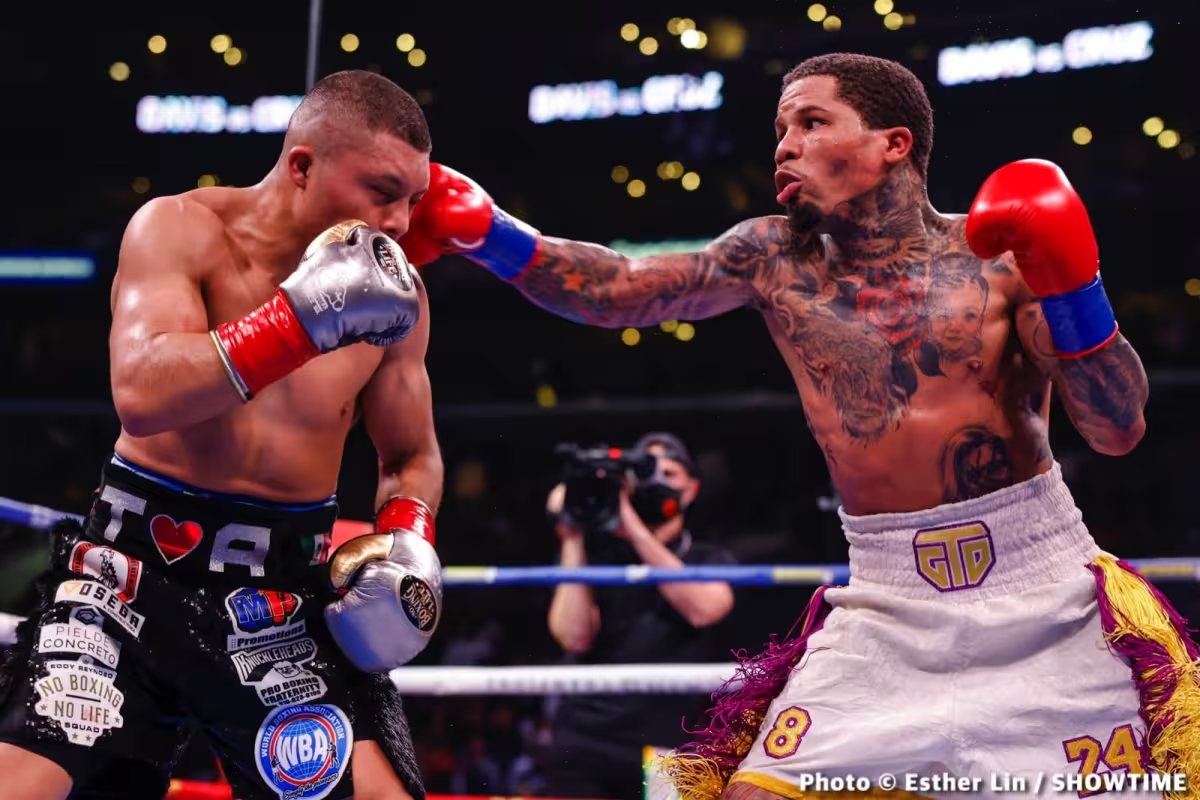
The specifics Stevenson emphasized — Mayweather’s early difficulties with southpaws and Crawford’s likely southpaw posture — are the hinge of his argument. If Mayweather struggled with that style in his formative years, Stevenson argued, a top-form Crawford could have posed unaccustomed problems. Yet the 50/50 verdict acknowledges Crawford’s unbeaten record and five-division crown as weighty counters to any stylistic edge.
Those facts matter now because Crawford’s retirement has intensified debates about his place in boxing history, and Stevenson’s view adds a named challenger to that discussion. Mayweather’s own legacy sits alongside the numbers: his record stands at 50 wins, and there is public chatter that a mooted September rematch with Manny Pacquiao — if staged as a professional bout — could put that 50-fight win streak back on the table.
The friction in Stevenson’s take is quiet but real: he singles out Mayweather as the one who could have beaten Crawford, then refuses to crown a winner, insisting the fight is 50/50. That tension captures the broader problem in legacy matchups — stylistic hypotheticals matter, but they collide with records and signature wins in ways that rarely produce definitive answers.
Stevenson’s comments land as boxing’s argument over Crawford’s standing accelerates. Crawford left the sport undefeated after 42 fights and a landmark victory over Canelo; Mayweather remains a touchstone for defensive excellence at 50 wins. Stevenson’s read forces a narrower question on both resumes rather than a sweeping conclusion: could Mayweather’s known susceptibility to southpaws have been decisive against a prime Crawford who, by Stevenson’s account, would fight left-handed?
The most consequential unanswered question now is precisely that: would Mayweather’s early-career trouble with southpaws have been enough to tilt a 50/50 prime meeting toward Crawford, or would Mayweather’s defense and ring-generalship still have carried the day? The answer matters not just for how fans rank fighters on paper, but for whether any future moves — including the proposed September rematch involving Mayweather and Pacquiao — will reshape the fragile arithmetic of boxing legacies.