



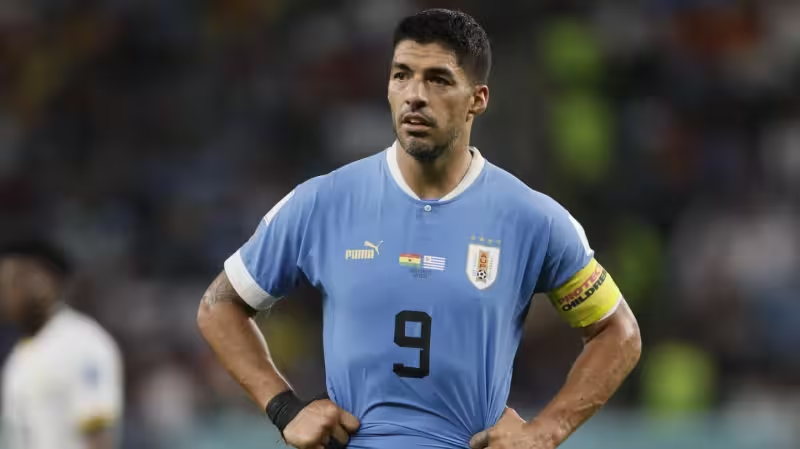
Marcelo Bielsa said Luis Suárez will not be available for Uruguay’s World Cup 2026 debut because Suárez told the coaching staff at the team’s farewell match that he preferred to leave his place so younger players could develop in his position.
The announcement removes one of Uruguay’s most recognizable forwards—Suárez, now at Inter Miami—from the immediate selection picture for the first group game, leaving Bielsa to open the tournament without a player the team and its supporters have long identified with the national attack.

Bielsa described the conversation as straightforward: at the farewell match Suárez made clear he wanted to open a spot for emerging players. That preference, rather than injury or suspension, is the practical reason Bielsa cannot count on him for the opener.
That choice creates a clear mechanism for the lineup change. Suárez’s decision hands a competitive opportunity to younger forwards who train with Uruguay; Bielsa must now deploy personnel who have benefited from that explicit invitation to step forward. For the coach, the absence is not a tactical mystery but a roster fact to manage before kickoff.

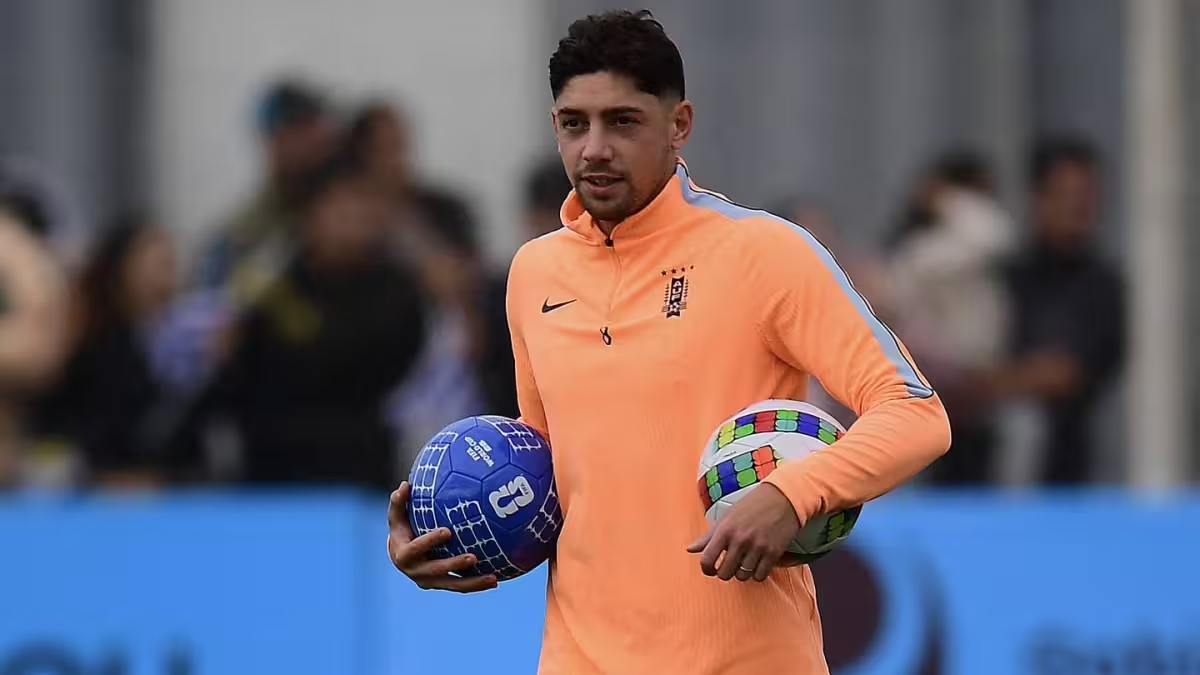
The timing matters because Uruguay begins its World Cup group stage against Saudi Arabia, Cabo Verde and Spain. Opening matches set rhythms and sometimes decide whether a team plays with the confidence of control or the pressure of recovery. Starting without a veteran scorer reshapes short-term expectations for Uruguay’s attack and removes a familiar option from Bielsa’s immediate toolkit.
This is notable given how Suárez is framed within the national story: he is regarded as one of Uruguay’s major figures. The friction is obvious—one of the country’s leading forwards has voluntarily stepped aside for youth development, leaving the national team to reconcile reverence for experience with a deliberate decision to accelerate a generational handover.
Practically, the squad Bielsa names for the opener will reflect that handover. The coach will have to choose between promoting younger forwards into starting roles or altering formation and game plan to compensate for Suárez’s absence. Either path is an implicit answer to Suárez’s stated preference: play the youngsters he referenced, or keep an experienced system that does not rely on him.
What remains unresolved is whether Suárez’s choice applies only to the opening match or to a longer stretch of Uruguay’s World Cup campaign. Bielsa’s statement confined Suárez’s unavailability to the debut; it did not say Suárez would be unavailable for later group matches or possible knockout fixtures. That unanswered question—will Suárez return to the matchday squad as the tournament progresses?—is the single practical unknown that will shape Uruguay’s planning after the opener.
Bielsa now faces a short window to set a lineup that answers both the tactical demands of a tough group and the internal promise Suárez made to create space for younger players. The team goes to the pitch with one of its most famous forwards off the immediate roster, and the coach must convert that absence into an advantage or risk losing momentum at the outset of the World Cup.



