



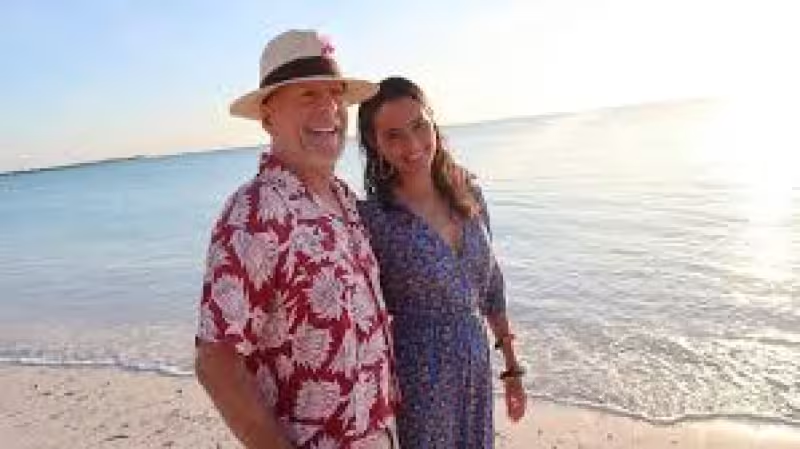
Emma Heming Willis says she walked out of a neurologist’s office nearly four years ago with only a single brochure and a diagnosis that upended her life: Bruce Willis had aphasia and frontotemporal dementia. "This is the issue: walking out of there with nothing was really hard," she told an interviewer on a recent Tuesday morning, and those few words became the opening to a book meant to answer the silence she found in that waiting room.
She published The Unexpected Journey in September as a practical guide to what she calls "caring for the caregiver." The book is aimed at family members looking after people with dementia or anyone responsible for a dependent person; it has already been translated into more than a dozen editions and has been released in Spanish as Un viaje inesperado. "I’m so excited that this book is now available in Spain," Heming Willis said, framing the publication as the public response to a private scramble for information.

The weight of the moment is both intimate and unmistakable: Heming Willis cares for her husband, Bruce Willis, and for their daughters, Mabel, 14, and Evelyn, 12, while navigating a disease she describes as incurable and irreversible. She has been married for more than 17 years and, at 48, has turned personal crisis into a handbook she hopes others can use so they do not have to repeat the same frantic searches she made online when leaving the neurologist. "There are so many caregivers out there without any guidance or roadmap," she said.
Context matters: Heming Willis said the diagnosis she received nearly four years ago identified aphasia and frontotemporal dementia, conditions that change language, behavior and personality and, in her words, do not reverse. That medical reality collided with a glaring system gap — she left the appointment with a paper, not a plan. She described using the internet to look up what to do next and then assembling advice, checklists and emotional guidance that now form the spine of her book.
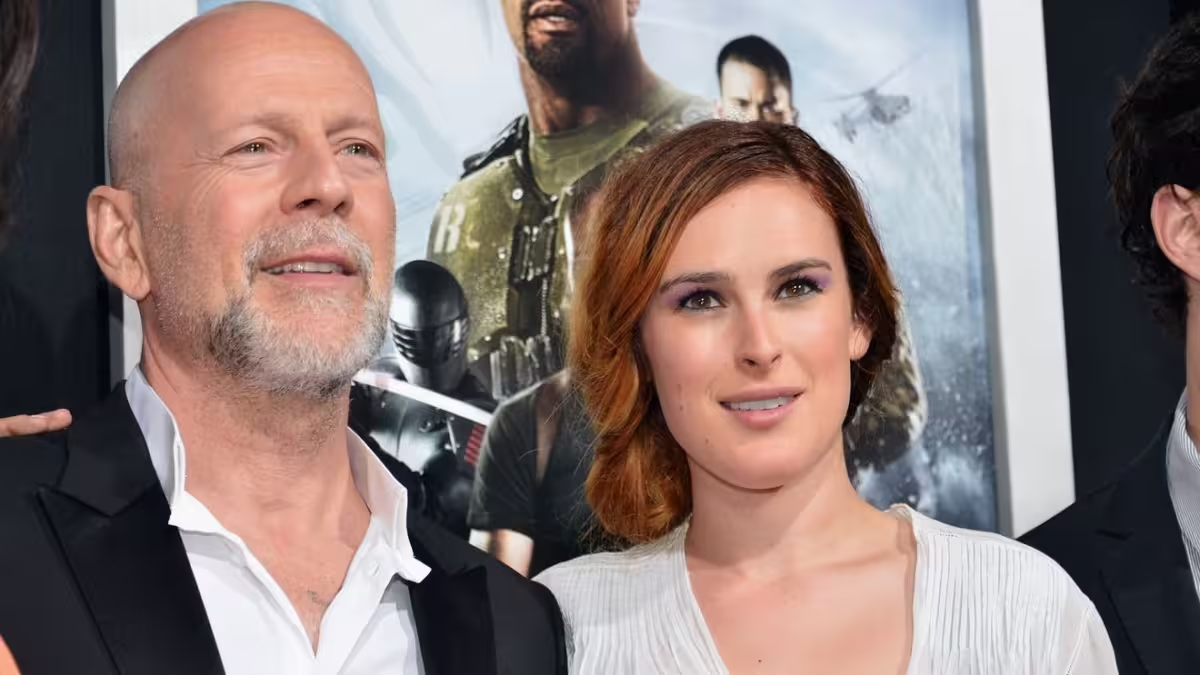
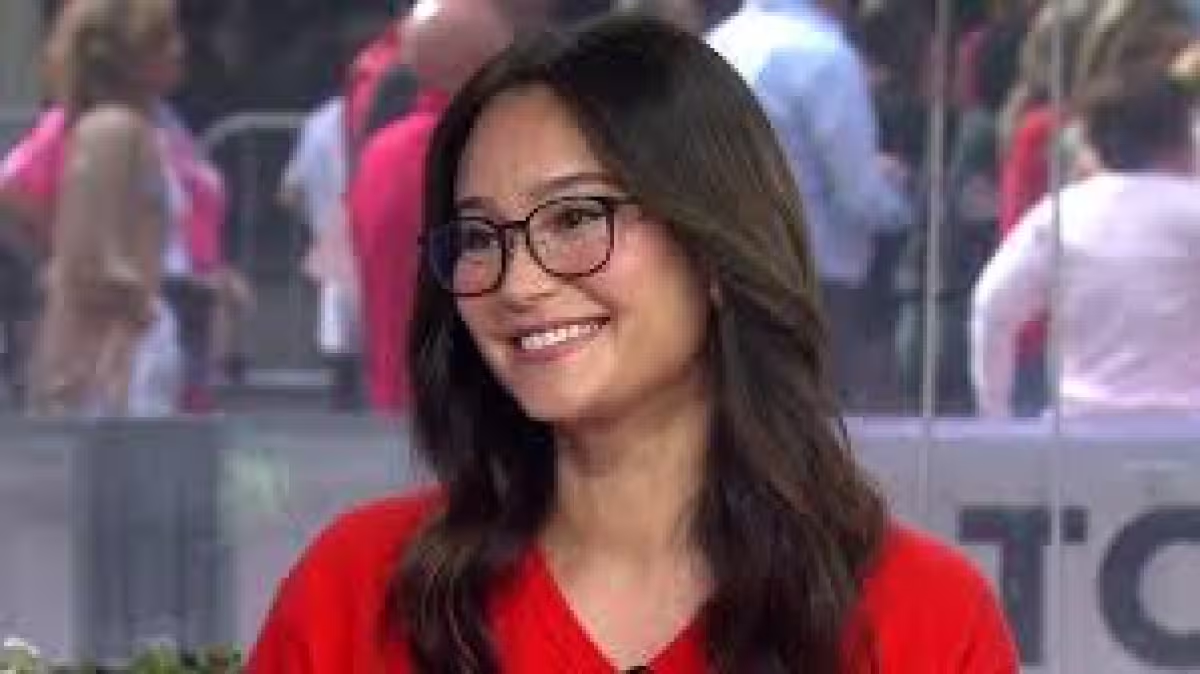
The friction in Heming Willis’s account is what separates a celebrity health update from a broader caregiving story. She repeatedly acknowledged that she occupies a privileged position with access, resources and connections — and yet she still felt unsupported and overwhelmed. "I thought I had to take it all on myself and that I was a failure because I needed support," she said bluntly. "We walk out with no support, and we’re asked to do so much where it’s not humane." Her admission undercuts any assumption that money or contacts remove the emotional and logistical burden of long-term care.
Heming Willis also framed her experience as common, not exceptional: "I think it shows that this is a universal problem," she said, adding, "And it’s not just my story, right? It’s so many people’s." She emphasized the improvisational nature of family caregiving: "And we’re all figuring it out as we go." Those lines connect the celebrity household to millions of unpaid family caregivers who face medical complexity with little formal guidance.
The practical gap remains visible. Heming Willis turned her frustration into a tool — The Unexpected Journey — but details about Bruce Willis’s day-to-day care arrangement are not part of her public account, and the household’s private management is not documented in the book beyond her advice for others. What readers can take away immediately is a roadmap for emotional triage and practical steps where none were offered at a medical visit: checklists, coping strategies and a call to ask for help rather than shoulder everything alone.
Her decision to publish, and to push for translations, answers the central question her experience raised: she chose to build the support she did not receive and make it available. For now, the most consequential next step is distribution — the Spanish edition and the multiple language versions mean more families can reach that makeshift roadmap without first consulting a search engine. Heming Willis’s book does not resolve the private details of Bruce Willis’s care, but it does aim to change what families walk out of neurology offices clutching — from a single page to a manual and a message: you do not have to do this alone.



