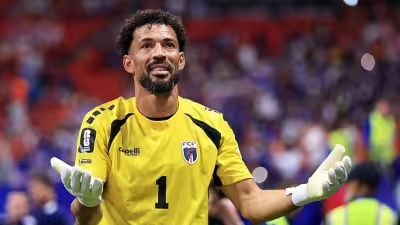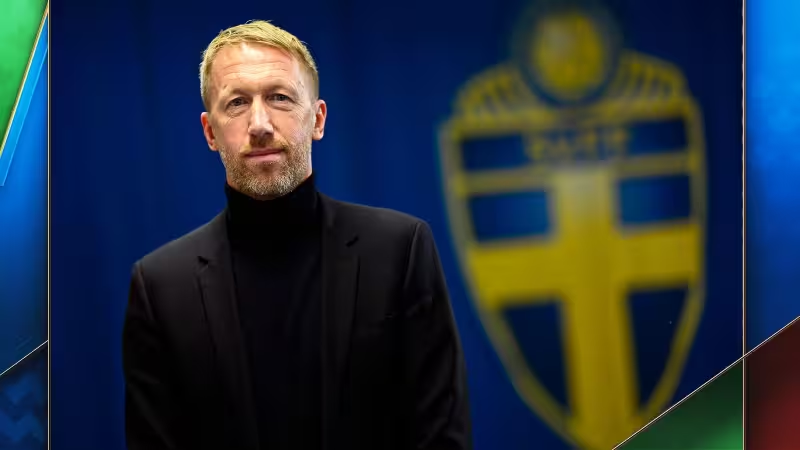
Graham Potter begins the conversation with the moment that still rattles him: Viktor Gyokeres’ 89th‑minute finish at the Strawberry Arena that sent Sweden to the World Cup — “the best night of my career,” he said, and added without affect how he celebrated, “Got f****** p****d!”
Potter’s line is small and blunt and it does the job — a manager who has had more than two months to live with a single, decisive minute. The goal did what a run of steady results could not: it sealed Sweden’s place at the tournament and handed Potter a career highlight after difficult club spells. Gyokeres’ strike was the number that changed everything.

That night matters now because Potter is the man charged with turning that moment into a campaign. He only took the Sweden job in October and has since extended his contract through 2030. The extension gives him time and authority to build, and he has already framed the assignment in personal terms: two of his children were born in Sweden, he said, and he promised he will sing the national anthem at the tournament. “I feel very Swedish,” he added, recalling seven formative years at Östersunds where, he said, “For seven years it was my home.”
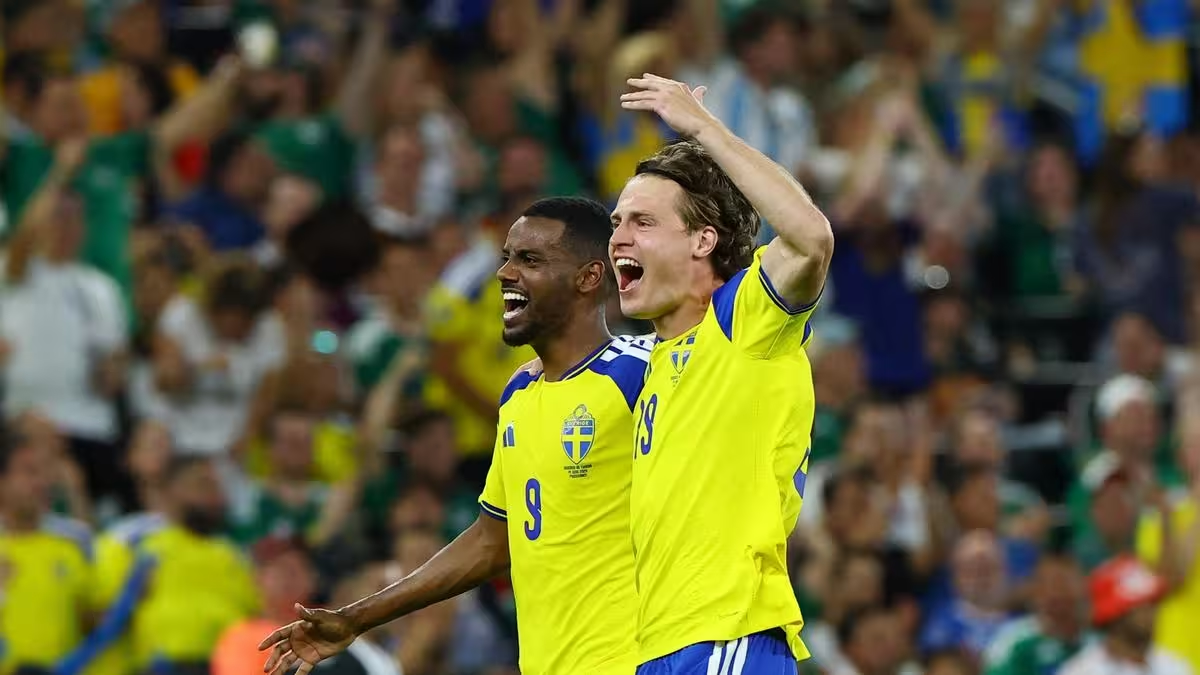
The route to the play‑offs underlines how unusual the qualification was. Sweden finished bottom of their qualifying group and relied on their Nations League performance to reach the knock‑out route that produced those four play‑off spots — an indirect path that magnifies the gamble and the gain of Gyokeres’ late winner. Potter has been candid about the strain of that route; even in mid‑match moments he admitted to thinking of the small, practical risks — “I'm thinking, 'That's yellow cards, that's problems.'” — the sort of detail that can wreck a final push.
Potter talks like a coach for whom Sweden is partly personal history and partly a repair shop. His seven years in Swedish football built his reputation and his ties to the country; his recent high‑profile club exits left him needing a reset. The play‑off night gave him both: a public redemption and a task. He laughed about replaying the scene for anyone who wants it — “If you go to YouTube, you can watch the Swedish commentary” — and the laugh carries a manager aware that a single image now defines a large part of his mandate.
That mandate comes with a live, unsolved problem. Sweden go to the World Cup for only their second appearance since 2006, and Potter must decide how to deploy his primary forwards. Viktor Gyokeres produced the dramatic finish; Alexander Isak remains the other focal point. Making those two function together across three group matches and any knockout ties is the tactical puzzle that will determine whether the play‑off remains a glorious anecdote or the hinge of a deep run.
What happens next is concrete. Sweden will travel to the World Cup with Potter under contract until 2030; he has both the time and the obligation to find a system that converts late moments into sustained performance. The victory at the Strawberry Arena gave him the headline — and, more importantly, bought him the space to solve the practical questions he now faces. How he pairs Gyokeres and Isak will be the single choice that tells us if that night was a start or merely the best night.