



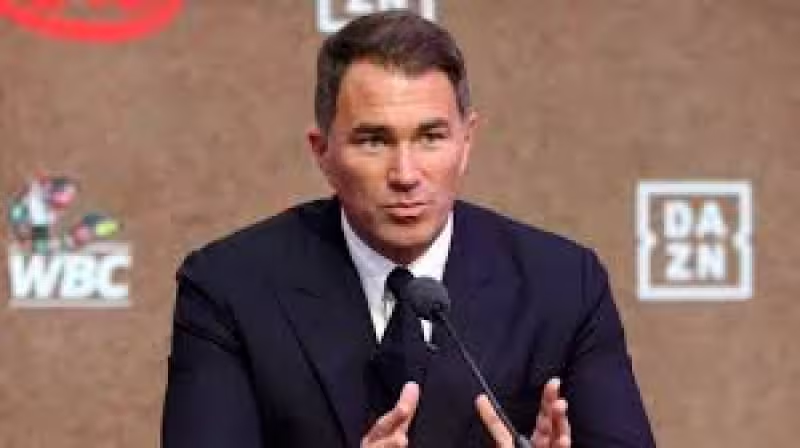
Promoter Eddie Hearn has confirmed the heavyweight showdown between Tyson Fury and Anthony Joshua is contractually required to be staged in the United Kingdom, even as organisers continue to weigh venues and target a date in November.
Hearn provided the clearest boundary yet on location when he said, "the contract for the fight stipulates the bout must take place in the UK." That line narrows one major variable for a fight being positioned as a massive stadium event and pencilled in for later this year.

Wembley Stadium is the favourite to host the fight because it is the largest-capacity venue in the UK, making it the leading candidate for a card expected to draw a seven-figure crowd. Tottenham Hotspur Stadium, which has hosted three major Ring Magazine events and was the site of Fury’s April win over Arslanbek Makhmudov, is also in the mix.
The location caveat settles a point that had briefly opened the door to an overseas option: a report by BoxingScene suggested Los Angeles’ SoFi Stadium had been in the running. That report sits uneasily with Hearn’s statement and the written contract requirement; the choice of a UK stadium now looks more a matter of which British venue will be secured and when the promoters will announce it.

Organisers are targeting November for the all‑British clash. The bout, agreed in a deal backed by Saudi Arabian boxing powerbroker Turki Al‑Sheikh and being organised under Ring Magazine’s banner, is also set to be broadcast on Netflix — a distribution detail that raises both revenue and scheduling stakes for stadium selection.
Practical timing for the fight hinges on warm‑up bouts. Anthony Joshua is due to fight Kristian Prenga on July 25 in Jeddah, Saudi Arabia. Fury has signalled he wants a warm‑up as well: he posted on Instagram that he will fight in Dublin on August 1, and Frank Warren’s Queensberry are hosting an event at the 3 Arena that night. There has been no confirmation Fury will appear on that Dublin card.
If both men come through their respective tune‑ups unscathed, the promoters expect to proceed toward the November meeting. That sequence explains the current cadence of decisions: secure a stadium with enough capacity for a marquee UK event, align broadcast and commercial partners, and then lock in an exact date once the fighters’ health and promotional logistics are clearer.
The friction remains between the public reports of international stadium interest and the plain language Hearn quoted from the contract. Practically, the presence of SoFi in reports signalled that promoters were assessing maximum revenue options worldwide; the contract’s UK stipulation moves the fight back into domestic logistics — ticketing, transport, and maximum attendance calculations — where Wembley’s size gives it a visible edge.
What comes next is straightforward but decisive: promoters must pick a UK stadium and set a precise date that fits Netflix’s schedule and the fighters’ calendars. The single most consequential unanswered question is which British venue will carry the fight’s commercial load and be formally announced as the host — Wembley or one of its high‑capacity rivals — and whether that announcement will arrive before or after the fighters’ August and July tune‑ups.



