




The United States dismantled Paraguay 4-1 in World Cup Group D play on Friday night, a result that was widely described as the most dominant game in U.S. World Cup history.
Numbers and names underlined the verdict: a four-goal margin, and Tyler Adams, Weston McKennie and Folarin Balogun each touted for having had the run of the grounds. Christian Pulisic, who started the match, was pulled at halftime with a calf issue, a development that immediately refocused attention from celebration to squad management under manager Mauricio Pochettino.

The scale of the victory gave the result weight beyond the scoreline. A 4-1 win in World Cup play is rare for the U.S. at this stage; the manner of the performance — control in midfield, forward thrust and multiple threats — invited talk that this was more than a routine group-stage day. Yet the match was not a bid to set the record for the most goals scored in a World Cup game; it was judged on how thoroughly the U.S. imposed itself.
Context matters. Framing the outcome as unusually dominant for an American side at a World Cup is defensible — the players named above ran games and finished chances — but that interpretation collides with a simpler read of the opponent. Paraguay did not produce sustained pressure, and that unevenness between teams complicates any immediate elevation of the U.S. performance to historic status.
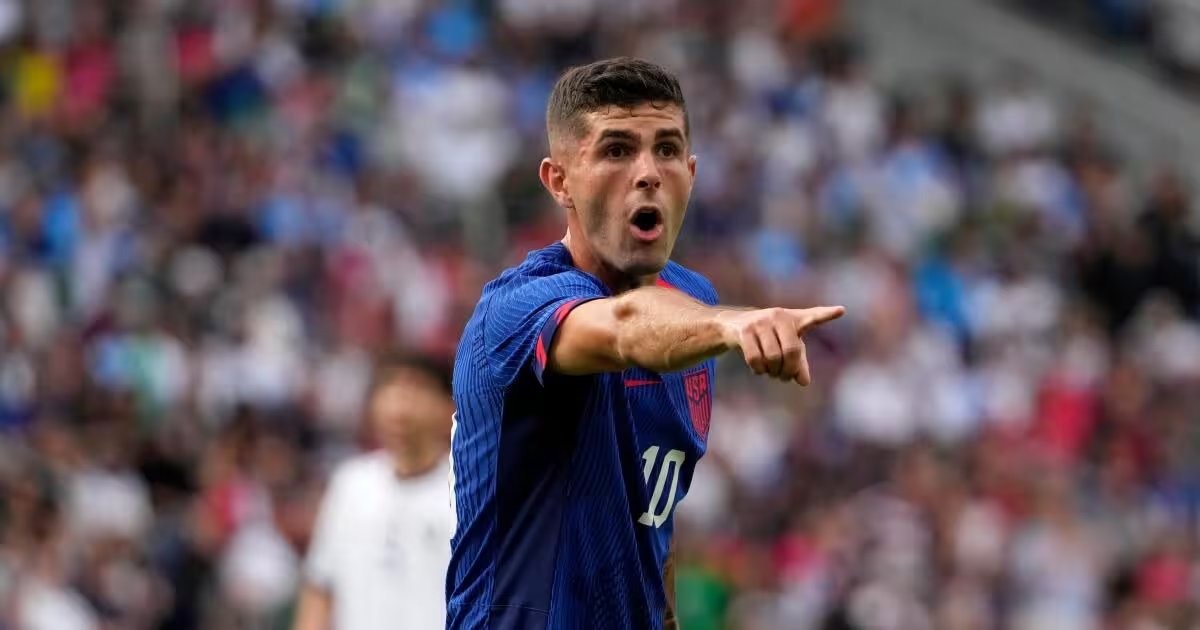
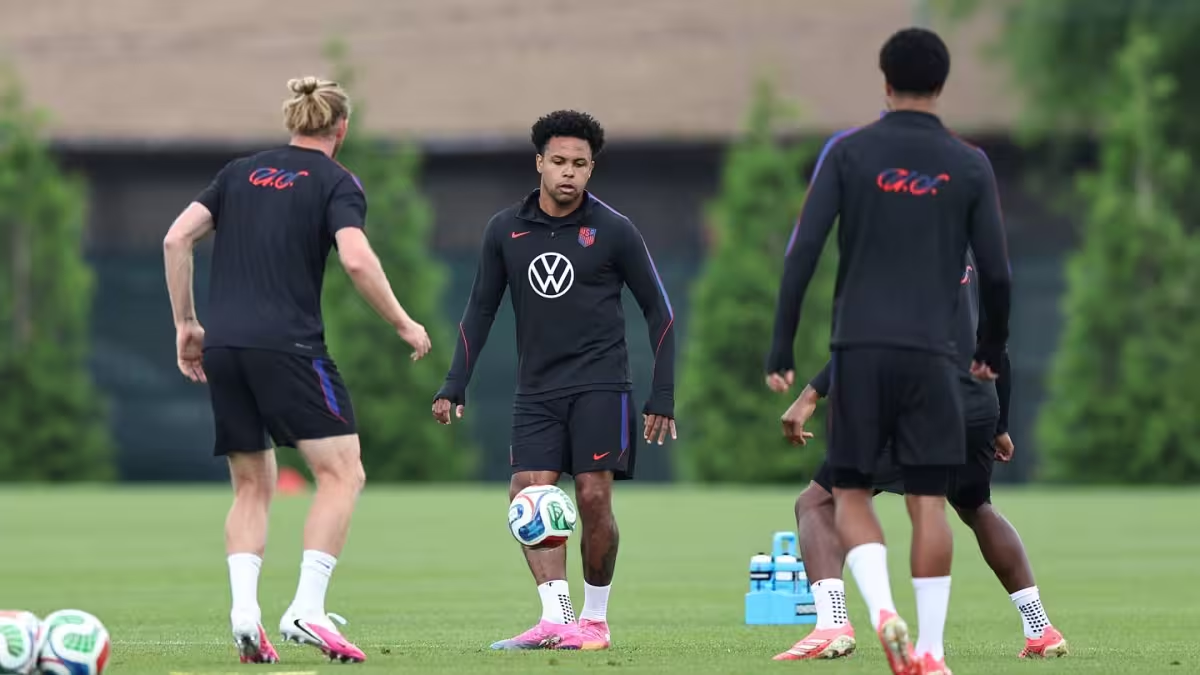
That friction — dominance on one side, weakness on the other — is the central puzzle of what the result proves. If Paraguay were a team on a bad night, the U.S. output says less about how they will handle real tests; if Paraguay are genuinely outclassed by quality opponents, Friday night was a rare and clarifying chance for the Americans to show what they can do when everything clicks.
Answers could come quickly. Australia, which beat Turkiye 2-0 on Saturday night, appears a stiffer challenge. The Socceroos won with just 28 percent possession, a defensive example that succeeded despite not dominating the ball, and they started Patrick Beach as a surprise goalkeeper against Turkiye — tactical choices that point to a compact, pragmatic side rather than a free-flowing one.
The U.S. and Australia are scheduled to meet in Seattle on Friday afternoon. That match shifts the context from declaration to test: sustaining Friday’s form would require the Americans to break down a well-organized Australian team that has shown it can win without controlling possession. Pulisic’s calf issue adds urgency; his halftime removal against Paraguay means Mauricio Pochettino faces a selection decision that could alter the U.S. approach — more reliance on midfield engines like Adams and McKennie, or a reshuffle to cover Pulisic’s absent balance.
The conclusion the facts support is immediate and narrow. The 4-1 scoreline and the players who stood out give the U.S. a substantive boost in confidence and table position, but the victory does not settle the question of tournament pedigree. The true measure arrives in Seattle: if the Americans can replicate control and cutting edge against Australia’s low-possession, organized setup — and do so without Pulisic, or with him fit and effective — then Friday night will look less like a one-off and more like the start of something sustainable.



