



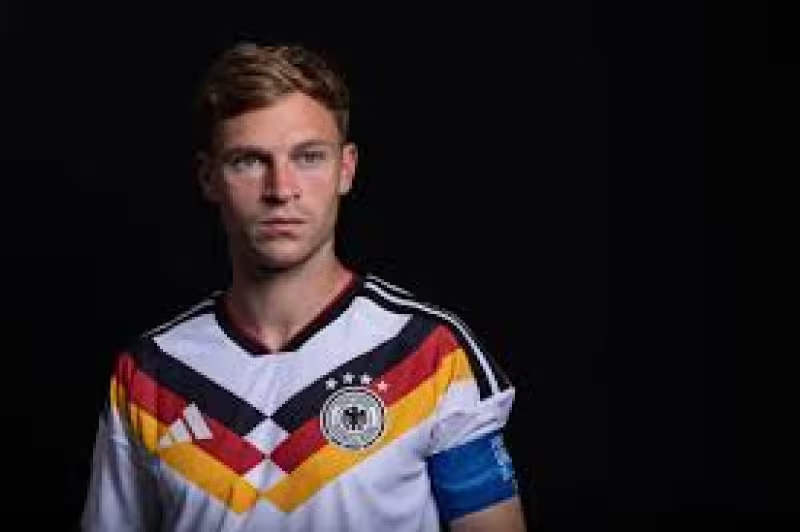
"We want to make Germany proud again. That’s our biggest goal. We know that we are representing our entire country here," Joshua Kimmich said, placing the aim for this World Cup in the plainest terms: restore pride for a nation that has watched its team fall short at the last two tournaments.
As captain, Kimmich said the moment feels different. "You can feel that playing a major tournament for Germany is something completely different," he added, noting that his role has "become a bit more special." He insisted there is "a lot of positive energy within our squad," and framed the competition as an opportunity rather than a test: "We have a huge opportunity to create excitement and joy in Germany."

The weight behind those words is straightforward. Germany arrives at this World Cup after consecutive group-stage exits in 2018 and 2022, outcomes that reshaped expectations and set up a season of rebuilding. Kimmich leans into that history rather than avoiding it: he says playing with "heart, determination and passion" might allow the team to transfer its internal energy into something that reaches the whole country — "and provide a similar impulse to the one created by the 2006 World Cup." He remembers that tournament firsthand: "I experienced that World Cup as a kid and was able to witness it firsthand," he said, invoking the memory as the model for what the national team could spark again.
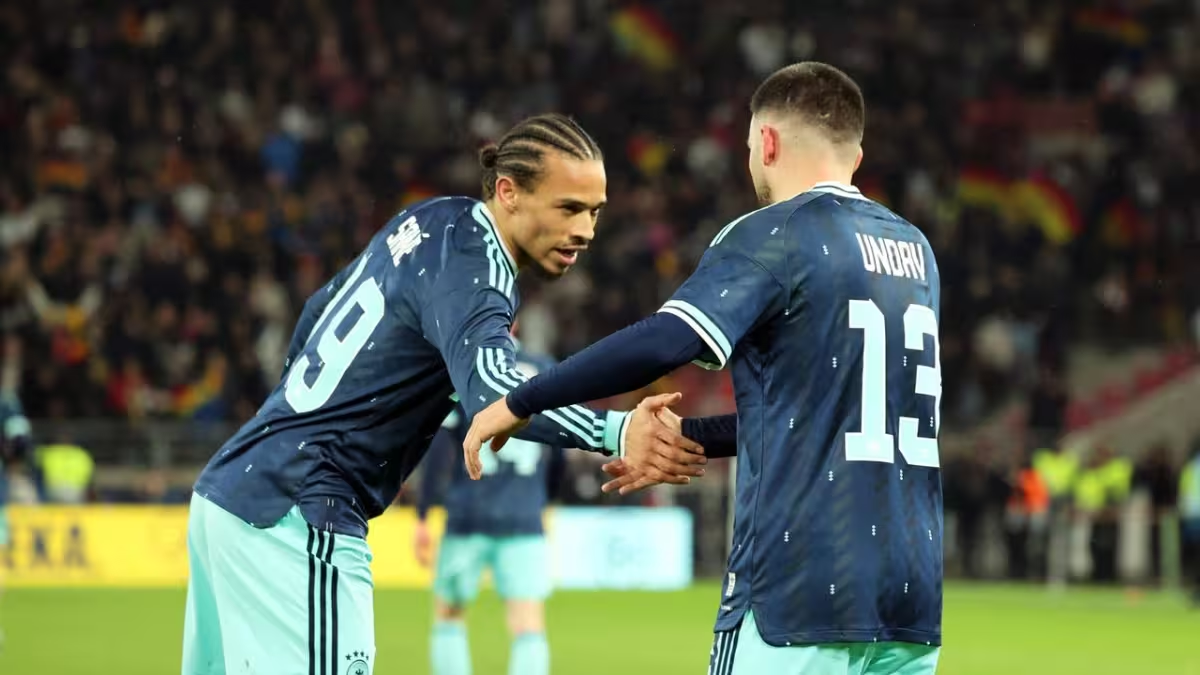
Still, Kimmich did not promise a tidy turnaround. "There will also be moments when we suffer on the pitch. Knowing that the country is behind us can help us enormously," he said, acknowledging the inevitable setbacks of tournament football. He warned that doubts and doubters will remain until the team shows progress, and he pledged to do everything he can to help people believe in the squad again — a pledge aimed as much at skeptical supporters as at his players.
That mixture — visible confidence inside the camp and a recognition that belief must be earned outside it — is the tension that will determine how the week and then the tournament read. Kimmich insisted the squad senses the stakes personally and nationally: representing the whole country, he said, makes the tournament feel unlike a club season. If Germany can channel its declared positive energy and Kimmich’s galvanized captaincy into consistent performances, the country’s mood could follow. If not, the conversations that began after two early exits will harden into a longer question about a generation yet to deliver.
The simple, concrete test now is on the field. Kimmich has put the ambition in public language and tied it to a memory many Germans still carry from 2006. Whether his leadership and the squad’s upbeat dressing-room atmosphere translate into the on-field progress Germany needs is the immediate question facing the team and the country — and the only sure way to make that opening claim true.



