



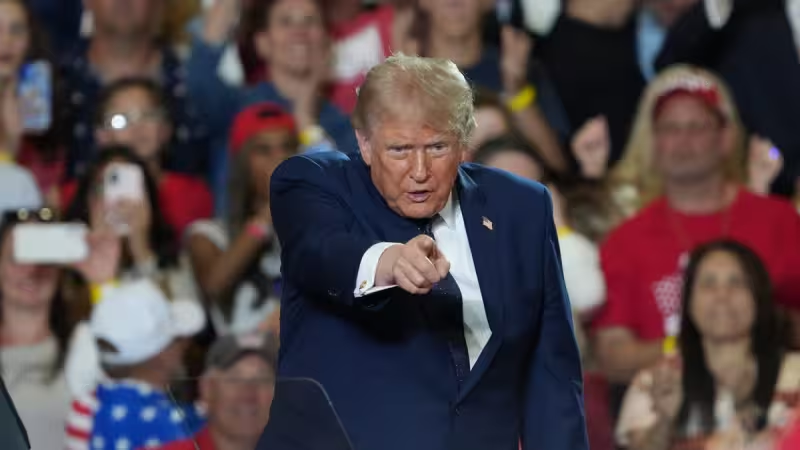
President Donald Trump’s approval rating fell to 39% in new NBC News polling released June 14, a second-term low that landed on his 80th birthday and offered a fresh snapshot of his standing five months before the midterm elections. The poll also found 49% of registered voters wanted Democrats to control Congress, compared with 44% who preferred Republican control.
The survey of 2,400 registered voters, conducted from May 29 to June 7 with a margin of error of plus or minus 2 percentage points, shows Trump still has a firm core inside his party even as his broader numbers weaken. Republicans remained in close fight for Congress, but the poll placed them behind Democrats in the contest for control, with 7% of voters still unsure.



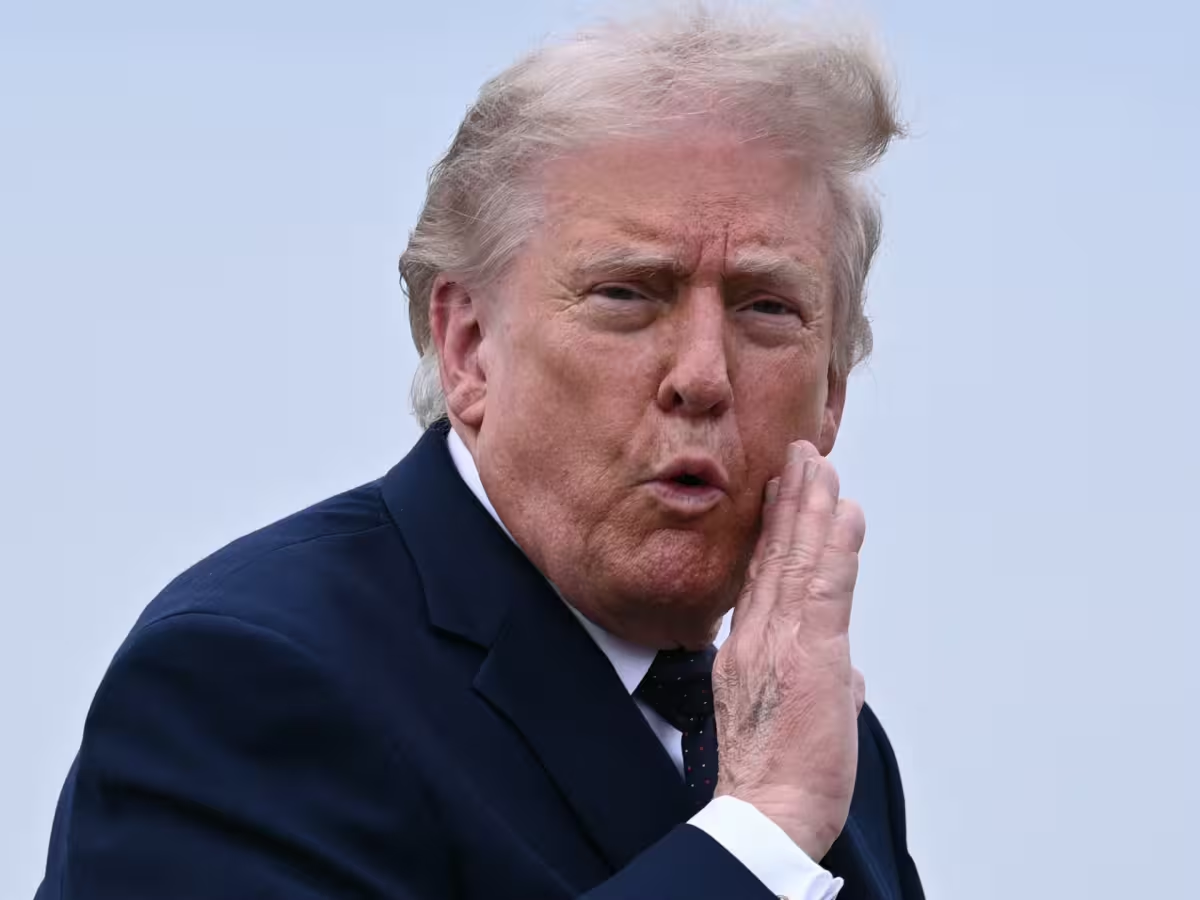
What makes the new readout harder for Trump’s allies to dismiss is that the decline is not limited to the general electorate. /Ipsos polling from June 3 to June 8 found his approval among rural Americans at 50%, down from 60% in February 2025, underscoring erosion in a bloc that helped power his White House victories in 2016 and 2024. That drop was tied to disapproval over his handling of the U.S. economy and the cost of living, two issues that remain central as prices for gasoline and groceries stay elevated.
Even so, the numbers do not point to a collapse. Bill McInturff, whose words summed up the Republican mood, said these are rocky numbers for Republicans but not catastrophic. The NBC polling also showed that in March, 88% of Republicans approved of Trump’s presidency and 63% strongly approved, a reminder that his party’s loyalty has not vanished even as his overall support slipped to a fresh low.
The friction for Republicans is that the president’s weakest numbers are showing up just as control of Congress is again on the line. Democrats and Republicans were positioned for a narrow fight when the poll was released, and Trump’s rural backing — once one of his sharpest advantages — has now fallen to its lowest point in the available polling. The next hard test is November, and the unanswered question is whether a softer Trump can still carry enough Republican voters to protect the party’s slim majorities in the House and Senate.



