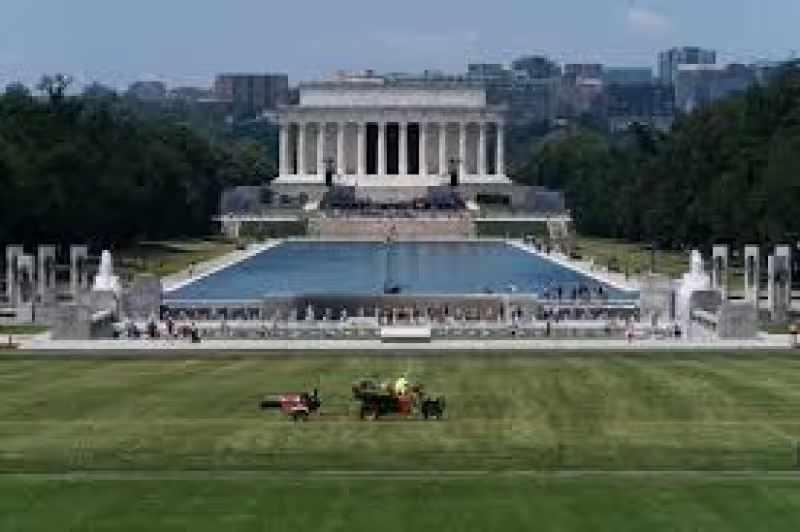
Oregon and Washington will not take part in the Great American State Fair when it opens in late June 2026, adding to a growing list of states declining to back the Trump administration’s planned semiquincentennial showcase on the National Mall.
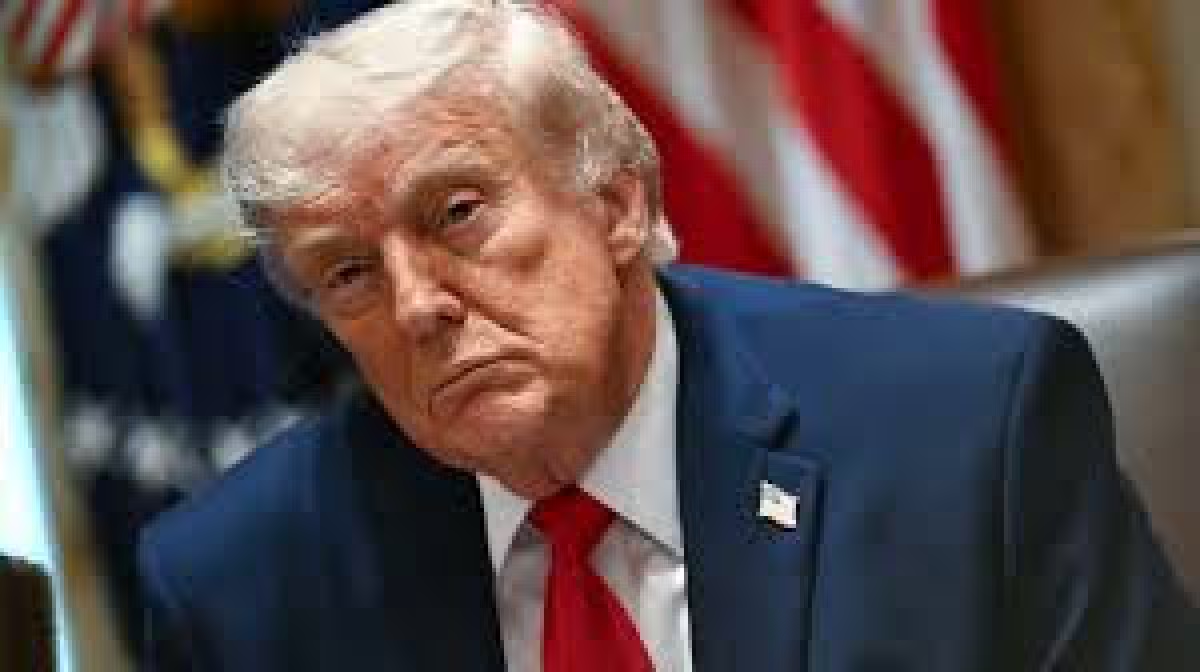
The two states’ decisions sharpen an emerging problem for the event, which is scheduled to begin in late June and run past the Fourth of July weekend as part of the America 250 celebration in Washington, D.C. Trump is slated to headline the June 24 kickoff event, and organizers had described the fair as a modern-day World’s Fair.

Oregon said cost was a major factor. Luke Harkins said the state would not participate because of the expense of taking part and because the fair, as presented, appeared to be becoming more partisan. Oregon’s office said the shipping alone would cost roughly $70,000, a figure that helps explain why states are balking as the event moves closer. Harkins also said the governor would still be celebrating America’s semiquincentennial in Oregon through America 250, which the state describes as nonpartisan.
Washington cited both money and fiscal strain. Denny Heck said the state was facing a very difficult fiscal situation and, given the significant costs of participating, would focus instead on local efforts in Washington state for the commemoration. That leaves the fair’s organizers with one of the central questions facing the project: how to fill state pavilions if more states continue to step away.
The answer has not been made public, though a spokesperson for Freedom 250 said all states will still be represented even as multiple states decline to send resources or staff. According to a report, Massachusetts, Illinois, North Carolina and Connecticut are also declining to participate, while Pennsylvania had not decided as of Thursday. In Illinois, a museum in Peoria has stepped in to help build out the state exhibit, suggesting at least some displays may be assembled without direct state government involvement.
The opt-outs matter because the fair is meant to be a centerpiece of the 250th birthday celebration, not a side event. But the political divide around it is already visible, and the participation gap is starting to look like a budget and messaging problem at the same time. If the remaining undecided states follow Oregon and Washington, organizers may still call it a national fair, but they will have to show that in the pavilions themselves.