



The Cubs should explore trading Seiya Suzuki before the trade deadline, proponents say, because the club can still convert an expiring right-handed bat into meaningful assets now rather than risk receiving only a draft pick if he leaves in free agency.
That argument rests on three simple facts: Suzuki remains a scarce commodity as a potent right-handed hitter; his contract situation makes a trade more feasible for acquiring established help; and Chicago needs to extract value from at least one of its players on expiring deals. Suzuki drew trade interest last offseason for the same reason — quality right-handed bats are thin on the market — and that dynamic has not changed.

On the field, Suzuki’s results have swung inside a single season. He missed the start of the year with a sprained right knee and did not debut until April 10. He opened strong — a wRC+ 81 percent above league average in April — cratered in May at 47 percent below league average, and has rallied back to well above league average in June. His overall OPS sits at.696, and his defensive metrics are by far the best of his career. He turns 32 in August.
Contract mechanics sharpen the trade case. Suzuki’s remaining salary will be less than $6 million at the deadline, and the Cubs could choose to include cash in a deal to pay down part of that salary. That flexibility makes it more realistic that a contender would surrender meaningful assets in exchange for him. By contrast, if Chicago keeps Suzuki through the season and he departs in free agency, the club would receive only a draft pick as compensation even if it extends a qualifying offer.
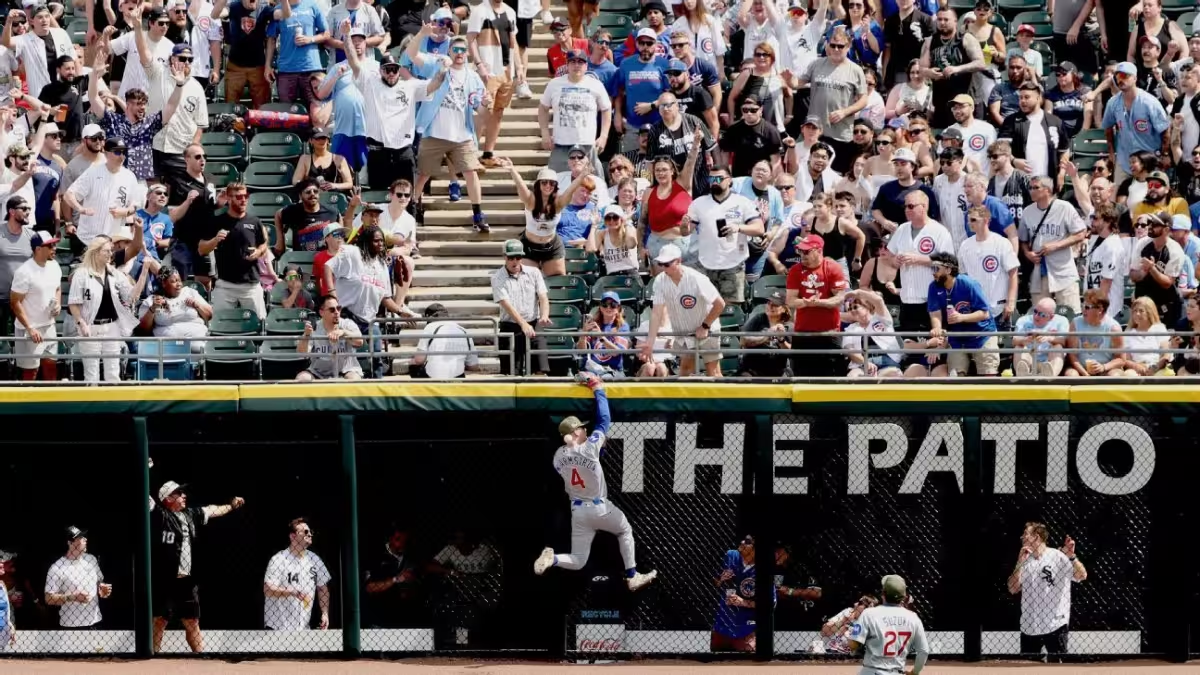

Practical consequence: trading Suzuki could return considerably more value than the draft compensation the Cubs would get if he signs elsewhere after the season. The team already has five prominent players on expiring contracts — Suzuki, Ian Happ, Shota Imanaga, Jameson Taillon and Matthew Boyd — and front-office voices have argued the club needs to convert at least one of those assets into roster help, particularly pitching.
There is a clear friction point. Suzuki holds a full no-trade clause, which means any trade would require his explicit approval. That control alters every negotiation. Teams that might meet Chicago’s asking price would also need to clear the player’s stamp, and Suzuki’s own preferences matter: he has indicated he does not want to serve as a designated hitter, a factor that will shape which clubs are realistic partners.
Finding a partner willing to both value Suzuki highly and secure his approval is the open question. A deal that includes cash to offset salary could widen the field of suitors, and Suzuki’s midseason rebound and elite defensive numbers strengthen the Cubs’ bargaining position. But performance volatility this season — the sharp April–May–June swing — gives potential trade partners pause about paying premium assets for sustained production.
The immediate timeline is straightforward. The next definitive decision point is the trade deadline. Between now and then, Chicago can test the market, solicit offers and try to identify a suitor whose package and clubhouse role meet both club and player requirements. If the Cubs do nothing, they risk Suzuki leaving as a free agent this winter for only draft-pick compensation; if they move him now, they could address roster needs in time to impact the pennant race.
Which path the Cubs choose will boil down to two linked questions: can they find an offer that improves the club’s trajectory, and will Suzuki approve the move? Those are the facts that will determine whether an expiring asset becomes a practical source of help or a missed chance to reshape the roster before the deadline.



