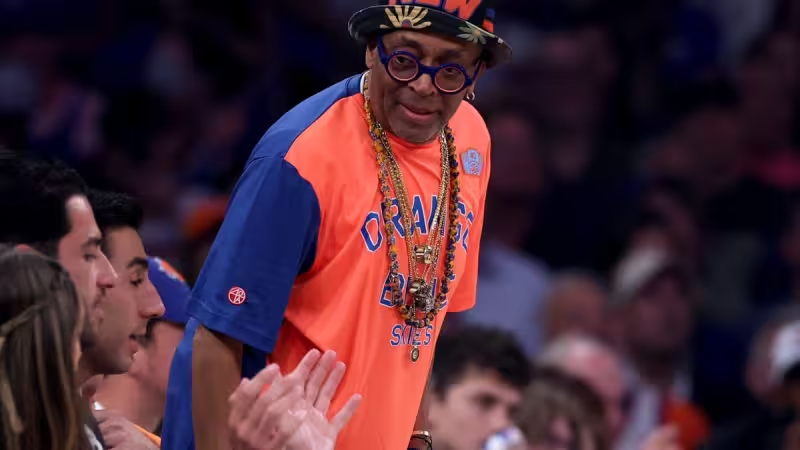
He left the Cannes Film Festival and boarded a plane in the middle of a film calendar to make it to Game 4 of the Eastern Conference Finals — the kind of move that tells you everything you need to know about who Spike Lee is. For decades he has been more than an audience member at Madison Square Garden; he is a branded presence, a season-ticket stalwart who has reportedly spent close to $10 million on tickets and skipped only one game because of international obligations.
The headline fact now attached to that presence is a concrete number: Spike Lee has an estimated net worth of $60 million. The figure matters because it ties a very public personality — the man fans see in the front rows, animated and unfiltered — to a private life built on filmmaking, teaching, commerce and property. His courtside reactions and his feisty interactions with rival players have made him beloved in NBA culture and occasionally controversial; they are as visible as his name on a director’s credit.

Lee broke into film in the 1980s with a shoestring directorial debut, She's Gotta Have It, and established a shorthand that audiences still recognize: he cast himself, centered Black life and culture, and stamped his work as "A Spike Lee Joint." Movies such as Do the Right Thing, Malcolm X, He Got Game, Jungle Fever and Mo’ Better Blues made his voice unmistakable, and in 2019 he won an Oscar for Best Adapted Screenplay for BlacKkKlansman. Behind the camera he built 40 Acres and a Mule Filmworks, which has produced more than 35 films.
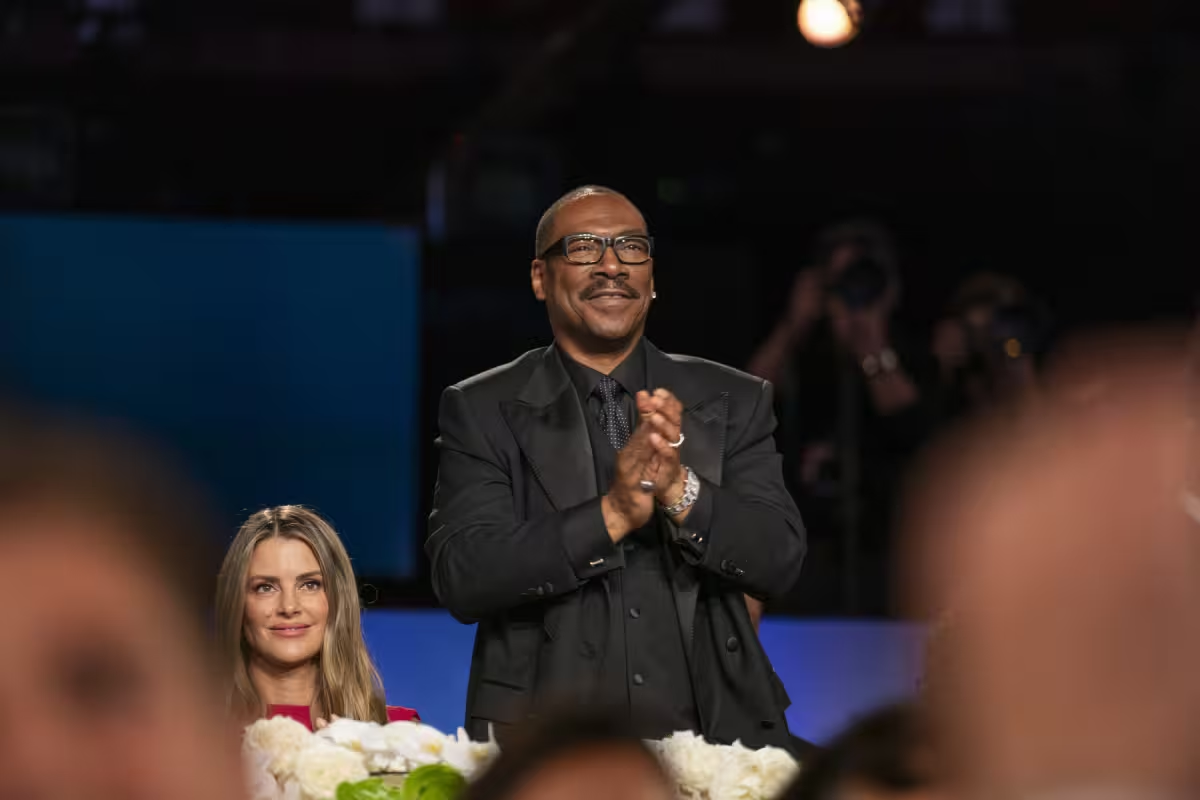
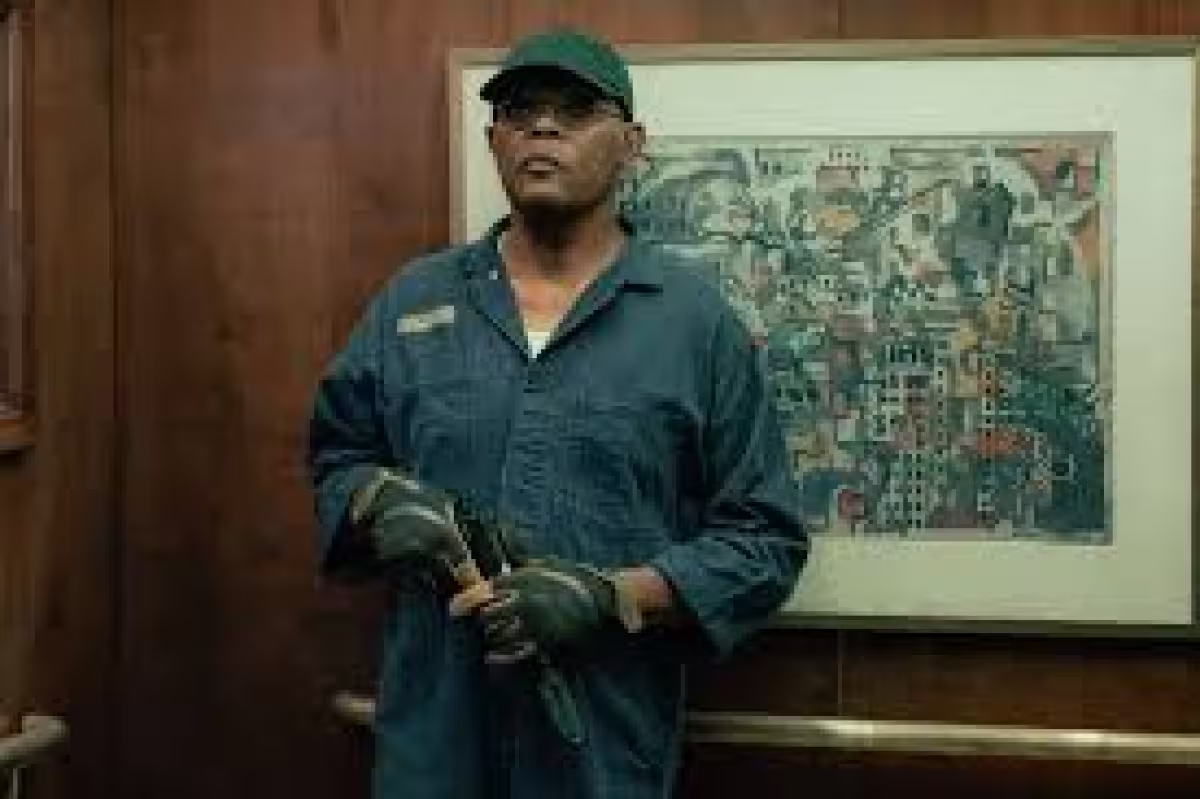
That filmography is only part of the ledger. Lee is a tenured professor at NYU's Tisch School of the Arts, has directed commercials for major brands — even appearing alongside Charles Barkley and Samuel L. Jackson in Capital One spots run during the NCAA tournaments — and has signed a deal with Netflix to develop new projects. His real-estate holdings underline the scale of his wealth: a historic Manhattan townhouse, a Brooklyn production studio and a Martha's Vineyard estate, the latter built in Oak Bluffs near Farm Neck Golf Club. He has said he once cut through his yard to talk to former President Barack Obama on the course.
That mix — Oscar winner, professor, commercial director, studio owner, longtime Madison Square Garden habitué — explains why Knicks fans treat him almost like part of the team. His visibility at games is not a side hobby; it is an extension of his public brand. Still, the same visibility creates friction. Animated reactions that enliven broadcasts also land him in headlines. His exchanges with opposing players and fans fuel debate over whether a courtside persona has crossed a line or simply colored the modern atmosphere of NBA arenas.
What the $60 million estimate does not reveal is the precise accounting: how much of that sum comes from film profits, how much from real estate, how much from advertising and teaching. That gap matters because it separates a cultural icon from the business decisions that sustain him. The known facts — a longstanding Cannes-to-MSG devotion, a studio in Brooklyn, a Netflix output deal, and decades of ticket purchases — suggest a diversified portfolio, but the proportions remain unreported.
So, who is Spike Lee? He is a filmmaker whose work shaped conversations about race and art, a professor who trains future storytellers, and a hoops obsessive whose courtside presence is part spectacle, part ritual. He has built enough career and capital to own homes in Manhattan and Martha’s Vineyard, to run a production company that counts more than 35 projects, and to keep showing up at Madison Square Garden. Given his Netflix deal and his tenured role at NYU, expect him to remain active behind the camera — and, in the near future, sitting near the hardwood when the Knicks need him most.