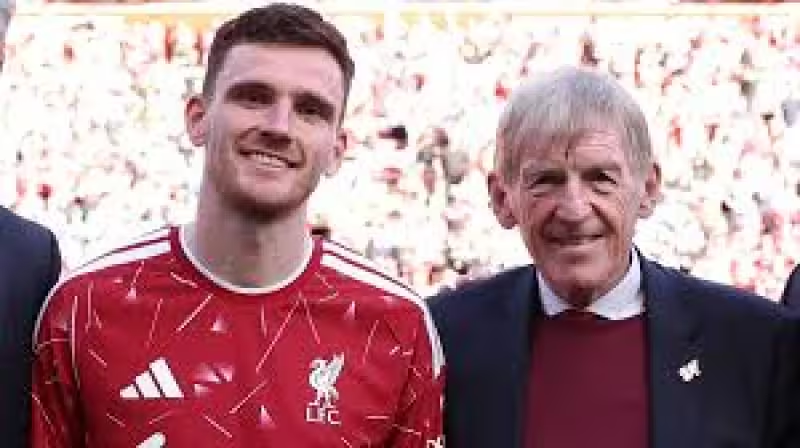
Andrew Robertson organised a game of Traitors for the Scotland squad during their buildup camp in the United States, saying it was a small intervention to stop players spending too much time alone and to get quieter voices involved. "It was something we had done before and decided to do again because we can spend a lot of time in our rooms or on our own," Robertson said.
The 32-year-old full-back described the game as part diversion, part team management: "It is not easy being away from your family, your kids." Robertson said the activity "was something to try and get people out of their rooms, give quieter people a voice and give newer players a voice." He added: "That was last week, that is what took up our time after training was done."

Robertson framed the decision in the hard arithmetic of tournament life. Scotland had two weeks between camp and their first match — a stretch, he said, that could "probably drag." "It is just about trying different ways of making time pass quickly because we knew these two weeks would probably drag," he said. "Whether it has worked or not, I am not sure, but we certainly enjoyed it."
The game was not a one-off in Robertson’s ledger: he devised a Traitors exercise during a training camp in Turkey in November before qualifiers against Greece and Denmark, and reintroduced it in the United States during the buildup to Scotland’s World Cup opener. The squad used the lighter moments after training to remove pressure from hotel rooms and create informal chances for newer faces to be heard.
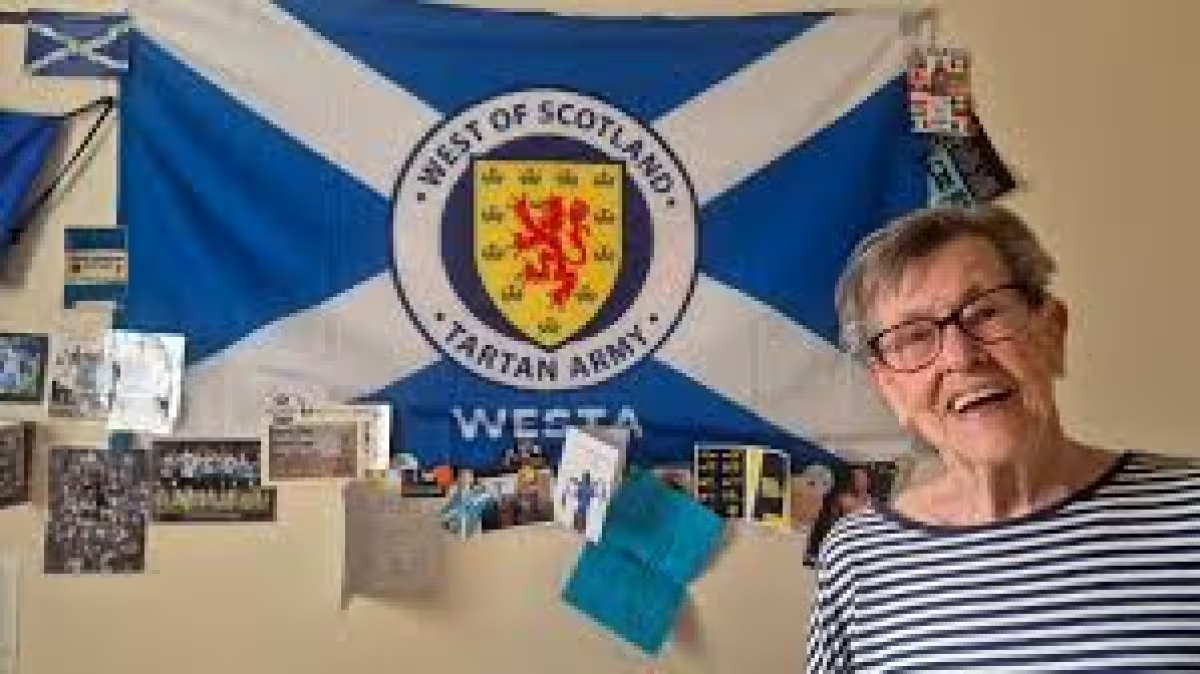

That informal leadership sits alongside a different message from manager Steve Clarke, who has repeatedly signposted a collective approach. Clarke said bluntly, "I have 26 superstars here," and warned that "to try and put so much on to one person is not fair." His words complicate any tidy narrative that Scotland’s fortunes will hinge on a handful of leading names; the manager insists the squad must distribute responsibility even as Robertson and others try to knit the group together off the pitch.
Clarke also made clear that Scotland are treating their opponent with respect. "It is important we respect the opposition," he said, noting that the coaching staff "have watched Haiti very closely over the last six months, since the draw was made." He added that "since they qualified they have improved the squad by bringing players in that have made them better," and warned that "they have very dynamic players, especially the attacking players, so we have to be careful." Haiti enter the match ranked 83rd in the world.
Scotland’s preparations included a brief injury scare: Scott McTominay missed training on Thursday with a stomach complaint but was back at work on Friday and Clarke reported he was in "perfect" condition. Those small interruptions are the sort of detail managers track when trying to turn a close-knit camp into a team that can operate under the stress of a first World Cup game in 24 years.
The lingering question is simple and immediate: did Robertson’s game — the laughter, the conversations and the chance for quieter or newer players to speak up — make the squad any sharper when the whistle blows? Robertson himself admitted uncertainty: "Whether it has worked or not, I am not sure," he said. What is certain is the setting: Scotland’s first World Cup match since 1998, against Haiti in Boston on Saturday. The test of those off-field minutes will come when they need to turn them into on-field moments that matter.