



How many subs in World Cup? For 2026, teams name a preliminary list of between 35 and 55 players (including four goalkeepers) by May 11, then submit a final squad of 23 to 26 players by June 1; those final rosters were released by FIFA on June 2 and the tournament opens June 11.
The headline numbers are simple: 48 nations trimmed larger preliminary pools into final squads of between 23 and 26. Those finals must include at least three goalkeepers. The preliminary lists had to contain at least four goalkeepers, ensuring depth before teams lock in their choices.

Injury replacement rules are the more consequential detail. An outfield player who suffers a serious injury or illness can be replaced only before a team’s first match — no later than 24 hours before kickoff — and only by a player from that nation’s preliminary list. FIFA’s Medical Committee requires a written medical assessment before approving any such swap, and if approved the change is permanent: the injured player is out for the rest of the tournament and the incoming player inherits the injured player’s jersey number for the duration.
Goalkeepers sit outside that lock-in. A goalkeeper who gets hurt can be replaced at any point during the tournament, and the replacement does not even have to come from the original preliminary list. That exception exists alongside the rule that teams must carry at least three goalkeepers on their final rosters.

Those differences matter because final rosters were due on June 1 and teams across the 48-nation field now face immediate choices about how much risk to accept. An outfield replacement must be made before a team’s first match if it is to be permanent and final; after kickoff the roster is locked in and outfield players cannot be swapped out for the remainder of the World Cup.
The practical consequence is straightforward and sharp. Teams can protect themselves by naming a larger final squad — up to 26 players — or by ensuring their preliminary lists include ready replacements for likely positions. But if a key outfield player is injured after that 24-hour-before-first-match cut-off, the squad has to cope with the loss. The incoming player rule and the permanence of approved swaps remove any later do-overs for outfield slots.
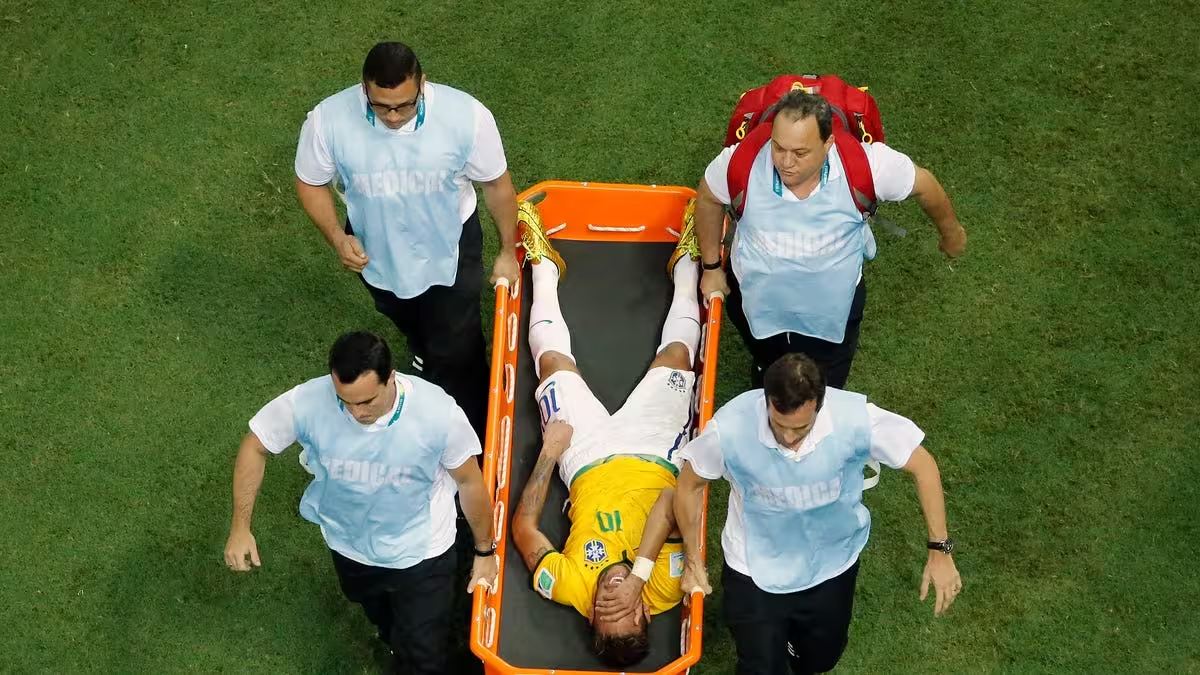
History shows why federations pay attention. Brazil’s 2014 tournament loss of Neymar after he fractured a vertebra in the quarterfinals is often cited as an example of how costly a late loss can be once squads are committed. Conversely, goalkeeper contingencies have been handled at the last minute before: in the 1970 World Cup, England replaced an ill goalkeeper at short notice — an early reminder that the position has long carried special treatment.
The friction in FIFA’s approach is clear: outfield players are locked after the first match, while goalkeepers can be replaced at any stage. That split forces teams to decide how to balance immediate tournament needs against the uncertainty of injuries during preparation and the opening rounds.
What comes next is a simple operational test. Teams must finalize and submit their decisions by the deadlines already passed or impending: preliminary lists were due May 11, final rosters were due June 1 and published June 2, and the first match for the tournament opens on June 11. The outstanding question that will shape lineups on the field is which, if any, injured outfield players federations will choose to replace before their first match and how those choices change group-stage dynamics.



