
Bret Johnsen keeps a deliberately low profile—about 3,000 followers on X and no public posts—yet he has been thrust into the glare by a single financial event: SpaceX’s $75 billion IPO that pushed his stake to more than about $1.4 billion.
That sudden change in fortune has turned a longtime behind‑the‑scenes executive into a public face for a company whose valuation now rests as much on future engineering promises as on current cash flow. SpaceX set aside 30% of its shares for retail investors in the offering, an unusually large allocation that hands everyday buyers a direct stake in whatever comes next—and makes Johnsen one of the executives expected to translate technical ambition into a financial story for them.

The numbers behind the shift are stark. SpaceX reported $18.7 billion in revenue last year; the IPO valued the company at $75 billion; Johnsen’s holdings exceeded about $1.4 billion as a result. Those figures give weight to what Johnsen has spent a decade preparing the company to say publicly and privately: "We’re now lowest cost per kilogram to space ever in the industry," he told investors, and he has argued repeatedly that assured access to launch is central to SpaceX’s business: "I tell people it’s hard to be a space company and not have assured access to space."
Johnsen’s elevation to CFO in 2011 was itself an act of preparation. Elon Musk brought him on that year "to guide SpaceX through its IPO," and Musk praised him at the time: "His experience will be invaluable to SpaceX as we implement the financial standards and processes needed to allow for the possibility of becoming a public company." Johnsen’s work over the last decade extended beyond launch economics—he helped steer the company’s all‑stock merger with xAI and brokered compute arrangements with Anthropic for SpaceX’s Colossus data centers in Memphis, Tennessee—moves that framed SpaceX as both a space and an infrastructure company ahead of the offering.
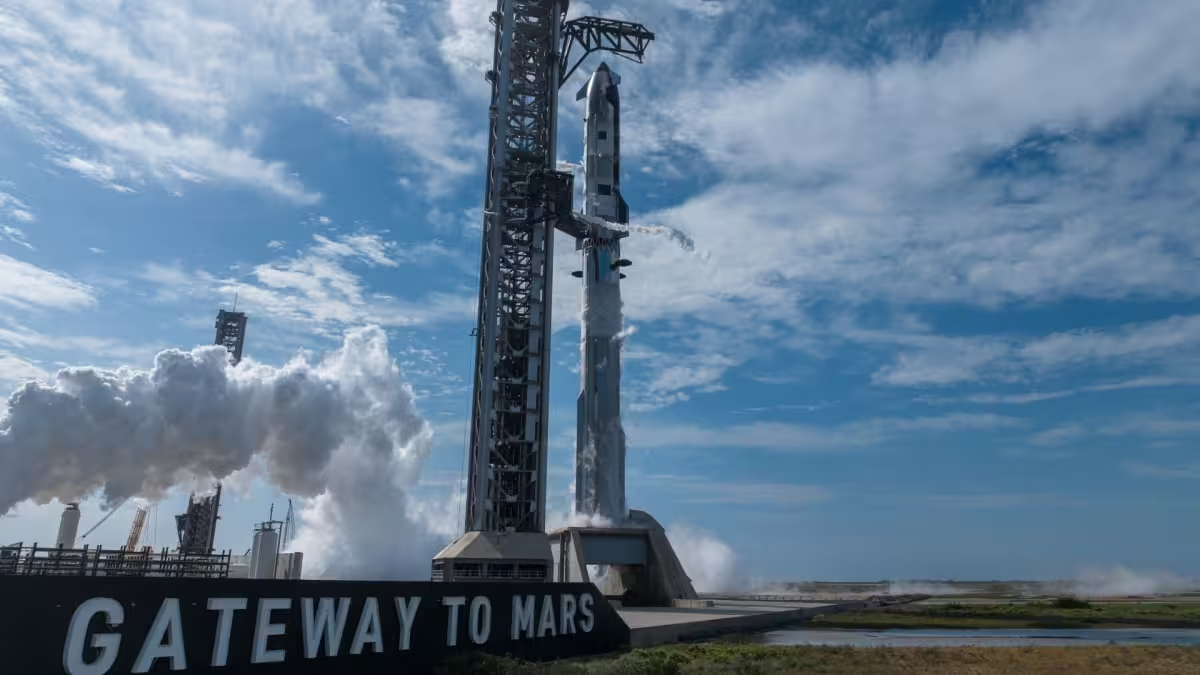

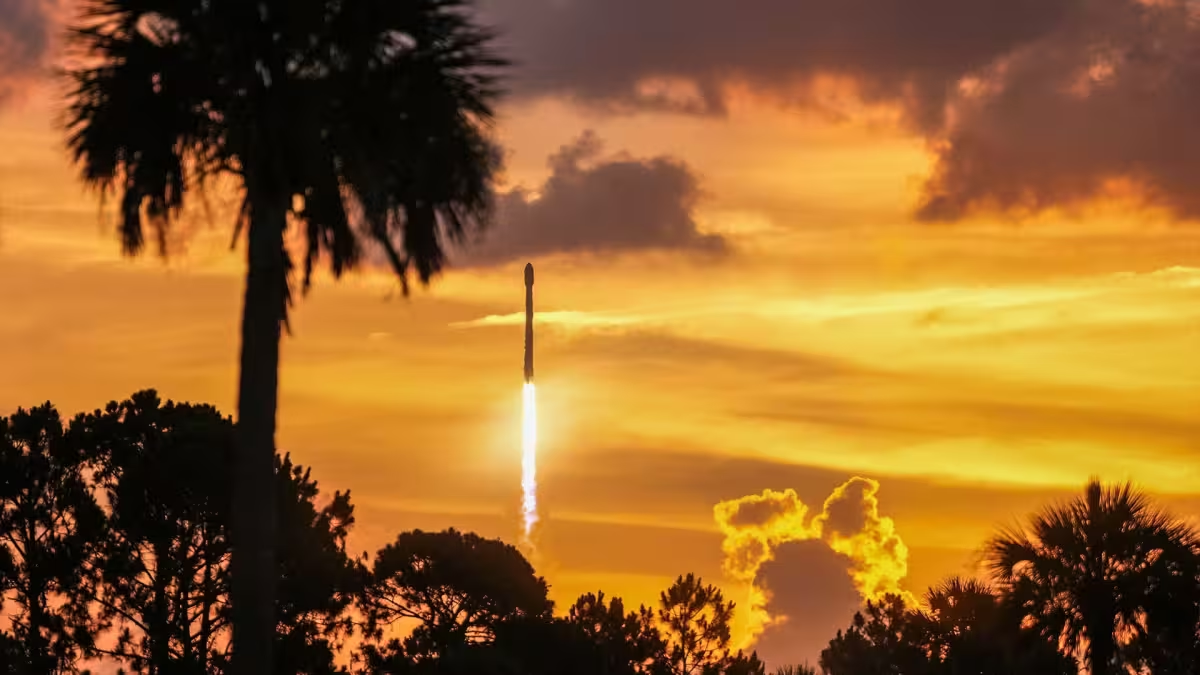
Even with that record, the company's next chapter depends on outcomes that remain uncertain. SpaceX positions Starship as the centerpiece of its future: Johnsen has described Starship as what he called "the holy grail of rocketry" because of its promise of rapid reusability. The prospect matters to investors because reusable, high‑cadence vehicles are the mechanism for dramatically lowering costs and enabling sustained operations in orbit, on the Moon and, eventually, on Mars.
But the technical ledger that underwrites the valuation is incomplete. SpaceX’s prospectus records 11 Starship test flights so far, and regulators grounded the system after the company lost control of a booster during a test in May. Those facts underscore a gap between the financial certainty created by the IPO and the operational hurdles SpaceX must clear before Starship can deliver the scale and margin investors expect.
The friction is personal and institutional. Johnsen has been described as the quiet architect of SpaceX’s public transition—working mostly behind the scenes and making few public appearances—yet the IPO makes him one of the executives who must now speak plainly to a much broader set of shareholders. He has sold a valuation that assumes Starship becomes a reliable, reusable transport system; the company’s future expansion into commercial launch cadence, in‑space refueling and propellant storage for Moon and Mars ambitions depends on that assumption aligning with engineering reality.
Practically, Johnsen’s task is twofold. He must walk retail investors through how SpaceX’s current revenue and launch economics support the valuation and the runway for ambitious projects, and he must explain how the company plans to de‑risk Starship. That will mean translating technical milestones—test flight results, regulatory clearances, and the path to full reuse—into measurable financial milestones that ordinary shareholders can grasp.
The most consequential unresolved question after the IPO is not who benefits from the windfall but whether SpaceX can convert Starship’s experimental promise into the reliable transport system its valuation assumes—an operational leap Johnsen helped underwrite on paper but will now be asked to justify in public.