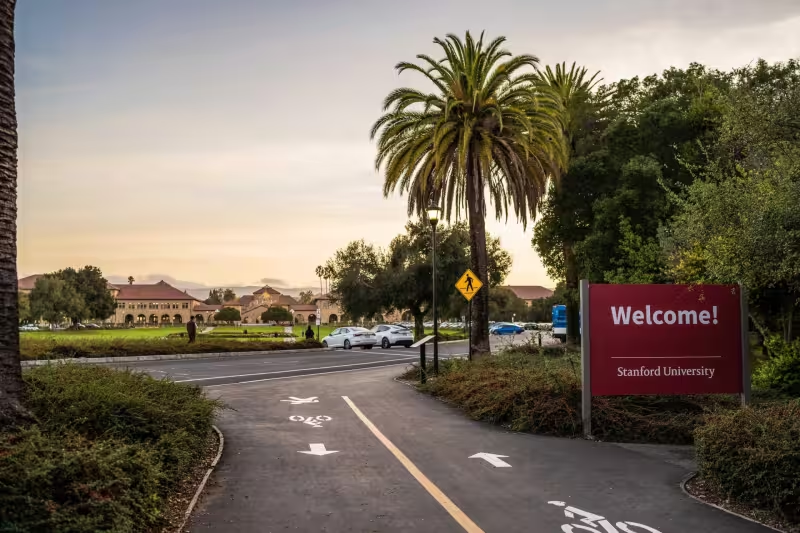
Theo Baker spent part of his Stanford years chasing a professor’s Volkswagen on foot, sprinting down a campus road in dress shoes while his editor followed on a bike. That kind of pursuit, he suggests, was the easy part. The harder task was building the case that former Stanford president Marc Tessier-Lavigne’s 2009 Nature paper on Alzheimer’s disease rested on fabricated data.
Baker, a soon-to-be Stanford graduate and investigative journalist, has turned that reporting into his debut book, How to Rule the World. The book won a George Polk Award-winning investigation into Tessier-Lavigne’s research misconduct, and Baker’s central allegation is blunt: the 2009 paper was built on data that was not real. He says Genentech’s internal review confirmed the fabrication but never made the findings public, and he says four senior Genentech executives independently backed up his account while they were all under nondisclosure agreements.

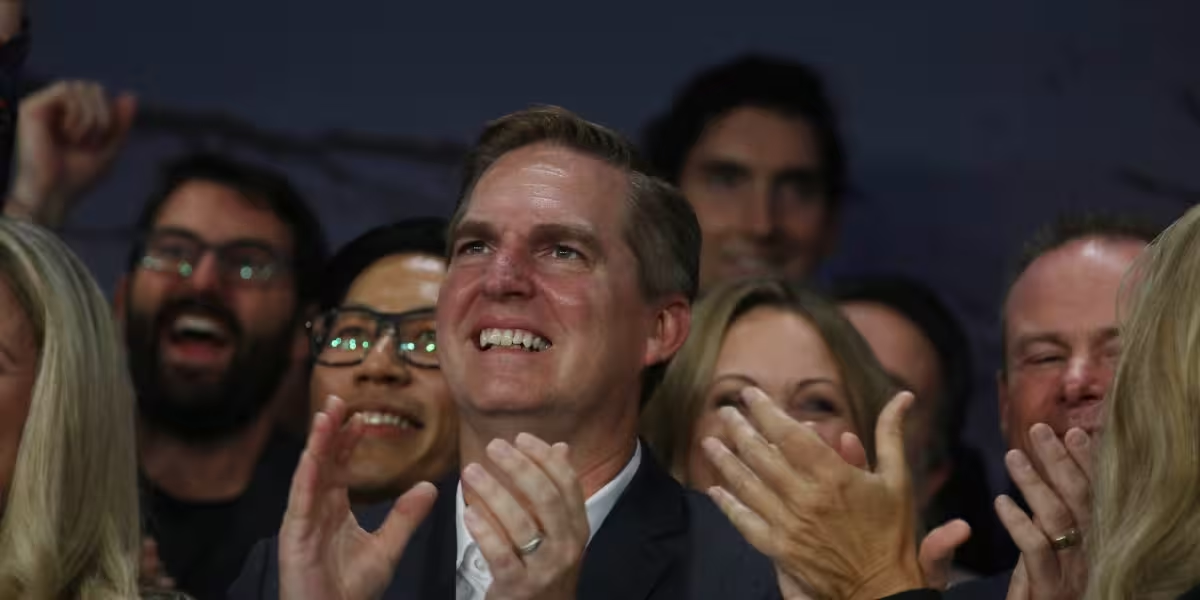


The book’s strength, by Baker’s own account and in the reporting around it, lies in that Stanford case. He used burner phones, kept sources off his contacts list and moved messages through online aliases and virtual machines to protect the people feeding him information. His editor briefed him on a whiteboard, and Baker hid his source list inside a dry-erase marker tucked in a desk drawer. The obsession was personal and institutional at once: Baker began student journalism during his freshman year and kept returning to the same question of how a university that feeds Silicon Valley could also shelter fraud at the top.
That makes How to Rule the World more than a campus exposé. The book is described as part memoir, part ethnographic study of Stanford’s social underbelly, and part indictment of a broader tech culture Baker sees as toxic. Stanford, in his telling, is not just a university but a recruiting ground for Silicon Valley, which he argues has produced high-profile bad actors at a remarkable pace in recent years. He also argues that influential figures in tech lurched right after the pandemic and burrowed into anti-democratic and extremist political thought, with Elon Musk’s DOGE initiative reflecting much of the same move-fast-and-break-things ethos that helped define Silicon Valley.
For Baker, the Tessier-Lavigne investigation is the book’s center of gravity because it lets him connect personal reporting with a larger institutional critique. He says Stanford’s culture inculcates fraud, and the reporting he built there is the clearest proof he has. The open question now is not whether he can tell that story. He already has. It is whether the book’s reach, helped by film rights already sold, will push that Stanford-Silicon Valley pipeline into the wider public argument he says it deserves.