



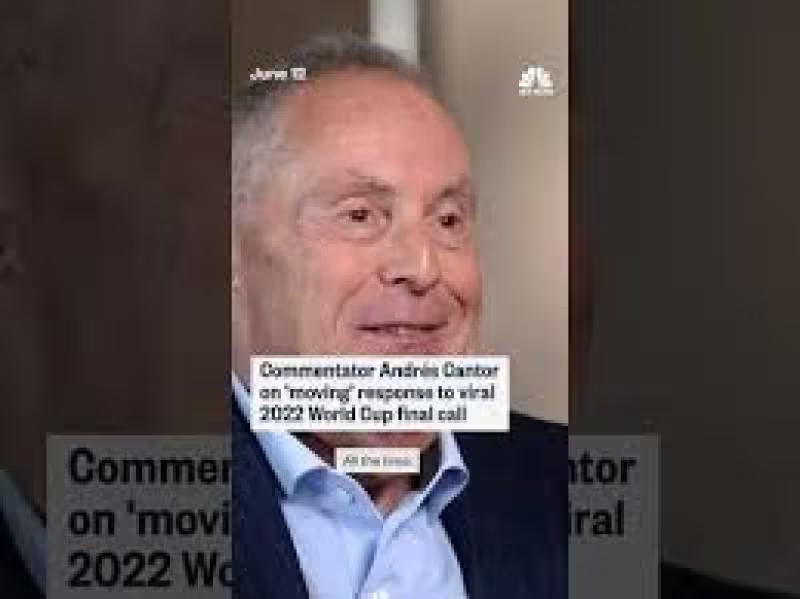
"I wanted to get to the World Cup with the strongest voice possible," Andrés Cantor said, and then he described the odd little choreography that helps him try to make that happen: a vocal coach named Wendy, an emphasis on sleep and a near-obsessive attention to how names are spoken on air.
A reporter met up with Cantor before the tournament to watch the routine that precedes the two-and-a-half-hour concert of matches he will narrate. "Before every World Cup, I ask Wendy to get me in shape," he said, and he makes clear that getting in shape means more than warmups — it is an effort to preserve a tool that has become instantly recognizable around the world.

Cantor’s unmistakable shout of "goal" began as a breakthrough in 1994 and has been everywhere since. "By yelling the goal the way I yell ‘goal,’ I disrupted the broadcasting world, if you will," he said. "It was definitely a before and after moment for my career." That voice propelled him to moments that still reverberate: at the 2022 World Cup final, when Argentina beat France on a penalty kick, Cantor’s call went viral and reached listeners well beyond Spanish-language audiences.
He said of that night in 2022: "It was a very emotional and very authentic broadcast because it was just myself on air, and very happy for my home country." He added that "it was something that I had been waiting for as much as all the Argentinian soccer fans for 36 years." The emotional impact is personal and public: "It is incredible how many times I’ve been stopped and recognized as the man that made people cry, which is really moving."
Those highs sit beside a practical discipline. Cantor is protective of his instrument. "Sleep is one of the most important things for the voice," he said, and he works to avoid wearing it out during a World Cup’s brutal schedule. "When the final whistle blows, I’m pretty much as tired as the players are," he said — a candid admission from someone whose job is to project stamina as well as sound.
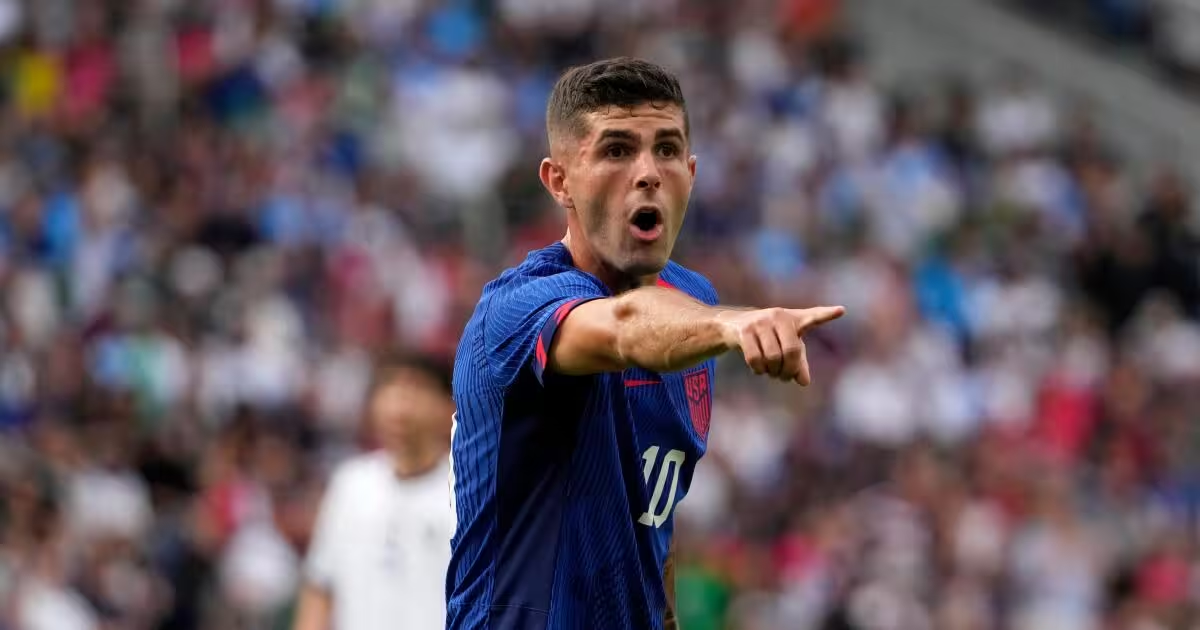
That tension is part of what makes Cantor’s work interesting: the same signature shout that made him famous is also something he must manage. He tries not to let habit become harm. He changes how he speaks on purpose — even the pronunciation of names. "One of the things I try to do is pronounce the last names of players as they should be in their native tongue," he said, offering a concrete example: he will say "Chris Richards" instead of saying "Richards." It is a stylistic choice that respects players and preserves vocal economy: shorter, flatter lines save energy for the big moment.
There is also a national dimension to the coming tournament. Cantor said he expects the presence of millions of Latin American and immigrant fans in the U.S. to lift the event: "I think the FIFA World Cup being played in the U.S. with the amount of Latin American and all immigrants for that matter that already live here, I think it’s going to make this World Cup really extraordinary." That crowd energy, he acknowledged, will demand more from broadcasters and their voices.
For Cantor the immediate calendar is punishing: he said he has 10 games in 14 days in the first round. That schedule sharpens his reliance on preparation and people. He pointed to Wendy as a key figure but offered no play-by-play of her methods beyond the fact that he calls on her before every World Cup. The work produces outsized moments, but it is also prosaic: rest, disciplined delivery and small pronunciation choices designed to protect his throat.
He has built a career around a single, unforgettable vocal choice — the shout that changed his career in 1994 and found new life in 2022 — and now he must steward it through one of the most intense stretches of international sport. He has a team, a coach and a plan; what remains unresolved for listeners is the exact routine Wendy follows to get him ready. As he heads into 10 games in 14 days, that missing detail is the quiet, technical question behind every famous shout: how do you keep the voice that moves millions healthy enough to keep moving them?



