



The Seattle Mariners finish a long East Coast road trip with a three-game series against the Washington Nationals in Washington, D.C., beginning tonight — a short, decisive swing that will say a lot about where both clubs stand after a charged opening of the season.
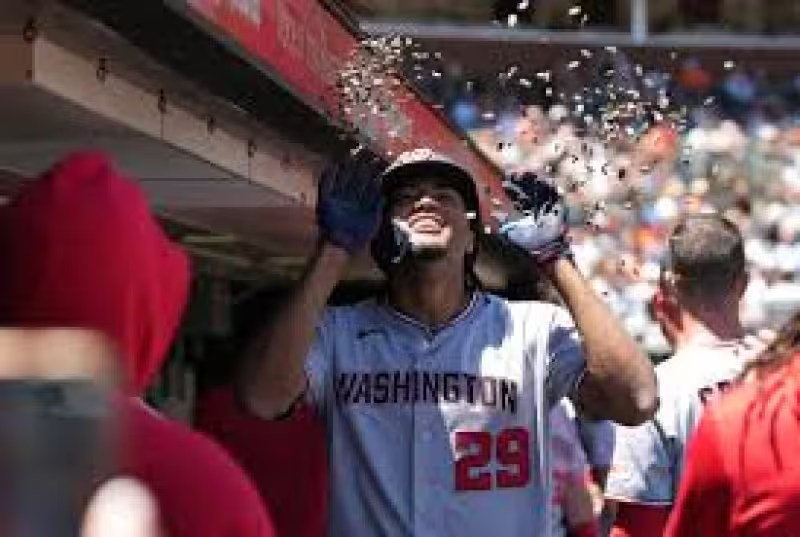
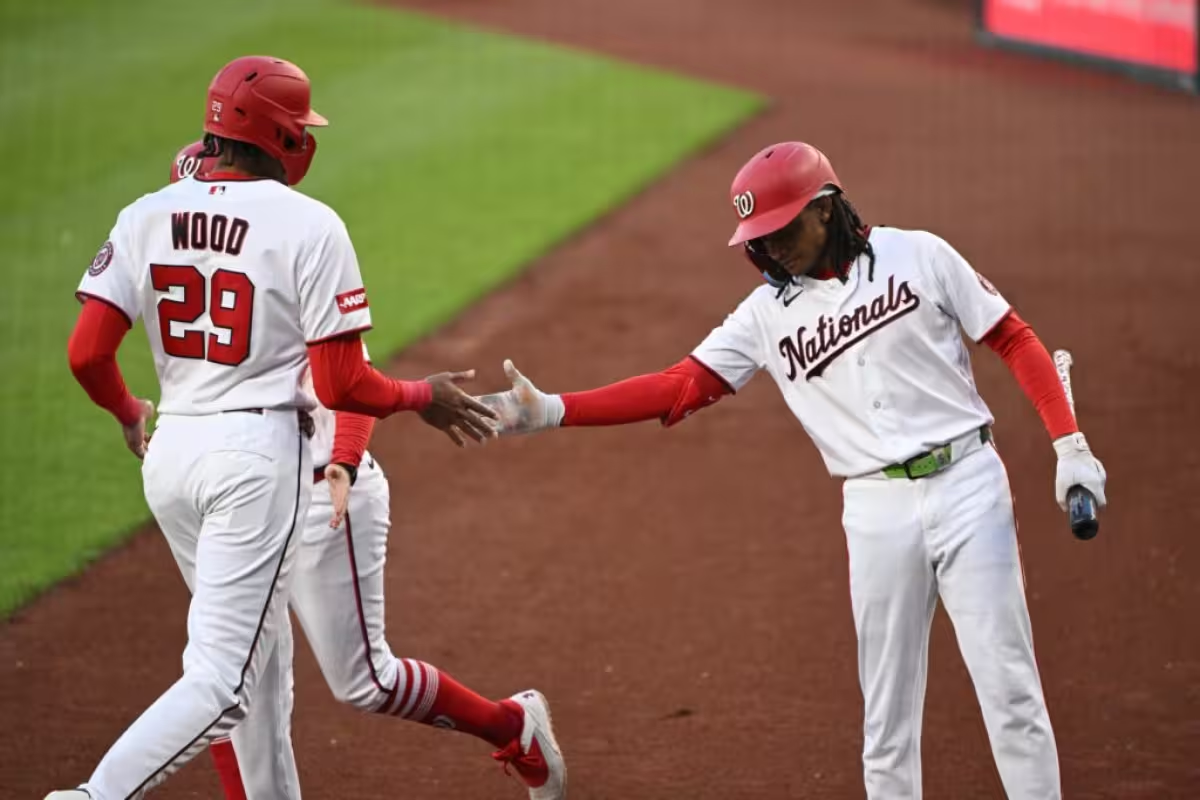
Washington’s offense is the headline here. The Nationals have scored the second-most runs in baseball and carry a lineup that has become one of the feel‑good stories in the National League. James Wood has been a central figure, producing 3.0 fWAR and slugging 18 home runs, while CJ Abrams has hit the ground running with a 150 wRC+. Role players Curtis Mead, Keibert Ruiz, Luis García Jr. and Jacob Young have all contributed, giving Washington depth through the order rather than a one‑man spike.

The front office changes behind that surge are recent and notable. Last fall the Nationals hired Paul Toboni as president of baseball operations; he arrived as the youngest top executive in baseball and has overseen moves aimed at accelerating a club still technically in a rebuilding cycle that began after the team’s 2019 World Series title. The result this season is a lineup that can pressure opposing staffs from the top down instead of relying on sporadic bursts.


The Mariners arrive in D.C. with a mixed résumé. Seattle rode an eight‑game win streak a week ago that reshaped its early‑season picture, but the club split a series in Baltimore after two lackluster games on Wednesday and Thursday. The contrast is the immediate storyline: can the Mariners reproduce the sharp, consistent play that produced the streak, or will the unevenness that showed up in Baltimore carry over and blunt their momentum?
Matchup details matter more than big narratives. Washington’s bullpen and rotation have shown variance — and one clear example is Zack Littell, who signed with the Nationals this offseason. Through his first six starts he posted a 7.85 ERA and a 9.03 FIP, but as soon as the calendar flipped to May he flipped his numbers: over his last seven appearances Littell has lowered his ERA to 2.27 and his FIP to 3.47. That kind of swing makes him a wild card the Mariners must plan for; if Littell is on, Washington’s offense can stretch leads, and if he isn’t, Seattle’s offense will have room to breathe.
For Seattle, the practical question is simple: can the pitching staff handle Washington’s depth, and will the lineup provide enough support when starters run into trouble? The Mariners’ rotation and bullpen will need to be steady from the first inning because Washington can score early and often. Conversely, Washington needs length from its starters and continued contributions from its everyday hitters to convert offensive runs into wins over a three‑game stretch.
What to watch when the series begins: the top of the Nationals’ order — Wood and Abrams — and how Seattle maps pitchers to them; Littell’s next outing, to see if his recent run of effectiveness continues; and whether the Mariners can recreate the energy that produced that eight‑game streak rather than the listless approach that showed up in Baltimore. The answer to those points arrives across three games in Washington and will determine whether Seattle leaves the East Coast with momentum or a nagging doubt it will have to correct at home.



