



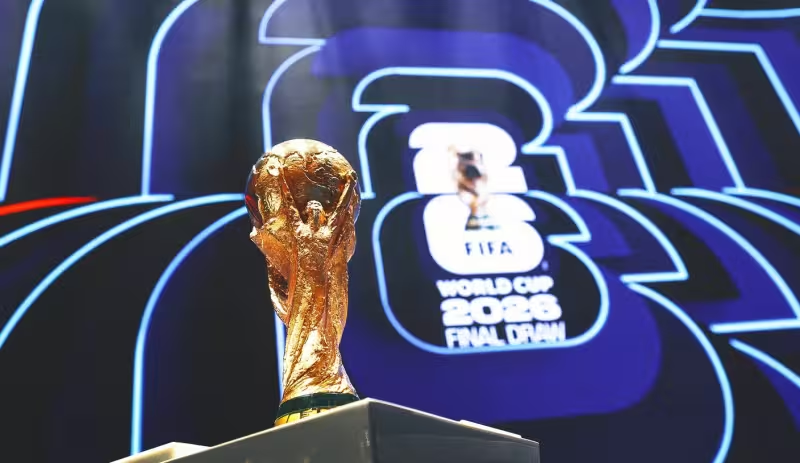
The 2026 Wolrd Cup will be played from June 11 to July 19, 2026, across 16 cities in Canada, Mexico and the United States, with the final set for July 19 at New York New Jersey Stadium in East Rutherford, New Jersey; the expanded tournament fields 48 teams and 104 matches.
All 104 tournament matches will air live on FOX and FS1 and will stream live and on demand in the FOX One and FOX Sports apps; the United States opens its campaign against Paraguay on June 12 at 9 p.m. ET, and that match will also stream for free on Tubi.

The field has been enlarged for the first time in the competition’s 96-year history: the FIFA Council approved the jump from 32 teams to 48 in 2023. To accommodate 16 additional teams and 40 more matches than past tournaments, organizers added a round-of-32 to the knockout phase and arranged a group stage made up of 12 groups of four.
Under the format, the top two teams from each group plus the eight best third-place finishers will advance to the round-of-32, producing a longer knockout pathway; with the new schedule the last four teams will each play eight matches en route to the final instead of seven.

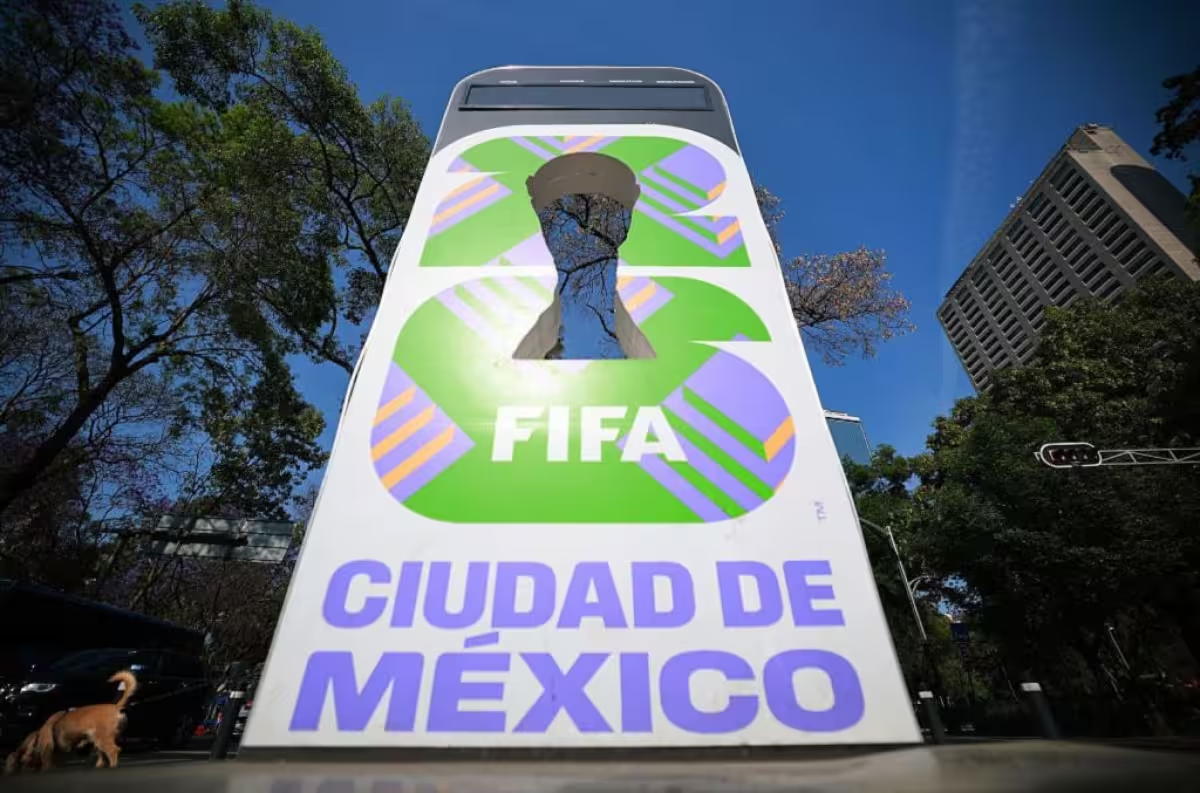

The scale and geography of the event complicate the practicalities that matter to fans and teams. Spreading 104 matches across 16 cities and three countries creates steeper travel and scheduling demands than previous tournaments: more matchdays, more fixtures to sequence within broadcast windows, and more rapid stadium turnovers. Those pressures will shape rest days, travel plans and potential home‑field advantages, and they raise fresh questions about competitive balance for teams that face longer transfers between venues.
For viewers the timetable offers clarity: the tournament opens June 11, the United States plays Paraguay on June 12 at 9 p.m. ET, and every match is available to watch live on FOX and FS1 or stream on FOX One and the FOX Sports apps. Broadcasters’ commitment to streaming every game, plus the free stream of the U.S. opener on Tubi, means fans on multiple platforms can follow matches across time zones without relying on a single linear channel.
Practically speaking, the expanded format alters the calendar that fans and federations must plan around. Twelve groups of four produce a denser group stage; advancing eight third-place teams to a round-of-32 guarantees that more countries remain in contention deeper into June, while organizers must fit 40 extra matches into a tight five‑week window between June 11 and July 19.
The immediate calendar point to mark is the U.S. opener on June 12 at 9 p.m. ET; beyond that, the largest unresolved item is which 48 nations will appear. Qualifying competitions will determine the field in the months ahead, and those results will dictate travel itineraries, ticket demand and many of the scheduling pressure points left open by the expansion. For now, fans and federations have dates, host cities and a broadcast plan — the next act will be the qualifying finish line that fills the 48 slots and forces concrete answers on how the larger format will run on the ground.



