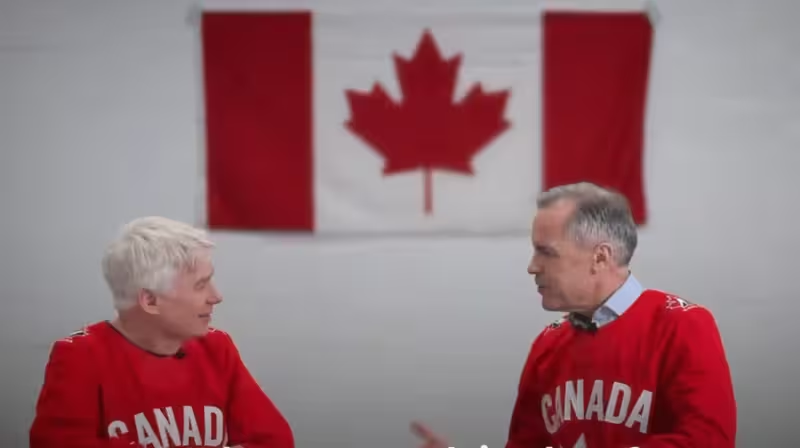
Mike Myers took the stage in Toronto on Sunday night to accept the Canadian Screen Awards' Icon Award and, halfway through, grew visibly emotional as he thanked his parents for moving the family to Canada and urged the value of being silly.
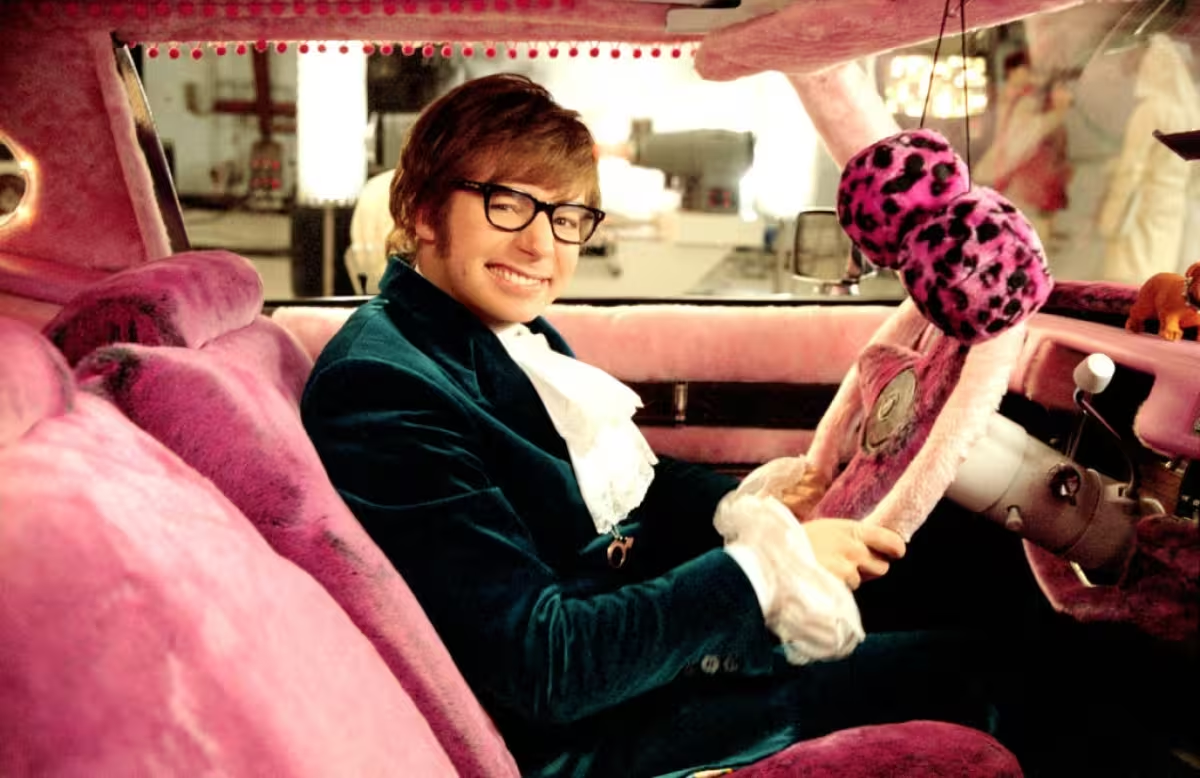
"Canada, I don’t know what to say, dude. I’d literally be nothing without you," Myers said, his voice breaking at times as he placed the country at the center of a career that would later produce Wayne Campbell, Austin Powers, Dr. Evil and Shrek.

He mixed gratitude with a self-aware laugh: "I had a whole speech written about how much I love Canada, but I suspect some of you might be sick of hearing that at this point." The line landed like a wink, then returned the room to warmth rather than awkwardness.
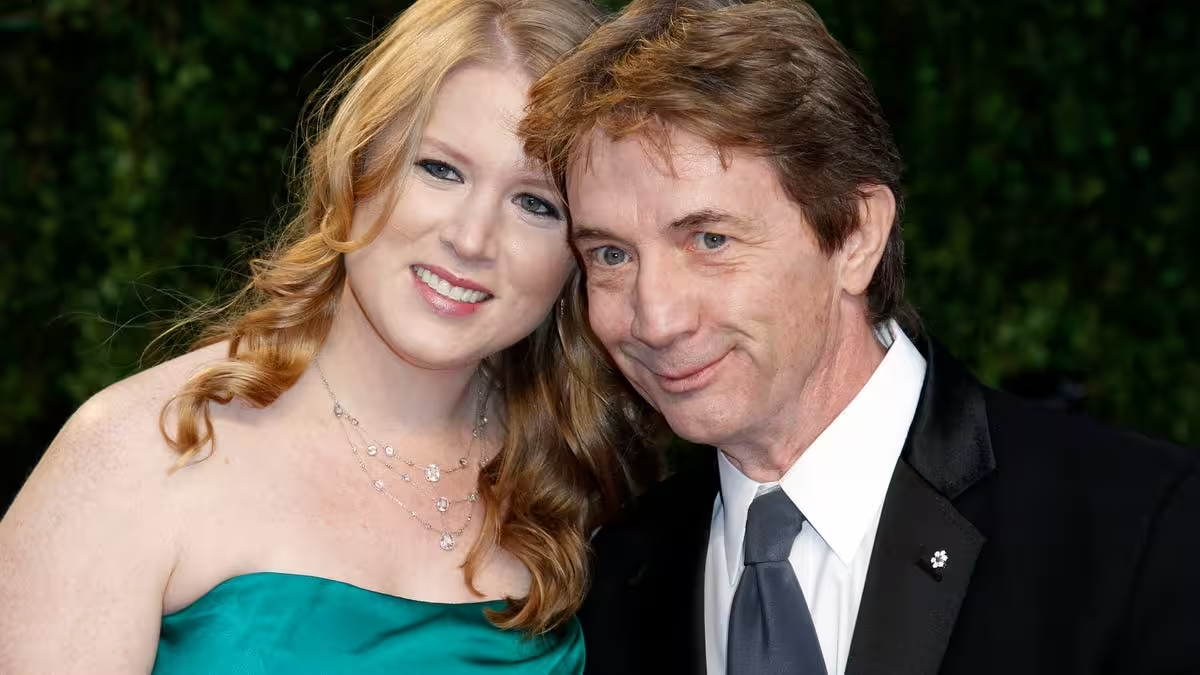
Myers thanked a string of personal and professional influences — Martin Short and the late Norman Jewison among them — and singled out a practical booster he said few entertainers mention: "I want to thank the Canadian taxpayer. I really do, actually, because I always say to my American friends, I had a big ally in my hand. I have 40 million people behind me."
The moment was both a personal confession and a public argument: Canada, he said, gave him the space and support to begin what became an international career. Myers grew up in Scarborough, a suburb of Toronto, and now lives in New York City with his family; the award ceremony underscored that his roots remain central to how he talks about success.

The ceremony also honored contemporary Canadian television work. Heated Rivalry won best drama series, with Hudson Williams taking best lead TV drama performer for the show and Sophie Nelisse receiving the Radius Award for her role. North of North won the best TV comedy prize; co-creator Alethea Arnaquq-Baril described the series as "incredibly personal to us. It reflects our community, our families, our lives in the Arctic."
Those victories mapped a single night: a lifetime achievement tribute to one of Canada's most recognizable exports alongside recognition for new and regionally rooted shows. The juxtaposition amplified the point Myers made on stage — national infrastructure and audiences still shape careers, from community stories in the Arctic to big-screen comedies watched around the world.
There was, however, a friction in his heat-of-the-moment ode. Myers’ admission that some might be "sick" of his praise did more than break tension; it acknowledged a curious celebrity truth. He is a Canadian who built a Hollywood brand but keeps returning, publicly, to gratitude for his country. That balance — flamboyant American-style stardom and unabashed Canadian appreciation — is a thread through the evening.
Myers’ remarks also echoed a moment from last year, when he helped lead what was called Canada’s "elbows up" response after a high-profile international dispute. The appearance at the Canadian Screen Awards felt, in part, like the capstone of a year in which Myers made national gestures as well as personal ones.
The Icon Award itself stopped short of explaining why, now, the academy decided to give it to him. The ceremony presented the honor and his speech; it did not walk backward through a list of specific milestones that sealed the decision. That gap is the night's clearest unanswered question: what precise catalogue of achievements — the Canadian projects, the taxpayer-funded stepping stones, the career choices — did the awards committee weigh when naming him an icon?
For viewers and fans in the room, Myers' short answer was the speech: gratitude, humor and a reminder to stay silly. For the record and for posterity, the awards left open the fuller accounting of how a Scarborough kid became an Icon Award recipient — and whether the ceremony signals a new phase of Canada-shaped work from Myers or simply a moment of thanks.