



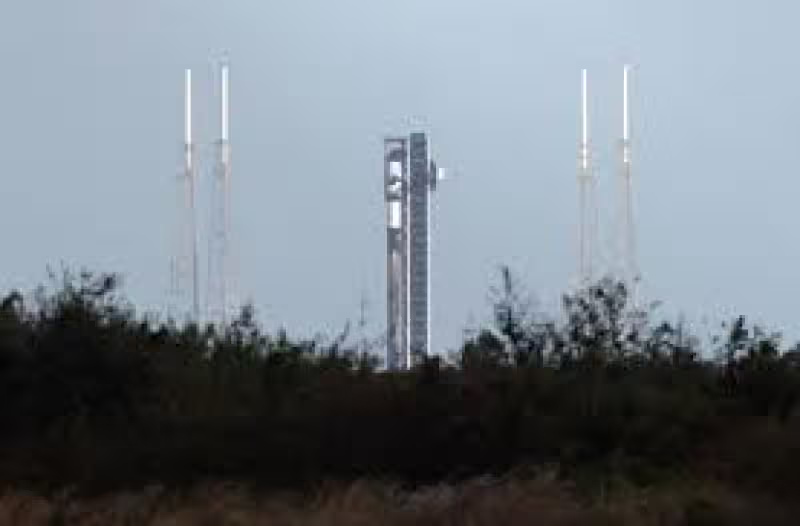
SpaceX is scheduled to launch its Starlink 10-54 mission from Cape Canaveral Space Force Station on Friday morning, sending 29 Starlink V2 Mini Optimized satellites toward low Earth orbit just before its stock begins trading on the Nasdaq for the first time. Liftoff from Space Launch Complex 40 is set for 8:37 a.m. EDT, or 1237 UTC, with the Falcon 9 expected to climb away on a north-easterly trajectory.
The launch lands in a narrow window of company firsts. It comes less than an hour before Nasdaq trading starts for SpaceX, which is now publicly traded more than 24 years after its founding in March 2002. The company’s valuation is $1.77 trillion, and it has said it will sell 555.6 million shares of Class A common stock at $135 each, a move expected to raise $75 billion. For investors and space watchers alike, Friday morning ties a routine Starlink delivery to a milestone that changes how the company is priced and watched.

The mission is part of SpaceX’s continuing Starlink deployment program, and the company says it already has more than 10,500 satellites in orbit. This flight is the 55th dedicated Starlink launch of 2026 and the 56th overall mission carrying Starlink satellites this year, a pace that has turned the constellation into one of the company’s central businesses. In SEC disclosures, SpaceX said connectivity brought in about $2 billion in 2024 and $4.4 billion in 2025, underscoring how much the network now matters to its balance sheet.

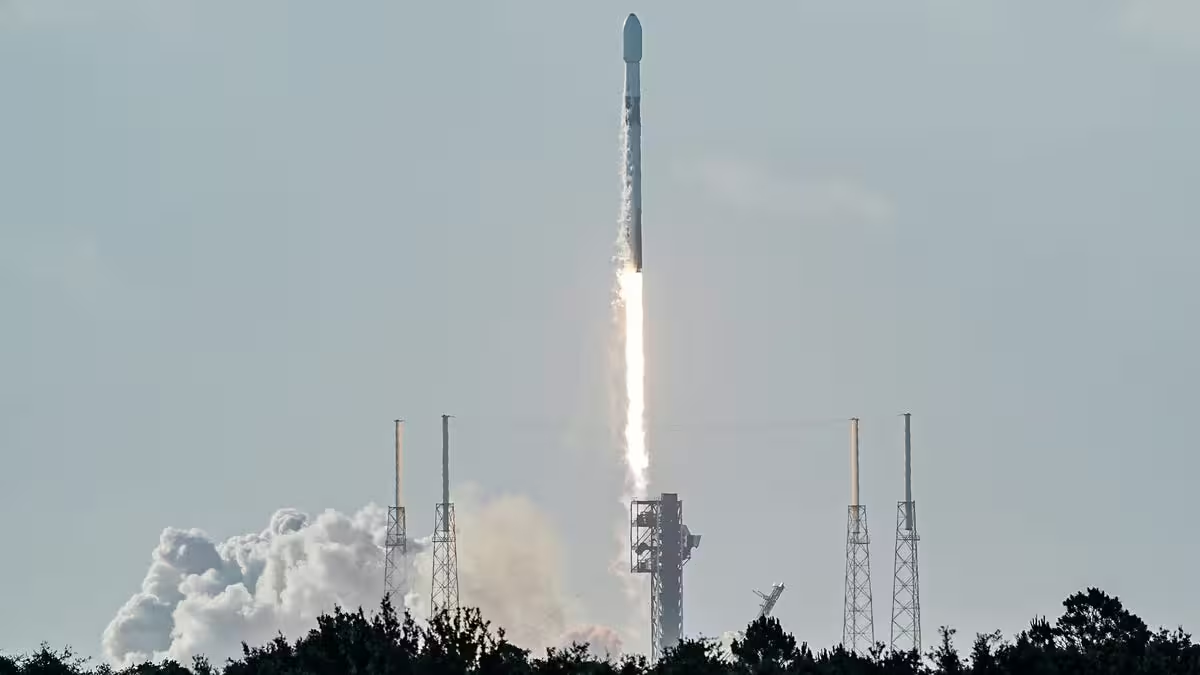
Weather is the main variable before liftoff. The 45th Weather Squadron is calling for an 80 percent chance of favorable conditions at the start of the window, though that drops to 70 percent as the window moves along, with meteorologists watching cumulus clouds that could complicate the attempt. Spaceflight Now said live coverage would begin about an hour before launch, giving viewers a final look at whether the forecast holds.
SpaceX will fly Falcon 9 booster B1080 on its 27th mission, and the first stage is aiming for a landing a little more than eight minutes after liftoff on the drone ship A Shortfall of Gravitas off the coast of South Carolina. If it sticks the descent, the recovery would be the 155th landing on that ship and the 623rd booster landing for SpaceX overall. That is the part of Friday’s launch that still has to be earned.
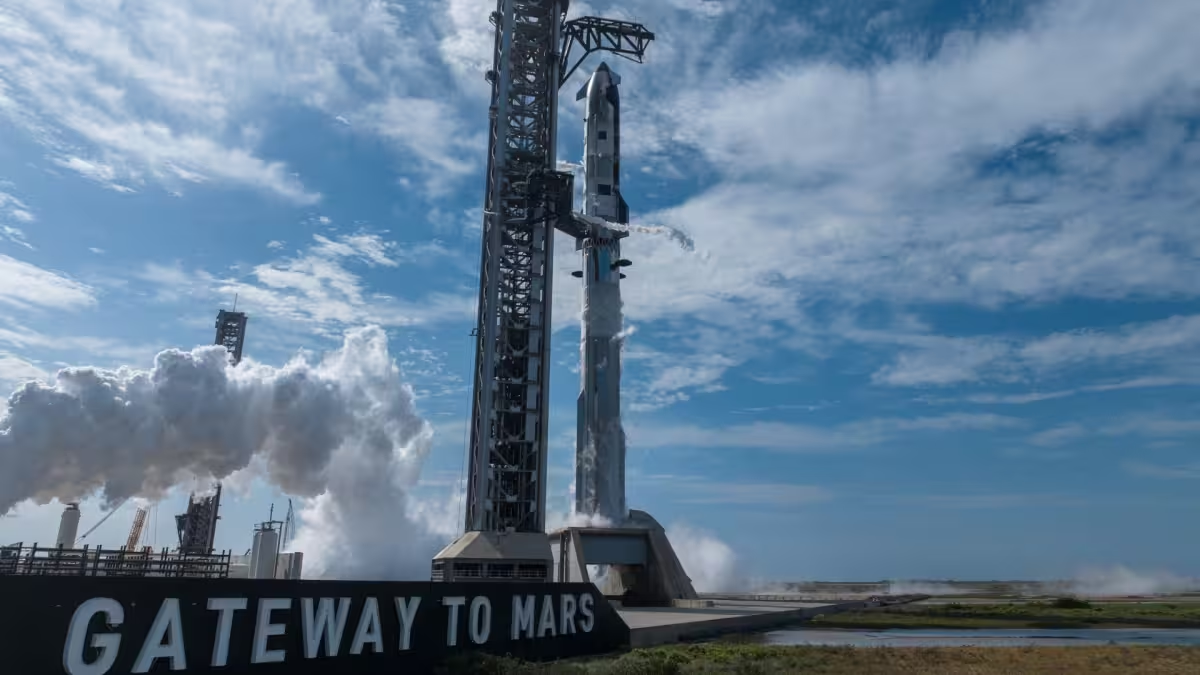
The company’s broader runway is still visible behind the countdown. SpaceX completed its 12th Starship test flight in May and has said it is working toward a 13th flight on a date it has not yet disclosed, while also saying it plans to begin deploying Starlink V3 satellites in the back half of 2026. Friday’s mission is smaller than those ambitions, but it is the one on the clock now: a Falcon 9, 29 satellites, a possible booster recovery, and a market debut all before the morning is over.



