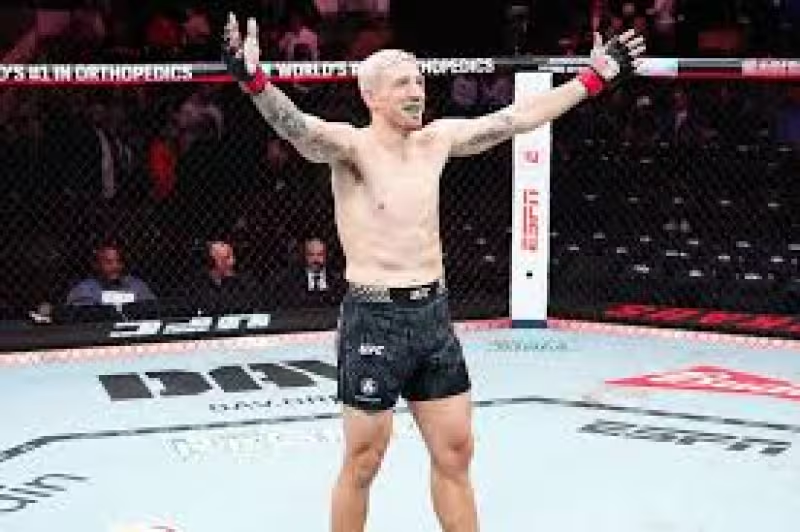
“They're trying to fill a hole that's not going to be filled with the things that they want,” Bo Nickal said on Sean Hannity's show, bluntly placing himself between a generation he described as lost and a different set of choices. The 30‑year‑old UFC fighter used the interview to push young men away from what he called empty pursuits and toward faith, community and family as the country prepares for a high‑profile fight on the White House lawn.
Nickal's comments carried extra weight because they aired in the run‑up to the UFC Freedom 250 card, scheduled for Sunday on the South Lawn as part of America 250 celebrations. Construction was still under way on the South Lawn on June 5, 2026, and President Donald Trump is hosting the match to honor the 250th anniversary of the United States — a backdrop that turned a routine promotional appearance into a moment with political and cultural resonance.

On the program Nickal moved quickly through his own arc — his rapid rise to MMA stardom, talk of UFC 300, his relationship with Dana White, and a public rivalry with Colby Covington — before landing on mentorship. He answered Hannity's question about role models by naming the emptiness he sees when young men chase status: “Drinking, drugs, sex, money, fame... and it's just going to continue to be empty.” Then he laid out alternatives: “Look to your faith, look to community. Look to family... these are the types of things that have real value.”
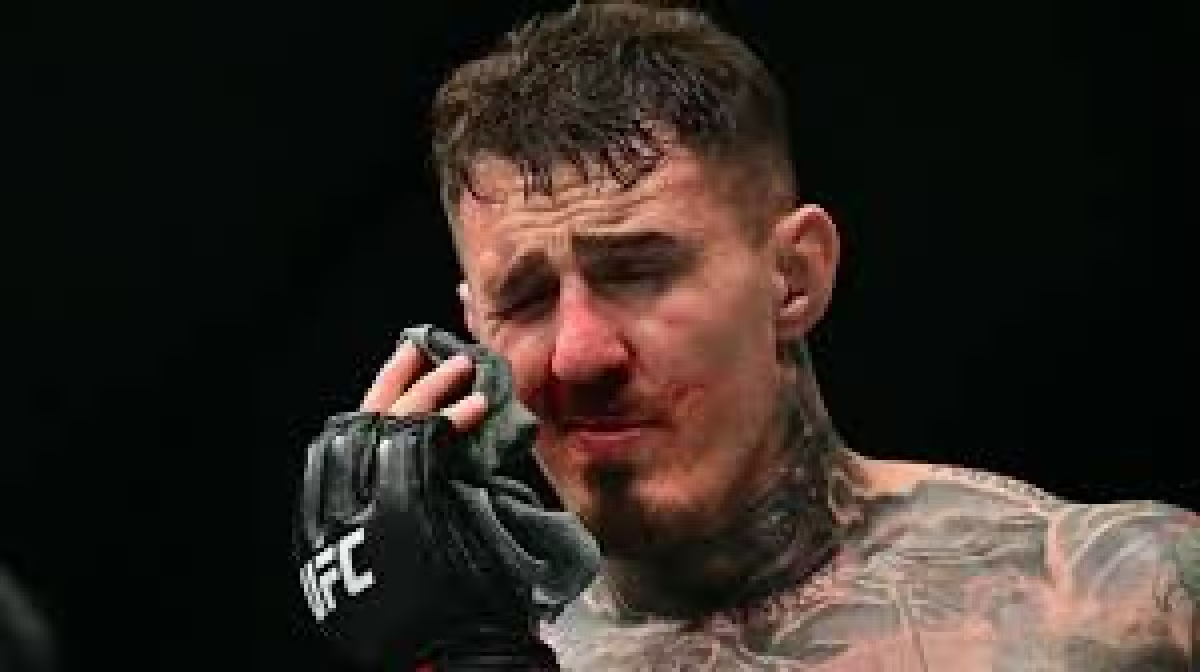
Nickal framed those options with a biblical line to underline the moral point he was making, quoting John 10:10 — “The thief comes to steal, kill, and destroy. I come to bring you life so that you may live it to the full.” His words were part sermon, part intervention, and part personal branding: faith and family became not just private commitments but themes tied to his public identity as an athlete and mentor.
That blend of counsel and self‑promotion exposed a friction at the center of the interview. Nickal criticized what he called a selfish attitude among younger men — saying it can feel good in the moment but ultimately destroy them — while speaking from inside the same generation he was advising. The contradiction is not new for public figures who trade on authenticity: the credibility of advice often depends on listeners' willingness to separate the messenger's platform from the message.
Nickal also used the appearance to remind viewers of the professional stakes on his calendar: the White House event, the shadow of UFC 300, and the ongoing narrative with Colby Covington are all signals that his profile is rising at a moment when reach matters as much as rhetoric. That reach is why his prescription for young men matters: the fewer listeners he has, the smaller the practical effect of urging a turn toward community institutions.
What happens next is concrete and immediate. The UFC Freedom 250 card is set for Sunday on the White House lawn, and Nickal will enter that ring with the dual task of fighting and representing the message he offered on air. Whether his call to faith, family and community changes behavior among the young men he described is the question his interview leaves open — he has the platform, but not the proof that his words will alter the course of the men he says are searching for role models.