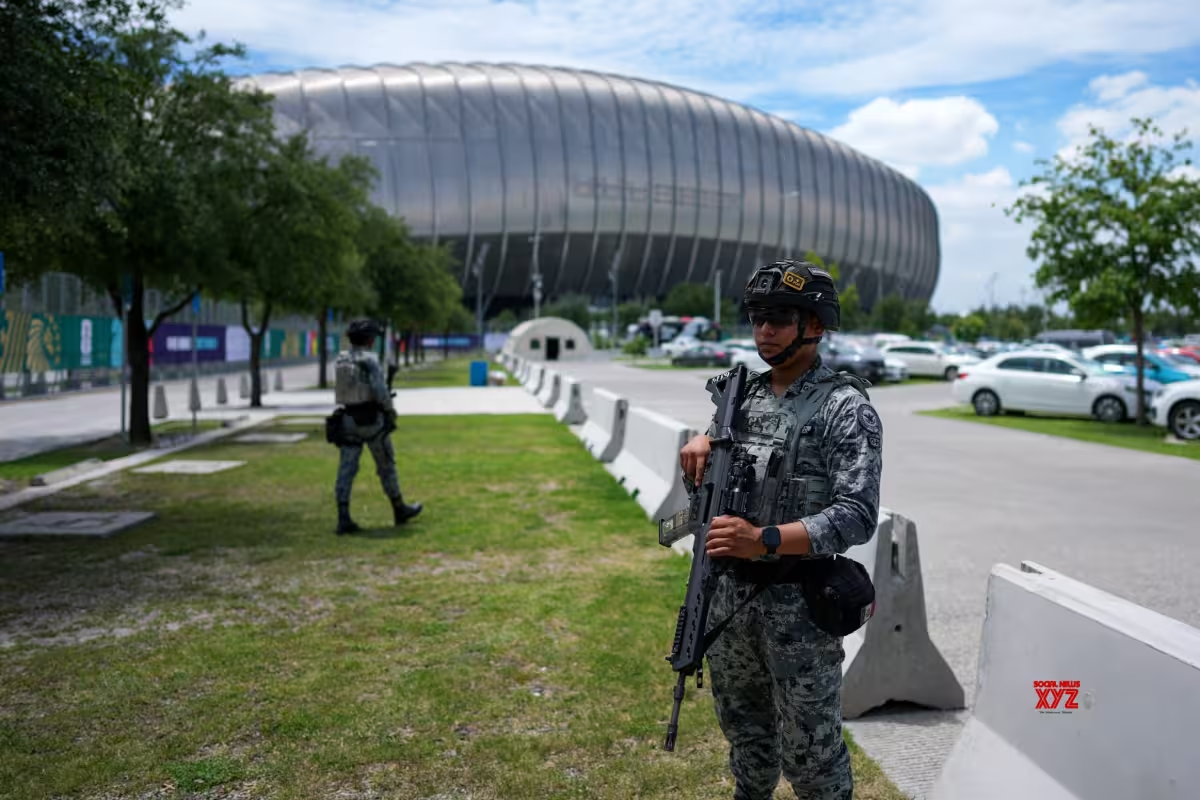
Heavily armed police and National Guard officers were patrolling the streets of Guadalajara on Tuesday, June 9, and deploying outside the stadium that will host FIFA World Cup matches as Mexican authorities moved to reassure visitors and residents ahead of the tournament.
Officials’ visible security push comes less than 48 hours before the World Cup opens on June 11, when Mexico will be one of three host countries and is scheduled to stage 13 games. Estadio Guadalajara in Jalisco is slated to host four of those matches, and the reinforced patrols were concentrated around that venue.

The scale of the broader deployment is significant: Mexico’s government said nearly 100,000 troops are being sent to guarantee security in the three host cities. On the ground in Guadalajara, the measures reported on June 9 were straightforward and conspicuous — armed police units on city streets and National Guard officers positioned outside the stadium perimeter.
That visibility is aimed at a simple practical goal: reassure fans arriving for matches and residents who live near the venues. The effort arrives against a raw recent memory for Jalisco. In February 2026, more than 70 people — including 25 members of Mexico’s National Guard — were killed after an operation to capture cartel leader 'El Mencho' led to his death. The State Department has advised U.S. citizens to reconsider travel to Jalisco, and the U.S. Embassy has warned that safety risks vary across Mexico.
The contrast between the security deployment and the fevered violence in February creates an immediate friction. Authorities are making security highly visible; the city was still reeling from deadly clashes less than four months ago. Those two facts sit side by side as matches approach: an attempt to project control and an unmistakable reminder that the state recently suffered large-scale violence.
For visitors, the practical elements are clear. Patrols and National Guard positions should be expected around Estadio Guadalajara and in adjacent neighborhoods on match days. The public messaging from Mexico’s government emphasizes troop numbers and presence rather than new, specific tactics; the June 9 movement of forces was part of that visible posture. Travelers flagged by the State Department’s advisory will find those warnings unchanged even as local authorities stress their stepped-up presence.
The stakes are both immediate and symbolic. Four World Cup games at Estadio Guadalajara will draw international crowds and media attention at a moment when Mexico is hosting a larger share of matches than usual — 13 in total — across the tournament. The government’s nearly 100,000-troop commitment is intended to keep those games on schedule and protect fans, but it also serves as a public test of how rapidly authorities can stabilize a state that experienced one of the bloodiest security incidents this year.
What to watch once the matches begin: whether the reinforced patrols translate into uninterrupted match days and a lack of major security incidents around the stadium, and how authorities report on crowd movements and threats. The World Cup’s opening days will provide the first concrete evidence of whether the visibility and numbers touted by officials change the security calculus on the ground.
The single most consequential unanswered question is whether the reinforced presence of police and National Guard will keep Guadalajara’s four World Cup matches free of the kind of deadly violence that struck Jalisco in February; the answer will determine whether the reassurance on display now proves sufficient.