



Bleacher Nation, in partnership with DataSkrive, published a focused preview asking one clear question: will Sebastian Aho score a goal against the Vegas Golden Knights on June 11, 2026?
The piece is built around that single-event prompt rather than a game recap. DataSkrive — identified in the preview as leveraging a combination of human expertise, machine learning and pre-built content libraries to assemble and personalize sports content — supplied the technical backbone for the targeted preview format.

That framing matters because the Aho question sits inside a set of parallel, player-level looks at goal potential for the same matchup. The preview package included similar short-form forecasts for Nikolaj Ehlers and Andrei Svechnikov, making the June 11 coverage a stack of date-specific scoring prompts rather than conventional pregame analysis.
For readers who care about a single wager or a single player’s night, the utility is obvious: a tightly scoped snapshot aimed at one outcome on one date. For others, the narrow focus highlights the distinction between a predictive tease and the fuller information fans normally use before locking in expectations — there are no extended scouting reports, and the preview does not present a game result because it exists ahead of the puck drop.
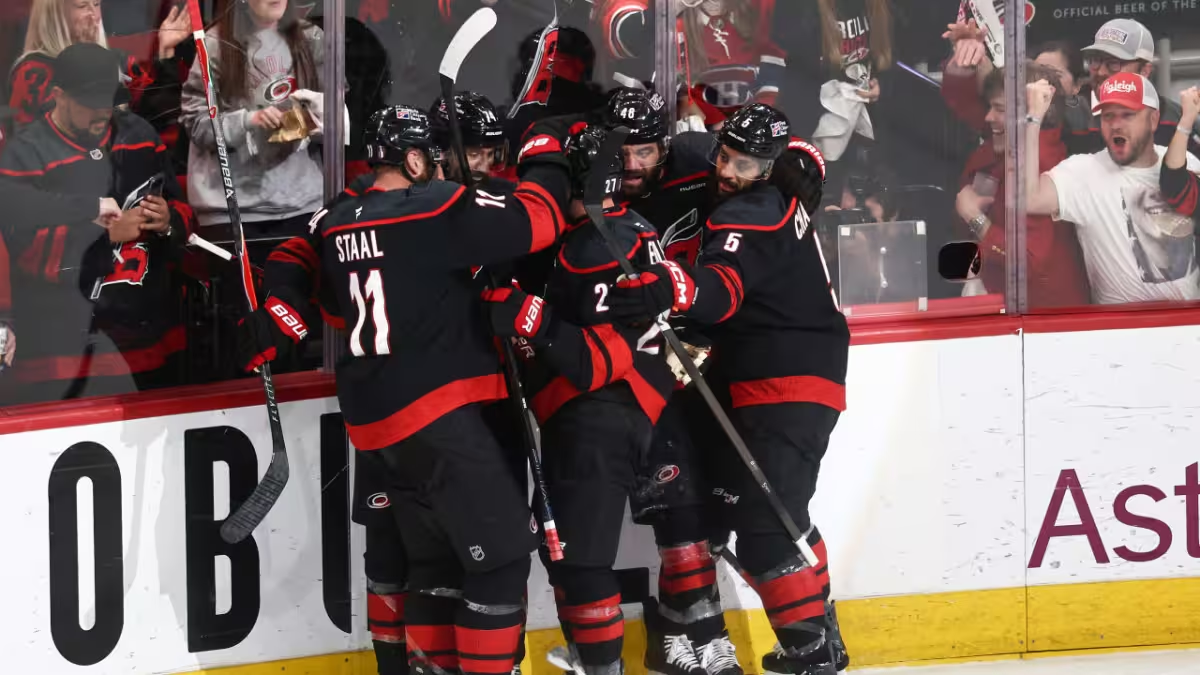
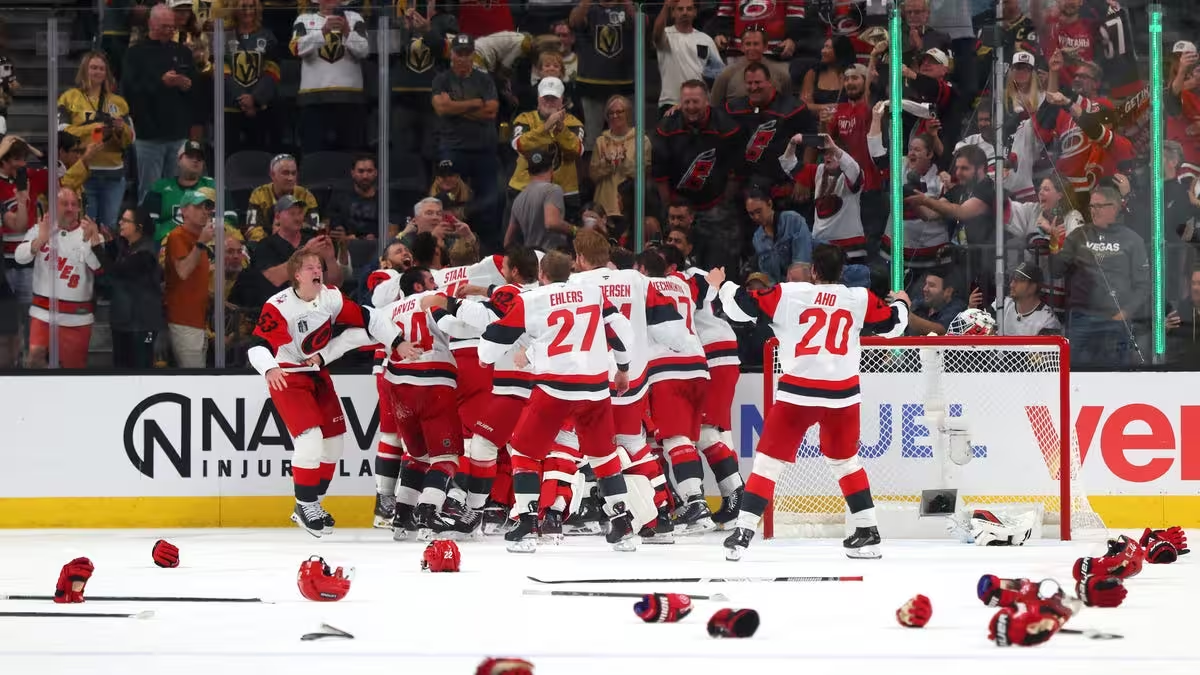
The preview’s central friction is the same as its selling point. It is framed like a prediction but, by design, it does not contain a final outcome for the June 11 matchup. The source material contains extensive unrelated copy and lacks game-result details; the package raises the scoreline question for Aho and then leaves the factual resolution to the event itself.
That structure has two immediate practical implications. First, the preview is best treated as a planning tool: a concise, data-shaped prompt that identifies a single player and a single objective for one night. Second, because it lives before the game, it should be paired with rink-day details — line combinations, availability notices and in-game developments — which the preview does not provide.
Readers coming for an answer to the headline question should note the preview’s role: it points attention and supplies a data-informed frame, but it stops short of delivering verification. The unresolved gap at the center of the piece is explicit — the preview asks whether Aho will score on June 11, 2026, but it contains no postgame confirmation and therefore cannot close that loop.
What to watch when the game starts: Aho’s shifts, his shooting chances and how the matchup unfolds against the opposing team’s structure. The preview sets those items as the things that will determine the outcome it posed. The decisive next step for any reader is concrete and immediate — consult the scoreboard from the June 11 game to settle whether Aho, Ehlers or Svechnikov converted the individual forecasts released ahead of puck drop.



