



A federal appeals court on Thursday put the Democratic challenge to President Donald Trump’s March order on mail-in voting on a fast track, setting an accelerated briefing schedule in a case that could shape how ballots are handled heading into the 2026 midterms.
The D.C. Circuit Court of Appeals granted the plaintiffs’ request to speed up the appeal of a lower court ruling that left the order in place last month. Under the new schedule, the Democratic plaintiffs must file their opening brief by June 17, the Trump administration and Republican states defending the order must respond by June 29, and the plaintiffs’ reply is due July 6. Oral arguments will be heard by Circuit Judges Patricia Millett, Robert Wilkins and Gregory Katsas.

Trump signed the order in March. It directs the Department of Homeland Security to work with the Social Security Administration to create lists of verified U.S. citizens eligible to vote in each state, and it also tells the U.S. Postal Service to restrict delivery of mail-in and absentee ballots based on approved lists submitted by states. Voting rights advocates, Democrats and state officials who are challenging the order say it could disrupt election administration and wrongly block eligible voters from receiving ballots. They also argue the president is claiming control over elections that the Constitution gives to states and Congress.



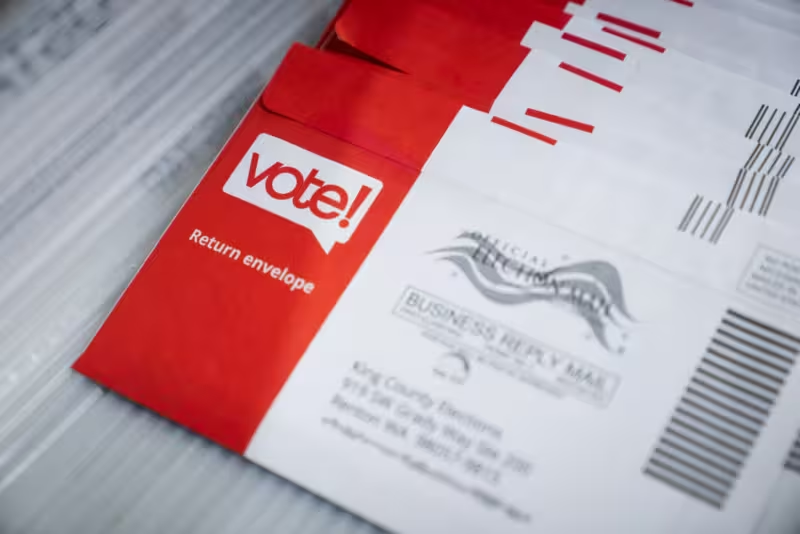
U.S. District Judge Carl Nichols declined last month to issue a preliminary injunction, saying the challenge was premature because federal agencies had not taken enough concrete steps to carry out the order. But after his ruling, the Postal Service issued a proposed rule to implement part of it. The proposal would require states to provide information about voters receiving mail-in or absentee ballots, attach unique barcodes to ballot envelopes and submit the data through a federal ballot-mail portal. It would not apply to primary elections or ballots covered by the federal law protecting military and overseas voters.
That sequence has sharpened the dispute rather than settling it. Nichols said the Postal Service had not finalized a rule, but he also left the door open for a renewed challenge if the administration moved forward. Last week, the Justice Department disclosed in a court filing that DHS had approved a plan to create a federal voter citizenship verification system, adding another sign that the administration is moving ahead while the appeal is pending.
The expedited schedule means the judges will weigh the dispute before the fall political calendar turns toward the 2026 midterms. Millett and Wilkins were appointed by former President Barack Obama, while Katsas was appointed by Trump and said he would have denied the motion to expedite. The next concrete milestones are the June 17, June 29 and July 6 deadlines, followed by oral arguments, which will determine how soon the court confronts whether the order can keep advancing before the case is fully resolved.



