



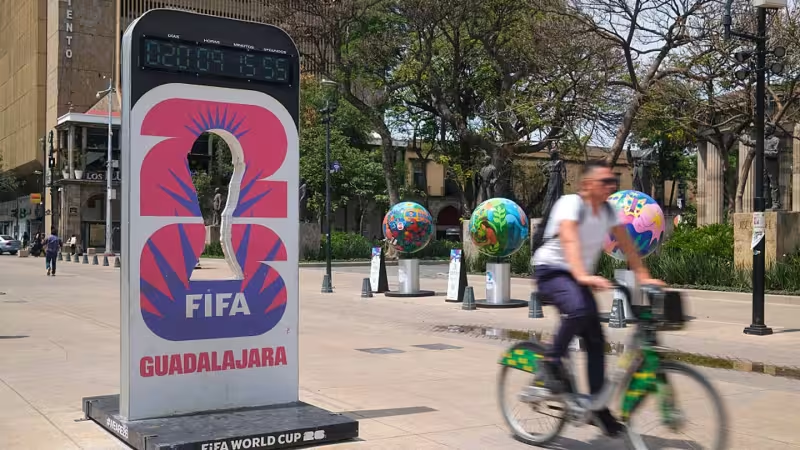
Guadalajara will keep its FIFA Fan Festival open for the full 39 days of the 2026 World Cup, turning Plaza Liberación into the city’s main public viewing site from June 11 to July 19, 2026.
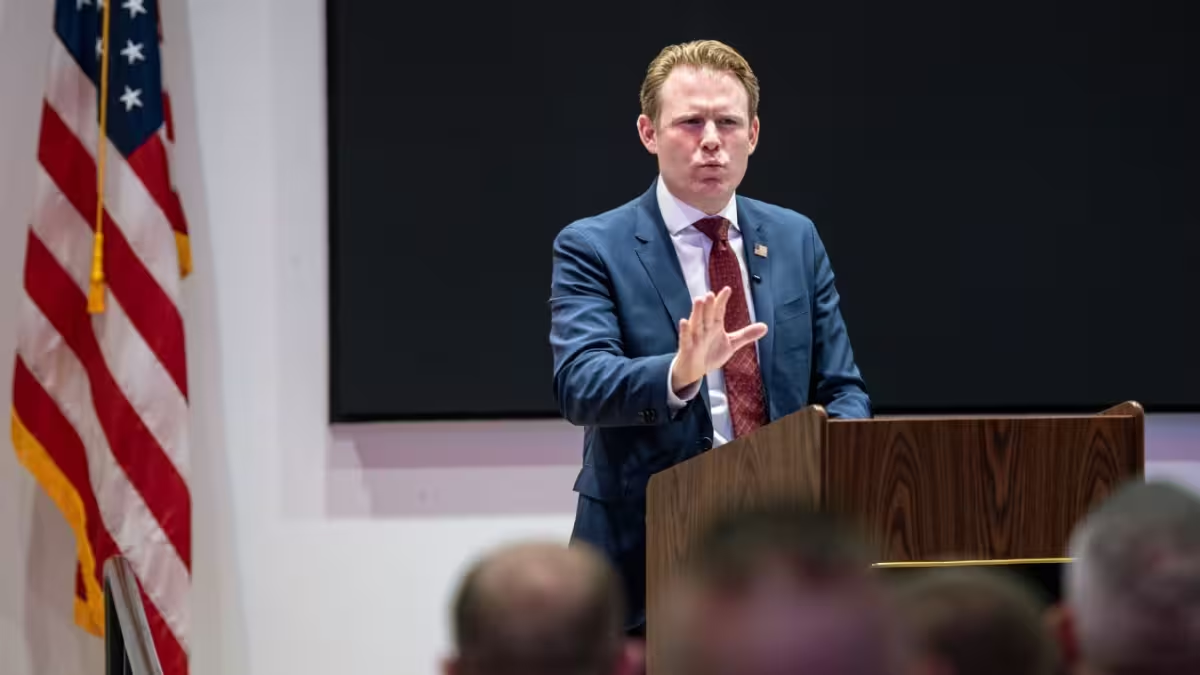
The festival is planned to carry daily transmissions, cultural activities and food offerings, and organizers say the venue can hold as many as 18,000 people at once. Andrés Labán said the Centro Histórico was deliberately chosen as a place that should stay active every day, with the city, state and nearby municipalities backing the plan.

Labán said the project is being financed through a mix of public and private money. He did not give a final cost, saying several government offices, sponsors and other actors are involved in the operation. The lack of a total figure leaves the main economic question still open even as the festival moves forward as one of Guadalajara’s biggest World Cup bets.
The expected return is centered on the Centro Histórico, where officials see business for nearby shops and hotels, along with a stronger profile for the district during the tournament. Labán said some days could bring 18,000 to 20,000 people up to three times in a single day, a volume that would put steady pressure on streets, services and the area’s already busy foot traffic.

That promise of a boost has not arrived without disruption. A bolero interviewed in the Centro Histórico said several coworkers were moved while screens and event spaces were installed, and a tour guide said temporary pedestrian restrictions had cut customer traffic sharply. In a district that has already been adjusting to construction, the festival’s upside is being measured alongside immediate strain on the people who work there.
Guadalajara’s choice also runs against what has happened in several U.S. host cities, where high operating costs pushed organizers to reduce, alter or spread out their FIFA Fan Festival plans. Los Ángeles cut its official festival to four days, New York gave up the idea of a large centralized event, and San Francisco and Seattle moved celebrations across multiple points in their metropolitan areas.
That makes Guadalajara’s full-length run a notable outlier as the Fan Festival model shifts more sharply than it has since Germany 2006. Tourism authorities in Jalisco estimate as many as three million national and foreign visitors will arrive during the tournament, and the city is betting that keeping Plaza Liberación busy every day will help capture more of that flow.
The festival is scheduled to begin on June 11, 2026, and end on July 19. For Guadalajara, the next milestone is not a decision but a deadline: the city now has to turn a 39-day promise into a place that can handle the crowds it expects.



