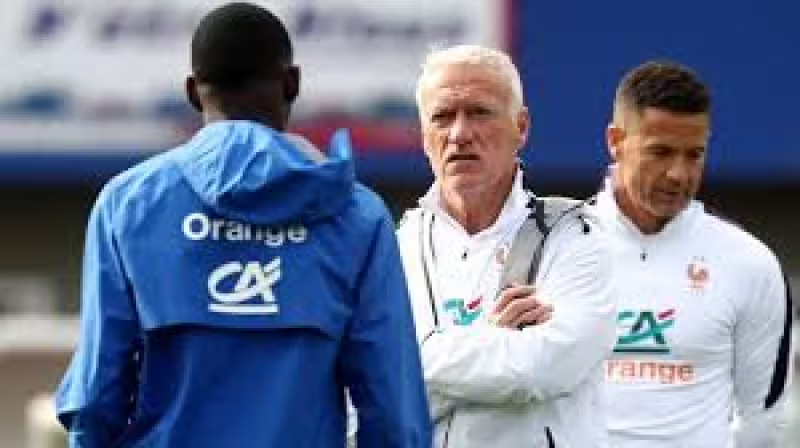
Didier Deschamps, the departing head coach of France, opened an interview with blunt perspective on what matters next: "We're among the favourites," he said, and added, "The most important thing is today and tomorrow, and tomorrow is the World Cup." He framed the remark not as swagger but as the practical focus of a manager preparing for one final World Cup campaign in North America.
The claim carries weight because Deschamps has earned the licence to make it. In a 14-year stint as France manager he has taken the team to three major finals, managed the 2018 World Cup victory and — as a player — captained France to the 1998 World Cup title. France have participated in four of the last seven World Cup finals, and Deschamps has been involved in three of those four. "If we have this status today, which seems logical and legitimate to me, it's because of everything that we have done, the results we achieved," he said.

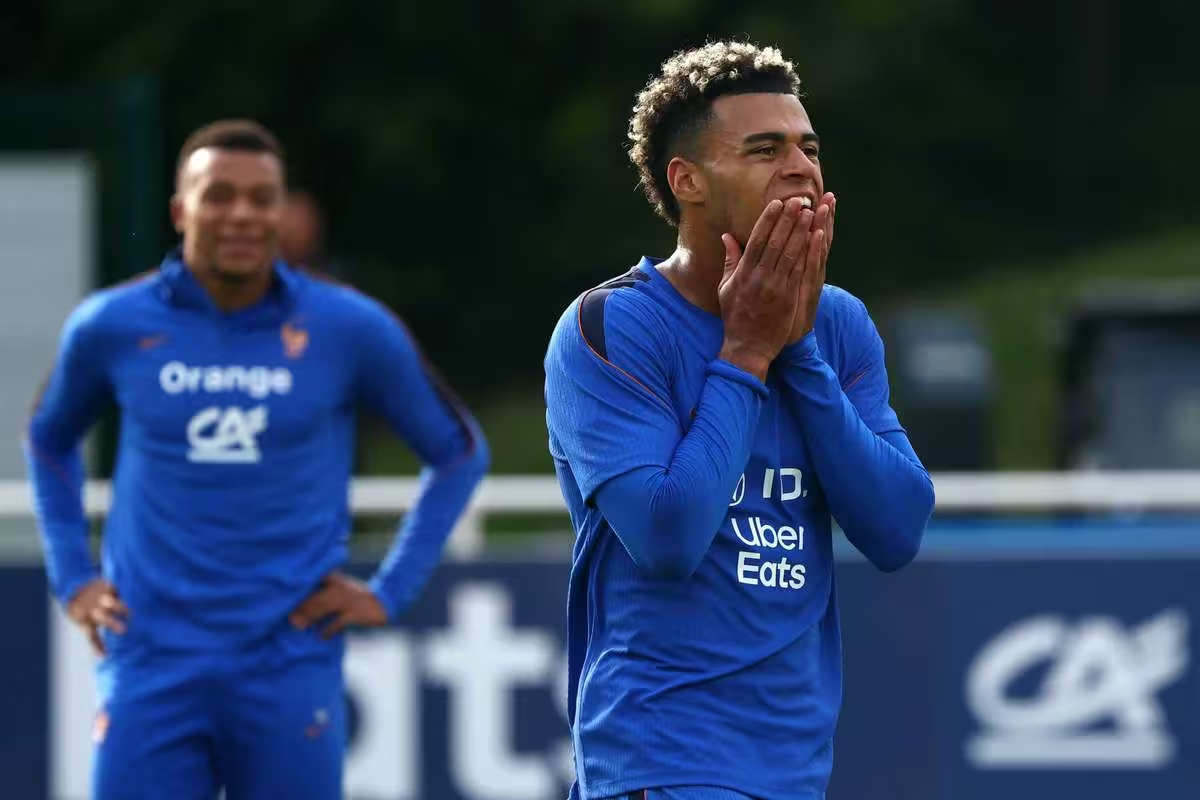
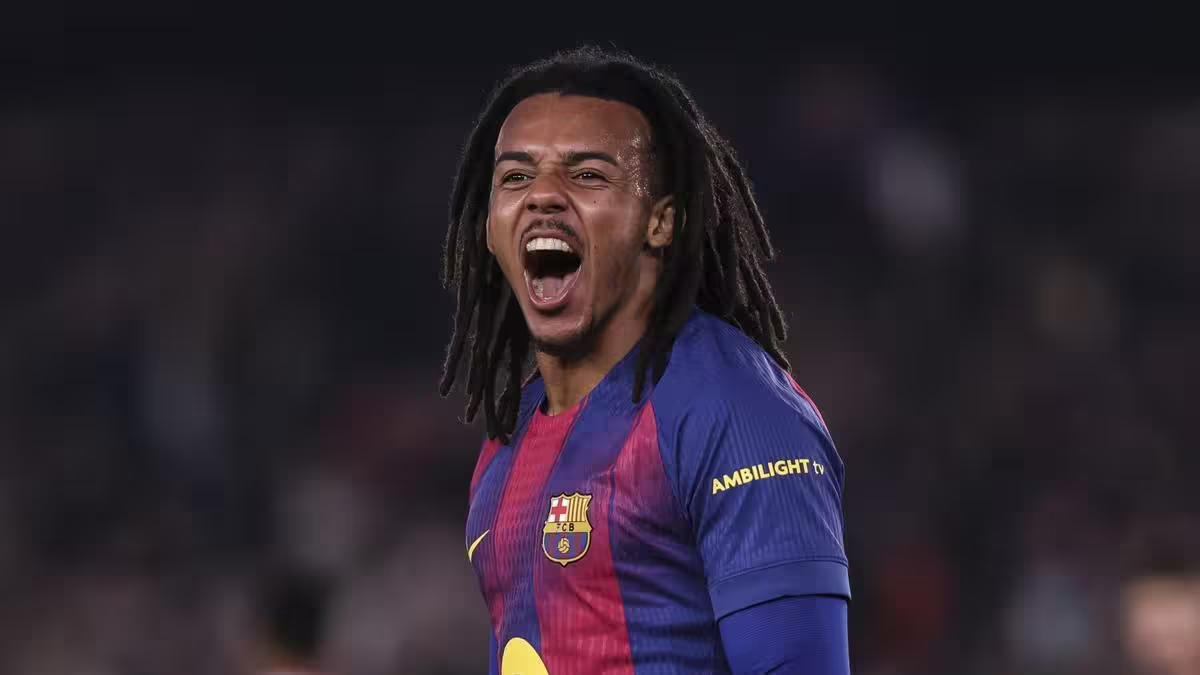
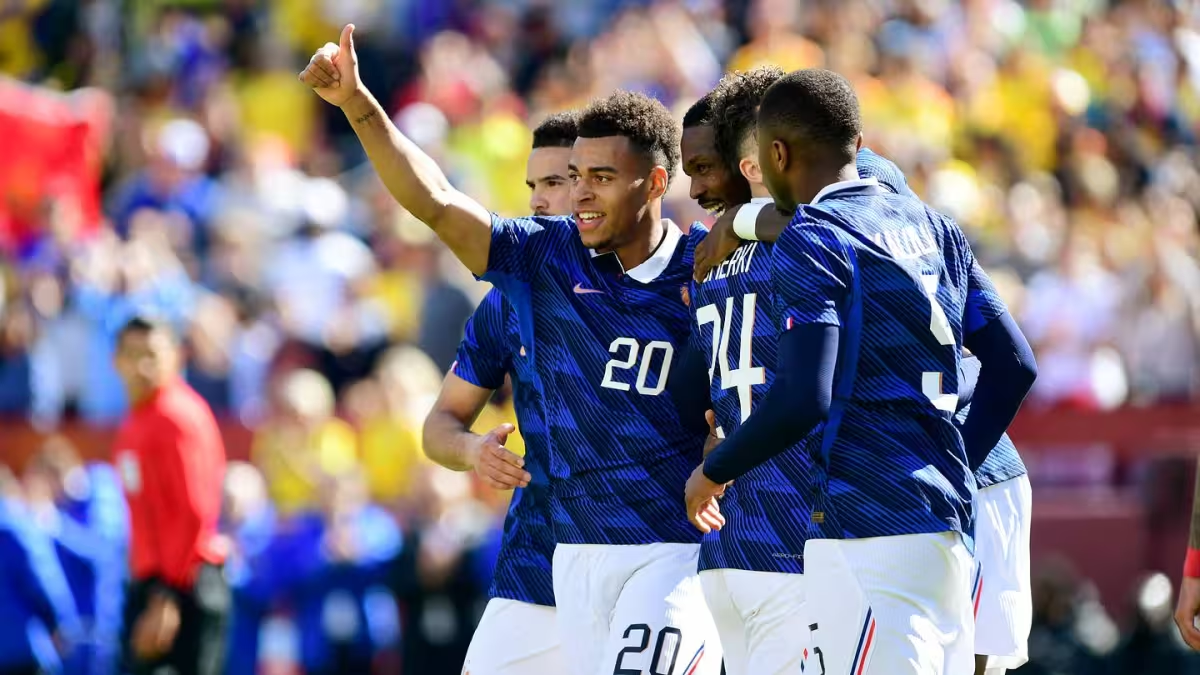
That record sits against a dressing room in transition. Since the 2022 World Cup final defeat to Argentina, Hugo Lloris, Olivier Giroud, Raphaël Varane and Antoine Griezmann have been part of a changing of the guard. Deschamps underlined his approach to that turnover with a line that doubled as a managerial creed: "I have a magic word: adaptation... I say to myself, 'In relation to the person I have in front of me, I adapt.'" He also noted the generational shift plainly: "The generation from when I started in 2012 is not the same as today... the new generation need more exchanges." For readers who want a deeper look at how France has built talent across eras, see France World Cup Squad: How a 1974 academy plan built three world-class teams (
Deschamps presented collaboration as part of that adaptation, noting he has exchanged messages with Thomas Tuchel, Carlo Ancelotti and Hansi Flick — a glimpse, he implied, of how he polishes ideas beyond the national set-up. Still, there is friction. Some critics in France fault the team for a defensive, restrictive style; the coach did not duck the complaint. He made clear he does not treat the label of favourite as a stigma — "It isn't a taboo word for me" — and defended his methods with the plain metric that matters to him: results. When asked about how posterity will judge him, he cut past sentiment with, "It doesn't matter." The line sits uneasily with supporters who want both trophies and a more expansive brand of football.
What follows is both obvious and unresolved: Deschamps will take his methods to one last World Cup in 2026, and France will travel to North America as a team judged by its recent record and by its stylistic compromises. The central question left by his interview is sharp rather than sentimental — can an approach built on adaptation and results, and honed across three major finals, deliver another run to the final in a France side that has been asked to change as much as to win? That is the task that will define the end of his tenure.