



Cabo Verde will play at the FIFA World Cup for the first time, arriving at a tournament that begins on 11 June and runs across the United States, Canada and Mexico until 19 July, drawn into a group with Spain, Uruguay and Saudi Arabia.
The result is concrete: the island nation topped Group D in the African qualifiers to earn this berth, finishing ahead of Cameroon, and turned to the World Cup with two 3-0 warmup wins, defeating Serbia and Bermuda before boarding for North America. For a country making its debut, those numbers — qualification first in the group, a pair of clear friendly victories — are the clearest evidence that Cabo Verde is not visiting merely to observe.

On the islands and across a wide diaspora the mood is celebratory. Local and international coverage has framed the qualification as a moment that forces the world to look at the nation and acknowledge its strength, and officials have described how the achievement resonates for people at home. The tournament’s global stage, running until 19 July, will multiply that attention in ways the players and federation have spent years trying to build toward.
Still, the draw is a hard test. Spain and Uruguay are both former World Cup champions; Saudi Arabia arrives with its own recent pedigree. For cabo verde, the group pairs the exhilaration of a debut with the practical reality of facing nations with far deeper World Cup experience — the precise friction the team acknowledges as it prepares.
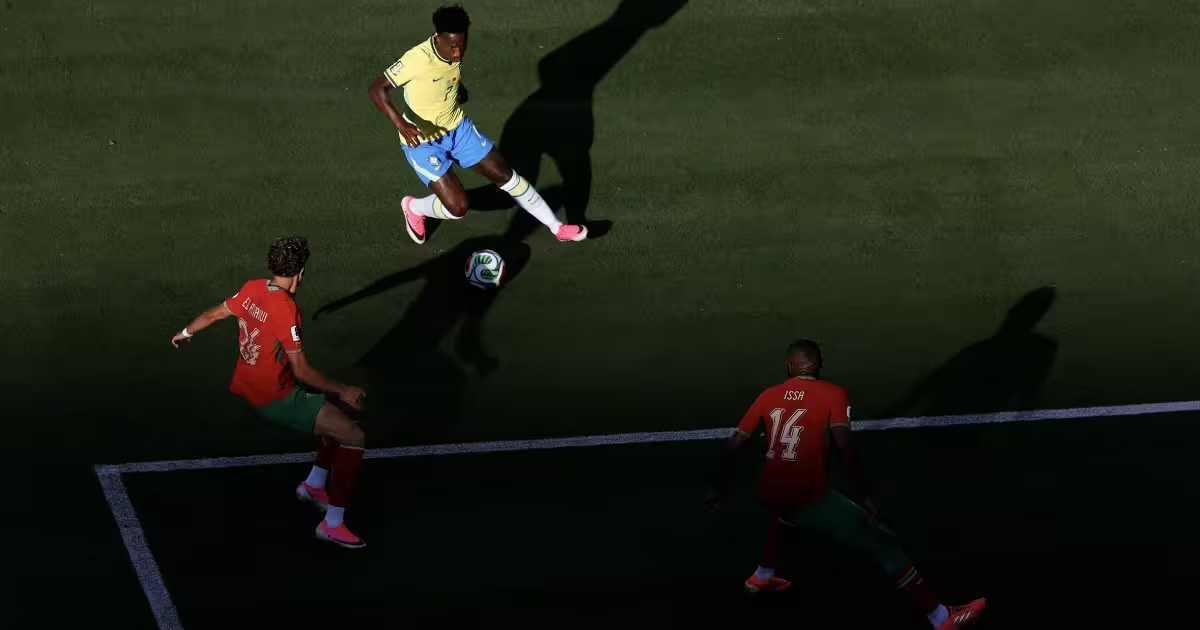
That preparation mixes veteran continuity and a sudden vulnerability. The squad leans on experience — goalkeeper Vozinha, 40, brings long service and club form at Chaves in Portugal — and on Ryan Mendes, the 36-year-old captain who is the nation’s all-time leading scorer and record appearance-maker and who could become the first player to reach 100 caps for Cabo Verde at the tournament. At the same time, the defence’s prospective leader in Europe is dealing with a setback: Logan Costa, born in France and signed to Villarreal, is the only player in the squad who plays in one of Europe’s five major leagues and he suffered a cruciate ligament injury during Villarreal’s preseason, removing a rare top-flight option from selection conversations.
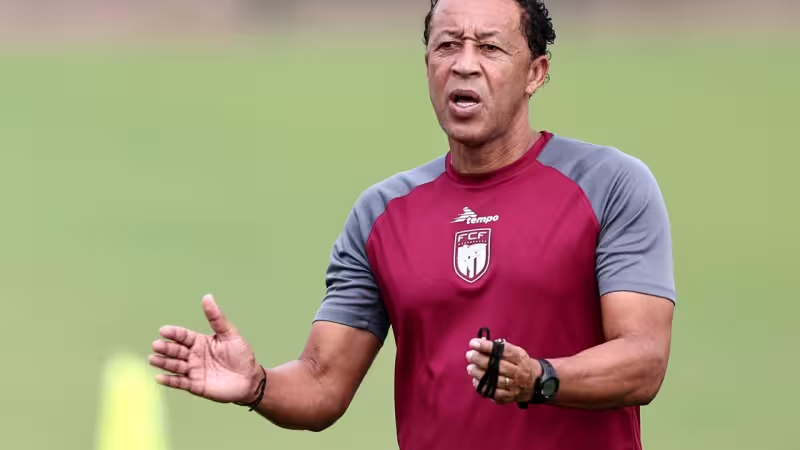
Coach Bubista has framed the challenge in national terms, saying the team feels enormous pride and emotion, that qualification “represents much for our people,” and that the players intend to meet every opponent with dignity, confidence and without fear. He has also stressed the symbolic push: the World Cup presence forces the world to take notice of Cabo Verde’s strength and resilience, a message aimed at both the islands and the diaspora.
Practically, the things to watch when the group stage begins are clear. Can the veterans anchor a side that has shown it can score — the two 3-0 friendlies are proof of attacking potential — while absorbing the pressure of two champions? Will the absence of Villarreal’s Logan Costa change how the back line is organized? And can Mendes convert his form and leadership into points and, possibly, a century of appearances?
The unresolved question that now frames every report and training session is simple and decisive: will Cabo Verde translate pride and promising friendlies into results against far more decorated opponents? The answer will arrive on the field in the coming weeks, with the island nation’s first World Cup matches set to show whether the team’s vow to play without fear will produce points or merely headlines.



