



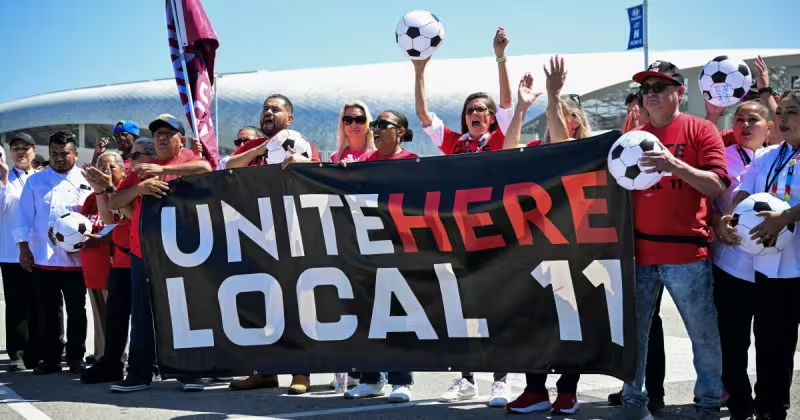
Workers at SoFi Stadium reached a tentative labor agreement Tuesday morning, averting a strike that had been authorized just days before the venue begins hosting World Cup matches this weekend.
Unite Here Local 11 announced the deal, which covers roughly 2,000 food and beverage employees — concessions attendants, cooks, dishwashers, servers and bartenders — and includes premium pay for World Cup and other mega-events plus an across‑the‑board pay increase.

Published reports say the tentative contract would run until April 30, 2028, and include a 40 percent pay increase for concessions attendants; union and operator statements also put many workers at more than $40 per hour after the raise. Local 11 negotiator Kurt Petersen described the package as "more than $40 per hour, and many of them significantly more than that," and confirmed it includes "premium pay for mega‑events, including all eight World Cup games."
The timing mattered: SoFi Stadium is set to host eight World Cup matches starting Friday, with the U.S. playing Paraguay in the first game at the venue. Last Friday, workers voted 96 percent in favor of authorizing a strike — a show of force that helped push talks to a rapid conclusion.
Union leaders framed the settlement as more than wages. Maria Hernandez, a union representative, said plainly, "We won everything we asked for," and pointed to an uncommon clause in the agreement: workers will retain the right to strike over safety concerns, including the presence of immigration agents at the workplace. "Usually when you win a contract, workers give up the right to strike," Hernandez added. "But that did not happen in this case, which is pretty huge."
That retention is the story's friction. Labor contracts typically require employees to cede strike rights for the contract term; here, the union and operators carved out an explicit exception for worker safety and potential interactions with immigration enforcement. Petersen summarized the provision as protecting workers who have a "reasonable apprehension of harm to the safety and security of workers," and said the agreement bars retaliation or exclusion from work for refusing to provide certain information during mega‑events.
Stadium operators and the union also touted the deal’s practical gains. Susana Lahargue, speaking after the announcement, said, "We got the best contract. It was a good negotiation." Local 11 emphasized the premium pay and the general wage bump as immediate benefits for workers who would otherwise have been at the picket line during the World Cup.
Despite the halt to strike plans, the agreement is not final. The tentative deal must be ratified by the workforce in a vote scheduled for Wednesday. If workers reject the package, the previous strike authorization remains in force and the threat of walkouts during the World Cup would return immediately to the calendar.
The pact also positions the union and the venue for what comes next: its reported duration into 2028 gives the bargaining unit leverage ahead of future mega‑events, including the 2028 Los Angeles Olympics. For now, the immediate question is narrower and urgent — will the roughly 2,000 workers formalize support for the compromise on Wednesday and allow SoFi Stadium to operate through eight World Cup matches without labor disruption?



