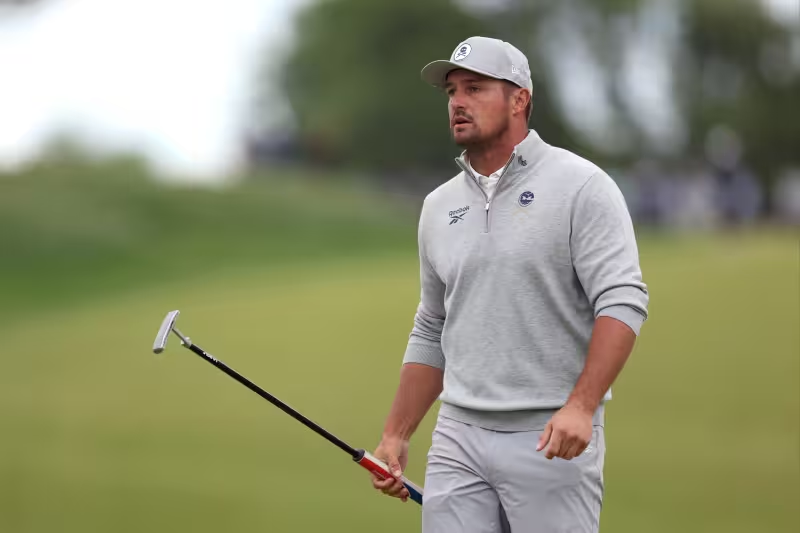
Brandel Chamblee said Wednesday that Bryson DeChambeau appears to be looking for an exit ramp from LIV Golf back to the PGA Tour: "The distraction of LIV being in flux, and Bryson – from what we can all sort of read between the lines is that – he’s trying to figure out a way to come back to the PGA Tour, at least that’s what we’re hearing through the grapevine," Chamblee said.
The remark lands against a mixed run of form. DeChambeau, a two-time U.S. Open winner who joined the Saudi-backed LIV Golf in 2022, has missed the cut at both the Masters and the PGA Championship this season. At the same time he has claimed two victories on the LIV circuit and nearly won another event in South Korea last week, an up-and-down ledger that feeds the central tension of Chamblee’s observation.

Chamblee did not frame the situation as purely performance-related. "So, just being in flux, I think it’s hurt a lot of players’ games," he said, and added a starker image: "He put so much into LIV, and now it’s up in flames." Those comments tied DeChambeau’s personal crossroads to broader instability inside LIV Golf.
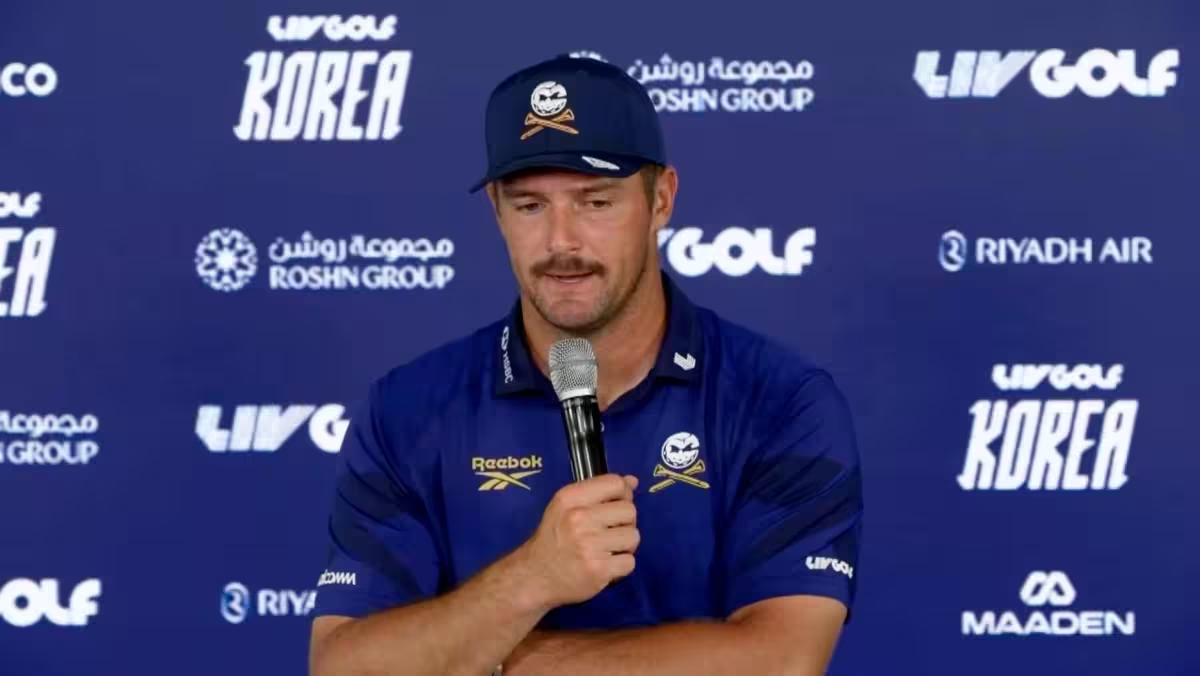
That instability is now public. LIV has faced recent financial strain, the Saudi Arabia Public Investment Fund is officially pulling its funding after this season, and the LIV CEO would not confirm whether the final four events on the 2026 calendar will be staged. Those facts are not separate from a player’s swing; Chamblee used that backdrop to explain why DeChambeau, despite recent wins, might be unsettled.
The friction is plain: success inside LIV — two tournament wins and a near-miss in South Korea last week — sits beside struggles in the majors and, Chamblee argues, a player in disarray. "And maybe that is the large point of what’s going on with Bryson this year, is that he’s completely in a state of flux," Chamblee said, and warned that "there’s a lot of doubt as to where he’s going to be next year."
DeChambeau heads into next week’s U.S. Open at Shinnecock on the eastern end of Long Island with that uncertainty attached to him: a major champion with clear credentials, an unsteady run of recent major results, and a prominent role in a tour whose future funding and schedule have been called into question. If Chamblee’s read is accurate, the U.S. Open will be as much a proving ground for DeChambeau’s present game as it is a public waypoint in a larger decision about where he plays in 2026.