




“The most slept on I’ve been in my entire life,” Trae Young said around the 27:00 mark of a recent episode of The Pivot Podcast, a line that was meant to be a shrug but landed as a provocation. Young followed that with, “Even when I was in high school, I wasn’t this slept on,” and then framed his detachment as strategy: “I learned over the years, there’s a lot of recency bias that goes on, especially if media... I know if we start winning, imagine the Wizards as a No. 1 team in the East next year. What people gonna be saying? So, it’s just, like, I don’t, I can’t get caught up in what people are saying now.”
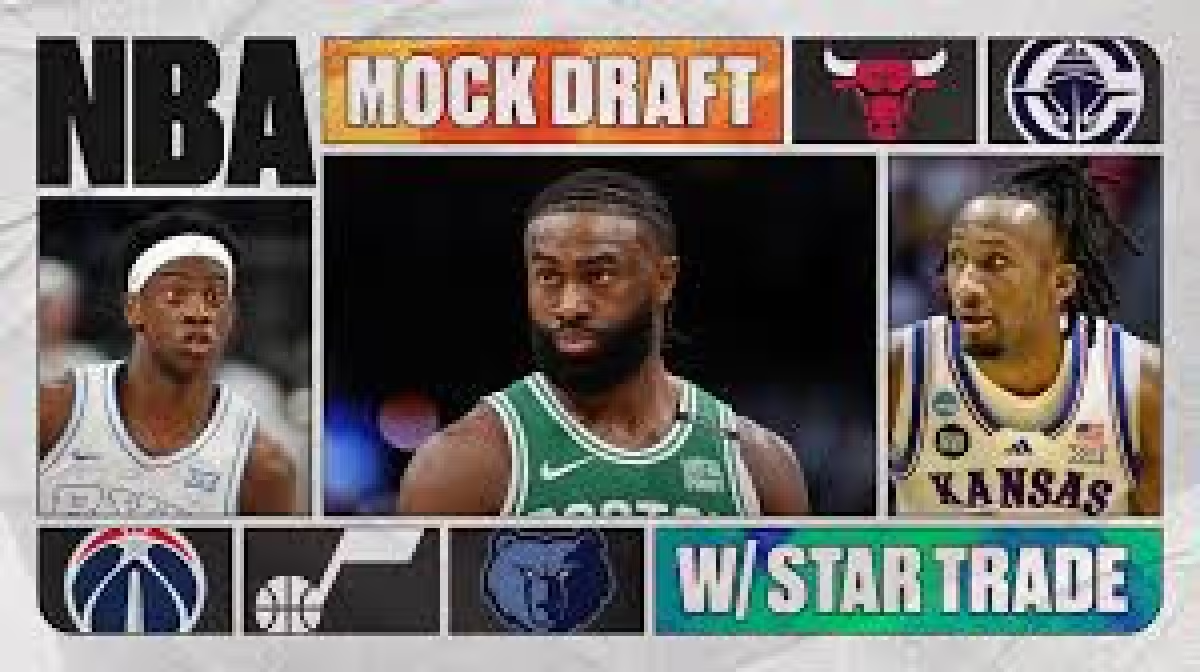
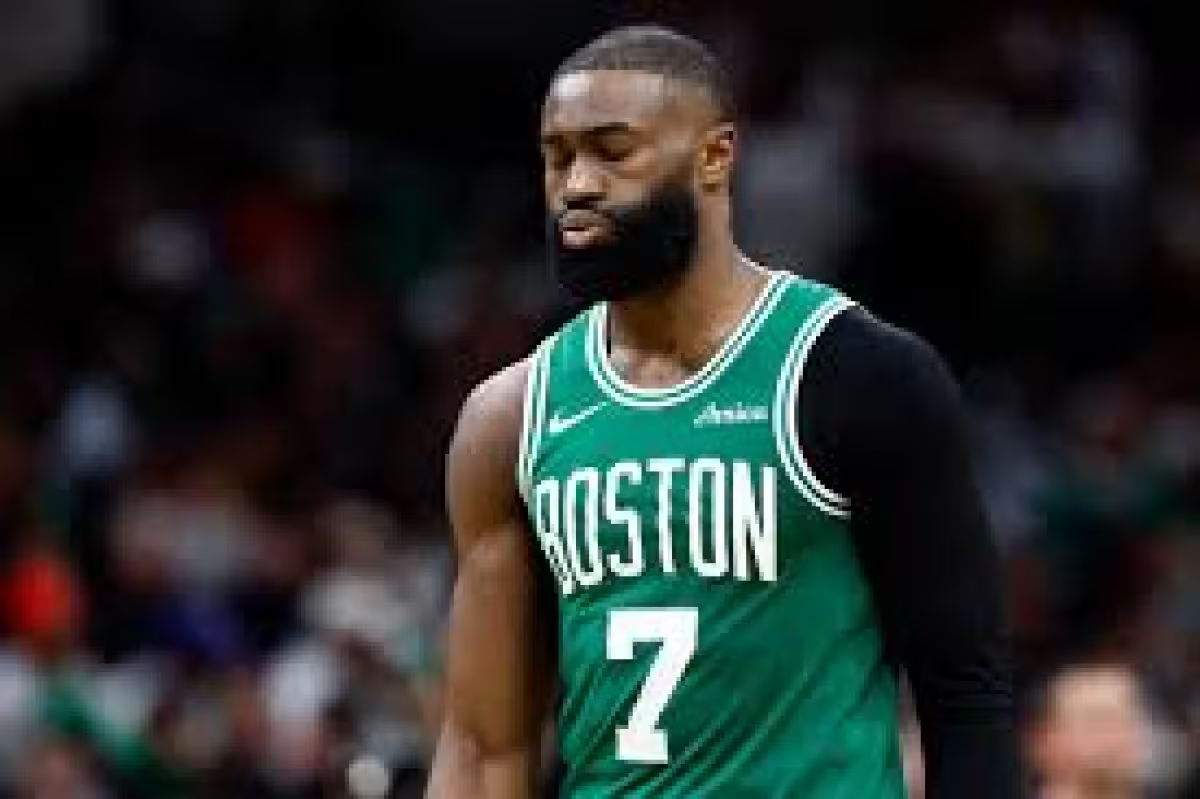
The reaction was immediate enough that Jaylen Brown replied on social media with three words: “They gone move the bar.” Brown, fresh off the highest-scoring season of his career at 28.7 points per game and having stepped up as his team’s lead playmaker when an injured teammate needed relief, turned Young’s self-assessment into an exclamation point. The exchange compressed a season of narrative — Young’s self-described invisibility versus Brown’s newfound, unavoidable prominence — into a single, public back-and-forth.

That attention matters because Young’s voice comes as he tries to rebuild. Last season he played just 15 games, sidelined by injuries, while the Washington Wizards dropped to 17-65 and failed to register a winning season for the franchise since 2018. The numbers aren’t abstract: they are the scoreboard against which Young’s claim to be “slept on” will be judged if he returns to health.
Context helps explain why Young framed himself this way. He’s not speaking from a vacuum; he is a player returning from an injury-limited year and projecting a future in which team success will rewrite the headlines. Brown’s recent scoring leap and the way he assumed playmaking duties when his team needed it are the counterimage: a player who, by outperforming expectations, forced recognition. Young’s podcast remark named the issue — recency bias — and the response from a peer signaled that his complaint has already become part of the discourse.
The friction is obvious. Young insists he can’t “get caught up in what people are saying now,” yet Brown’s pointed reply shows that the conversation is already happening. If Young is indeed “the most slept on” he’s felt, the retort from a counterpart whose own career arc recently moved from overlooked to celebrated undercuts the idea that anyone has fully ignored him. The exchange highlights the gap between perception and impact: claim the lack of attention, and peers may oblige by amplifying it.
For the Wizards the stakes are practical. A return to form from Young would change how the team is viewed and how opponents prepare. For Young personally, the question isn’t only whether he will be recognized but whether he can stay on the floor long enough to compel that recognition. His comeback will be measured first in games played, then in the production that follows; the podcast line will matter only if the performance backs it up.
There is an unmistakable next chapter on the calendar: recovery, availability and output. If Young can stay healthy and push the Wizards toward respectability, the narrative flips — as he himself noted, wins reshape impressions. If he cannot, the comment about being “slept on” will read as bitterness, not prophecy. That is the choice before him: turn a media critique into motivation, or let the injury ledger and a 17-65 team record write the next paragraph for him.
One concrete unresolved question remains sharper than any quip: how much will Young actually play and produce when the season starts? The answer to that will determine whether Brown’s casual warning — “They gone move the bar” — becomes a boast about his own ascension, or the opening line in a wider conversation about a player who insisted he’d been underestimated and then forced everyone to notice.



