
Mitchell Robinson was supposed to be a high‑impact presence in short bursts for the Knicks, but through three NBA Finals games he has been neutralized — and at times looked actively harmful to the team’s defense.
The numbers underline the problem. In Game 1 Robinson posted two points and six rebounds in 13 minutes; in Game 2 he played 14 minutes, scored on two baskets, made three of six free throws and finished minus‑10. Across the series through three games he has yet to log a single positive plus‑minus, and his cumulative box score reads six offensive rebounds, one steal and one block.

Game 3 supplied the most damning evidence. Early, Robinson was caught flat‑footed on a Luke Kornet screen and allowed De’Aaron Fox an easy pull‑up. Later he watched Landry Shamet get cleared out by the same Kornet action, a play that ended with Dylan Harper dunking. In the third quarter a delayed transition screen by Keldon Johnson left Robinson accepting the switch and enabled an open Victor Wembanyama pass to Johnson for a layup. On a failed lob attempt he was standing next to Wembanyama and did little to alter the try.

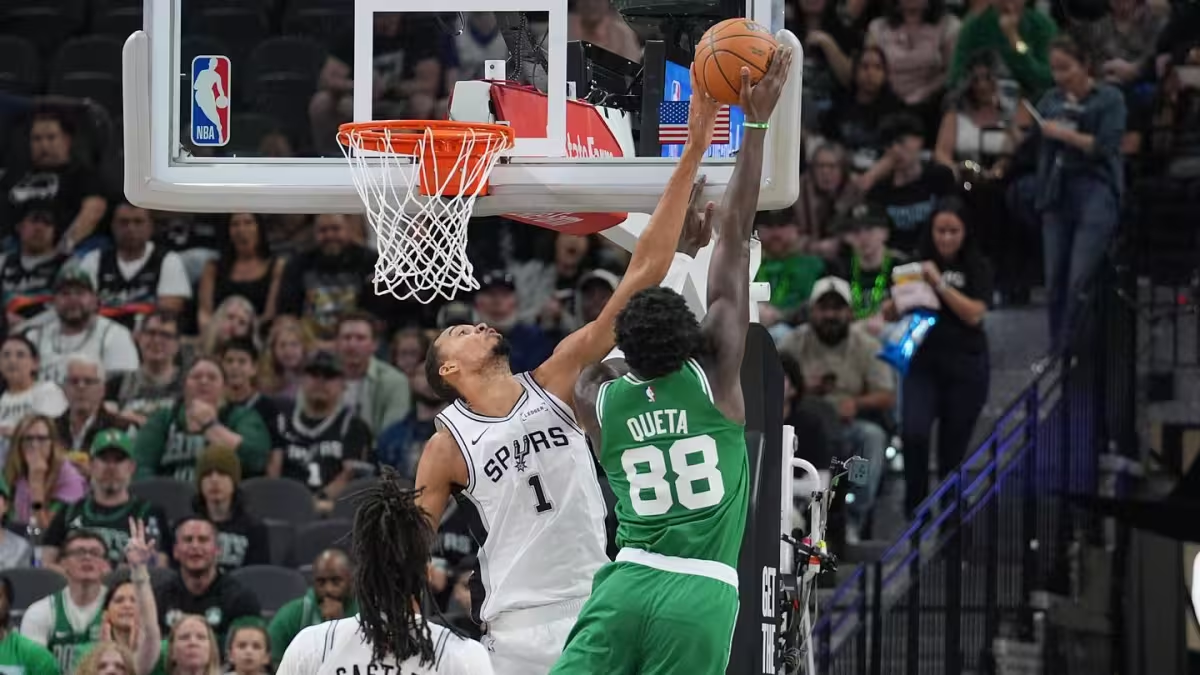

Those plays are decisive because they expose what the Knicks thought they were buying: spot minutes of elite rim protection, mobility on switches and offensive rebounding that could change possessions. Robinson has produced the latter unevenly — six offensive boards across three games — but his defensive miscues in Game 3 showed the opposite of the disruptive, game‑changing energy New York expected from its backup center.
Context sharpens the surprise. Before the Finals Robinson had been discussed as a player who could shift the matchups in limited minutes; he has a track record of dominating stretches with offensive rebounds and rim deterrence and had previous success slowing Wembanyama. The Knicks went into the series counting on that upside, effectively planning for 48 minutes of elite center play shared between starters and bench. That blueprint has been weakened by Robinson’s inability so far to produce a net positive on the court.
The friction is clear: Robinson was supposed to be a short‑rotation weapon. Instead, through three games he has frequently been neutralized and, on several plays, detrimental. The Knicks remain the favorites in the matchup, but the series calculus changes when a planned rotation piece fails to deliver the specific minutes and defensive impact the team needed against one of the league’s best bigs.
The unanswered question is not whether Robinson once had the skills to matter — he did — but whether he can reset on both ends under Finals pressure. With no positive plus‑minus in three games and multiple breakdowns that directly led to easy Spurs buckets, Robinson’s recovery is the clearest open variable in this series: if he returns to the disruptive, offensive‑rebounding role New York expected, the Knicks get back a path to the matchup control they planned for; if he does not, the team will have to find those minutes elsewhere while the Spurs continue to exploit the gaps he has left.