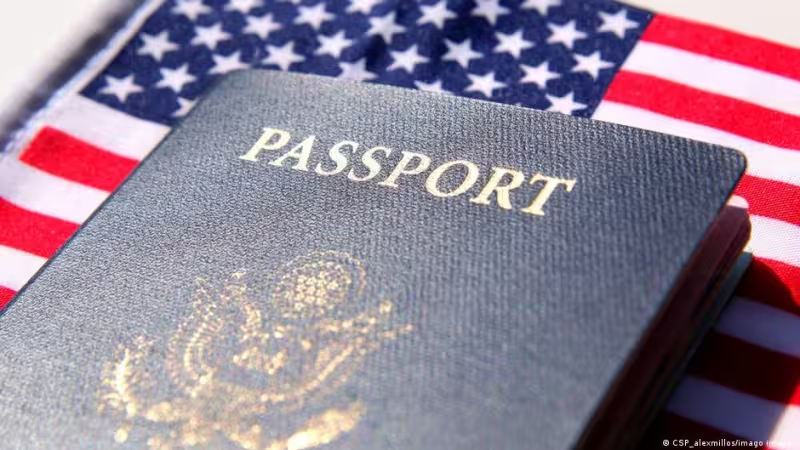
The Justice Department on Monday said it will seek to strip citizenship from 17 naturalized U.S. citizens convicted of crimes ranging from health‑care fraud to wire fraud and a conspiracy to manipulate stock prices.
The targeted individuals, the department said, were born in Cuba, Haiti, Somalia, China, India and other countries and are accused of having concealed criminal conduct when they applied for naturalization. A Justice Department statement quoted Todd Blanche: "Gaining US citizenship is a privilege and under the steadfast leadership of President Trump, this Department of Justice maintains a zero-tolerance policy for the abuse of this process."

Denaturalization is an uncommon remedy in American law and can be pursued only in federal court. The department’s announcement is notable because it names a specific toll — 17 people — and because federal judges must hear and decide each case before any citizenship can be revoked.
The cases, the department said, involve convictions in various courts for offenses described as health‑care fraud, wire fraud and a stock‑manipulation conspiracy. The Justice Department’s claim is procedural as much as punitive: denaturalization applies only to people who became U.S. citizens through naturalization, and the government must prove in federal court that an immigrant lied or hid material facts during the naturalization process.
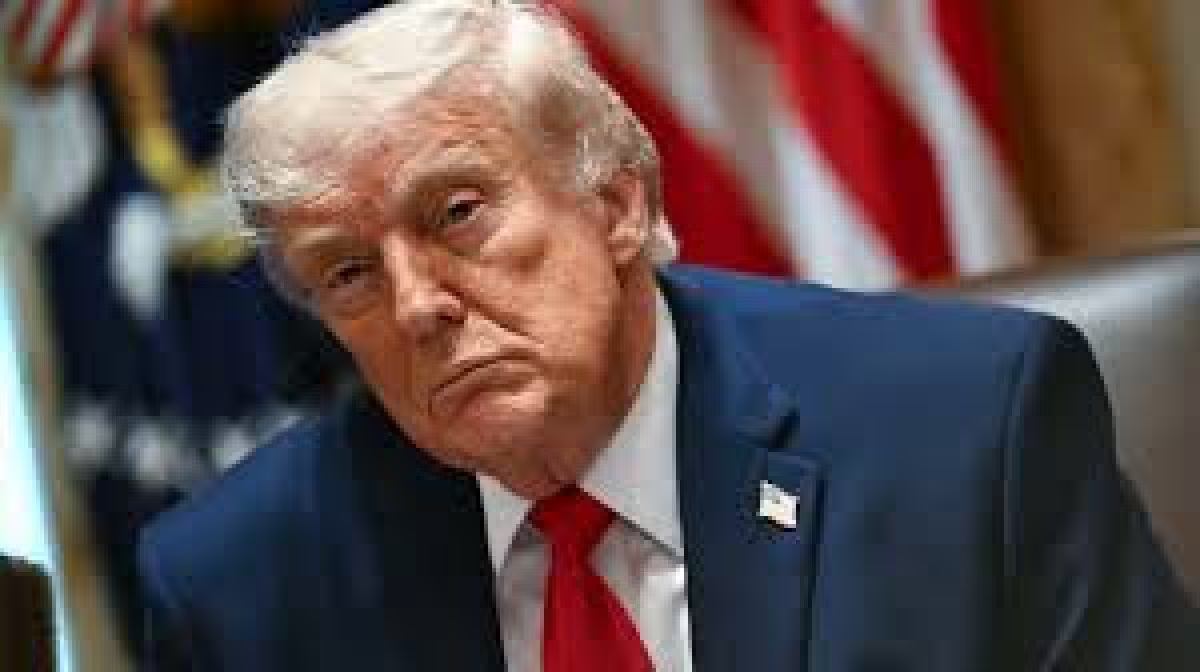
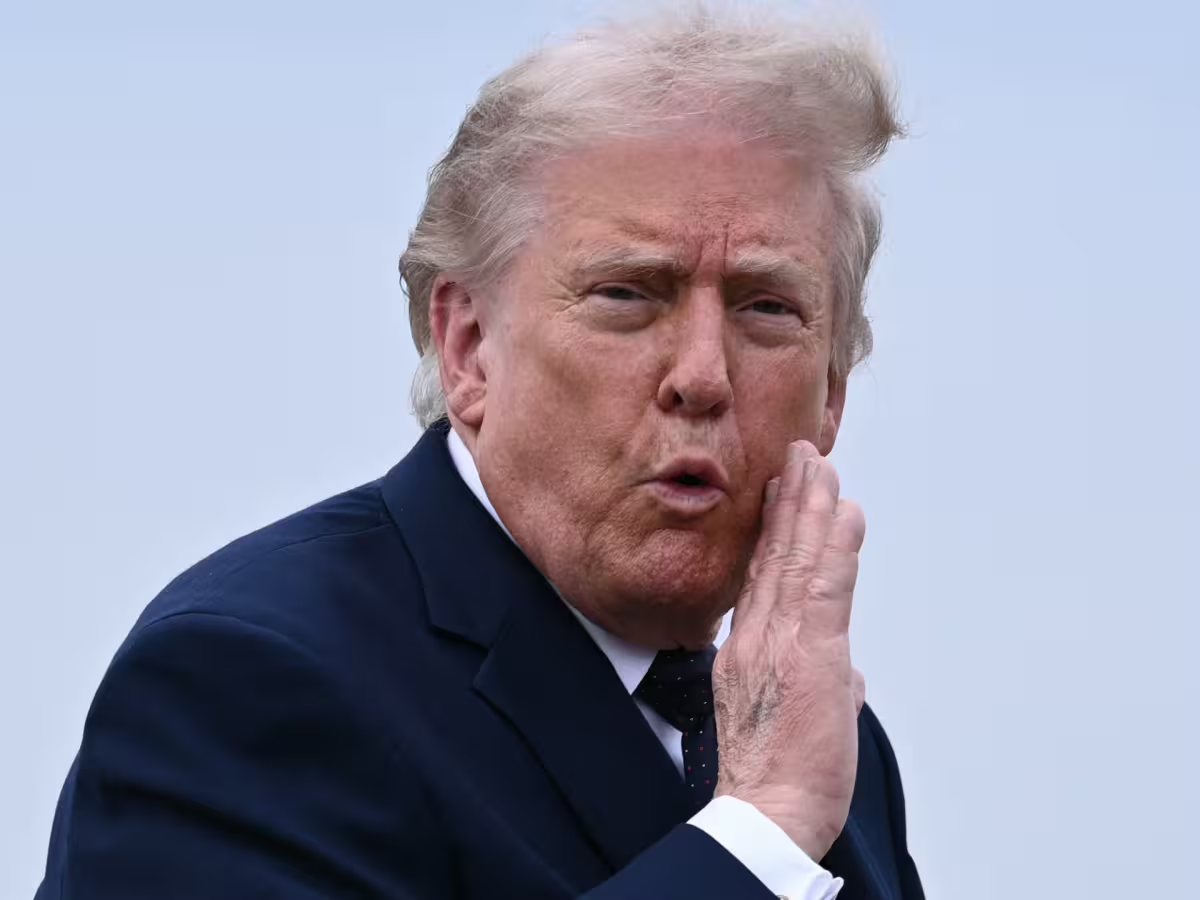
The announcement arrived amid a suite of immigration‑focused actions by the administration. Early in his presidency, President Donald Trump signed an executive order seeking to revoke birthright citizenship for children born in the United States to undocumented parents, and the administration has moved against so‑called birth tourism. On the same day the denaturalization notice landed, a U.S. federal judge struck down a $100,000 H‑1B visa fee imposed by the administration; Judge Leo Sorokin wrote, "Here, the substance and application of the $100,000 payment reveal that it is a tax, regardless of what the payment is called." Twenty Democratic attorneys general have filed suit challenging that fee.
There is an immediate friction in the Justice Department’s declaration: while officials say the 17 people concealed criminal conduct on their naturalization forms, the department did not make public the individual names or the specific evidence it will present. Denaturalization has a high bar in federal court because it strips a constitutional status; courts have repeatedly required the government to offer clear, convincing proof that an applicant willfully misrepresented or concealed material facts.
Practically, the next step for the department is to file separate denaturalization suits in federal court against each person. The announcement gave no timetable for when complaints will be filed or when judges will schedule hearings, leaving an open question about how quickly the department will move these matters through the courts and how vigorously defendants can contest the government’s assertions.
The statement and its timing will sharpen scrutiny of how the Justice Department balances enforcement and evidentiary standards. The department framed its action as policing abuse of the naturalization process; critics note that denaturalization is rare and that broad use of the tool without disclosed evidence risks civil‑liberty challenges. Which specific 17 citizens the department plans to sue and precisely what proof it will produce are the central unanswered questions that will determine whether these filings amount to a narrow enforcement measure or a more consequential expansion of denaturalization practice.
If the government files the lawsuits, federal judges will be tasked with weighing documentation and testimony against the high legal threshold for revoking citizenship — a judicial test that will decide whether the department’s zero‑tolerance rhetoric translates into legally sustainable results or produces another front of litigation over immigration and citizenship rights.