




Andrew Vaughn went 3-for-5, hit a triple, scored three runs and drove in one as the Milwaukee Brewers routed the Colorado Rockies 12-4 on Sunday.
Vaughn’s five-turn day supplied steady offense in a blowout where Milwaukee pounded out runs across the lineup; his triple and three runs added to a day the club turned into a comfortable margin. Manager Pat Murphy now has a healthy Andrew Vaughn to deploy after a stretch when availability and production were questions.

The numbers behind the hot week are clear: Vaughn has recorded hits in six of his last eight games and is slashing.341 over 26 games this season, with 13 RBI and 13 runs scored. Those figures underline a sustained uptick in contact and run creation even as the power column has not caught up.
The gap is the notable part. Vaughn’s recent surge at the plate has come without power; across those 26 games he has just one homer. The triple on Sunday showcased his ability to turn contact into extra bases, but the season line still reads one long ball, a contrast with the batting average and run-production uptick.
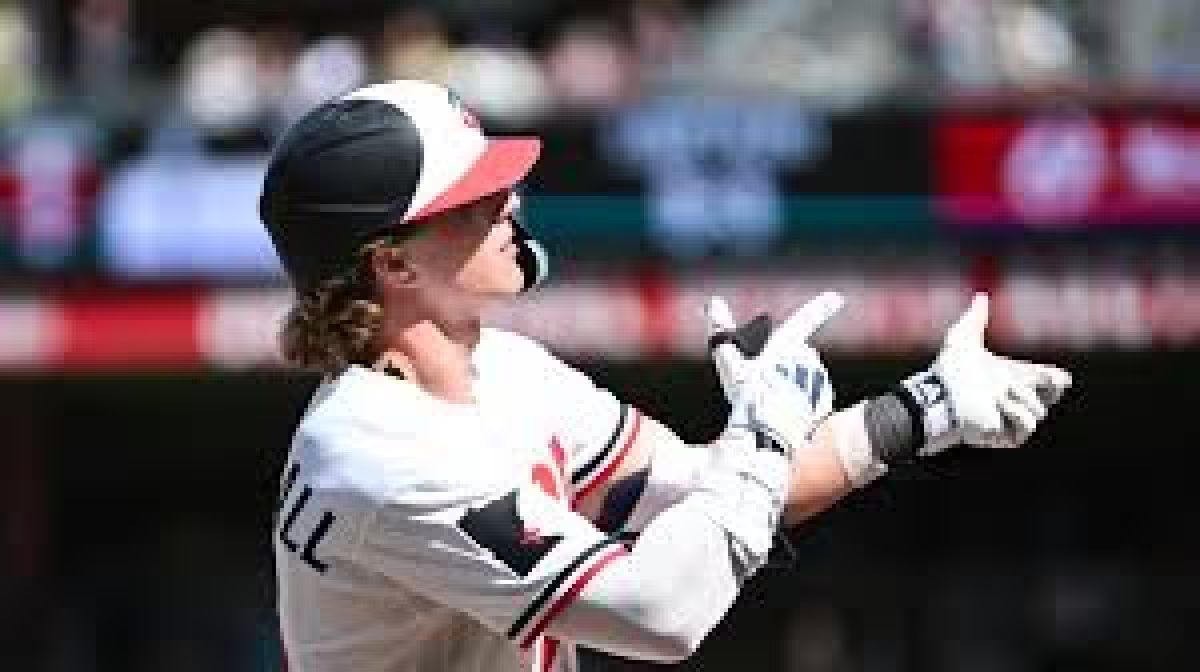


That contradiction reframes what the Brewers are getting from Vaughn right now. He is driving in runs and igniting rallies through hits and baserunning rather than home runs, which helps a lineup that needs consistent floor batting. It also gives Murphy a healthier option in the middle of the order when execution and on-base work matter more than the occasional blast.
What the record does not explain is why Vaughn’s recent form arrived when it did. There is no verified detail pointing to a specific change in mechanics, role, or rehab timeline that produced this stretch. The unanswered piece—what made him healthy and start producing more consistently—remains open even as results pile up.
The immediate question for Milwaukee is whether this contact-driven hot streak will translate into a sustained run of production that includes more power, or whether Vaughn will remain primarily a high-average, low-homer contributor. With 13 RBI and 13 runs across 26 games, he is already helping the scoreboard; the next development that will matter is whether the home-run total begins to rise alongside the batting average.
For now, Vaughn’s 3-for-5 day stands as the clearest evidence of the turnaround: he is hitting, scoring and driving in runs. The bigger test is not Sunday’s box score but whether the form that produced a.341 average over 26 games can deliver the fuller offensive package the Brewers need, starting with adding power to the mix.



