



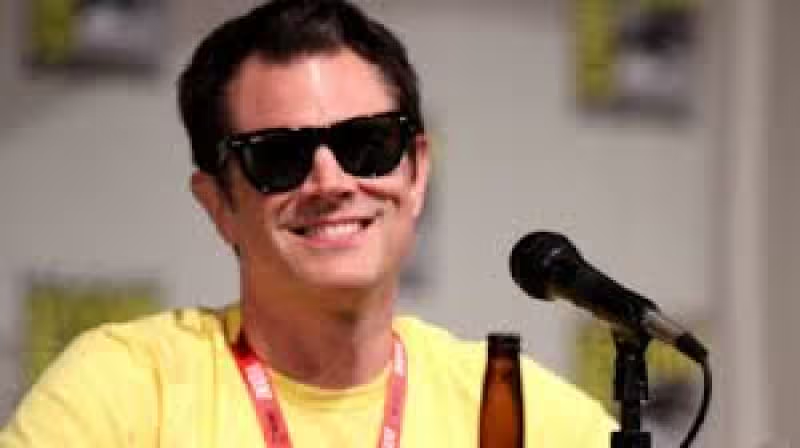
Johnny Knoxville and the Jackass crew rode in the West Hollywood Pride Parade, turning heads in a city that stages one of the country's most visible Pride celebrations.
Their presence was notable not because they are a long-running entertainment franchise, but because the cast showed up in a parade they had once been banned from, a reversal that reframed the appearance as more than a celebrity cameo.

For many attendees and observers, the sight of Knoxville and his castmates on a WeHo float underscored a broader claim circulating on social platforms and among fans: that the irreverent, boundary-pushing ethos of Jackass has long spoken to queer audiences in ways mainstream coverage has overlooked.
That reaction supplied the weight to an otherwise concise moment — a cast known for shock stunts and anarchic comedy riding through a neighborhood that celebrates LGBTQ+ identity — and turned the ride into a cultural note beyond choreography and costumes.
Context matters: the parade appearance followed an earlier ban of the Jackass cast. The ban is part of the public record tied to this story, though the specifics of when and why that ban occurred remain unspecified in available accounts. The contrast between exclusion at some prior point and inclusion at the parade is the central fact shaping response to the appearance.
The reversal introduces an immediate tension. A group that had been prohibited from participating at one time now marched through West Hollywood alongside floats and community groups that treat the parade as a celebration of identity and rights. That gap — exclusion followed by participation — raises straightforward questions about how the ban was imposed and what changed to allow the cast to ride this year.
The Jackass presence also complicates neat narratives. The franchise has never presented itself primarily as a movement or an identity project; its public persona rests on stunts, pranks and shock value. Yet the parade sighting pushed a different frame: for some, that same reckless, countercultural energy maps onto queer sensibilities and histories of camp, defiance and boundary-testing. The appearance therefore functions on two levels at once — as entertainment spectacle and as a symbolic reconciliation with a community that had once, formally or informally, shut the group out.
What happens next is the unresolved element of the story. The available facts do not supply a follow-up timeline, a statement from parade organizers, or an explanation from the cast about the prior ban. The single most consequential unanswered question is plain: why had the Jackass cast been banned in the first place, and what does this particular ride through West Hollywood mean for the relationship between the show and Pride organizers going forward?
The parade appearance itself supplies a clear result — the cast rode — but it leaves the policy and meaning unsettled. If organizers, the cast or community leaders provide clarification, that explanation will determine whether the event registers as a one-off stunt, a reconciliatory gesture, or the start of a changed relationship between a controversial entertainment brand and a marquee Pride institution.



