




After preview screenings this week, critics pushed a near‑universal narrative: Disclosure Day is a major return for Steven Spielberg — a dense, emotional UFO thriller that many called one of his best films in years and that several singled out for Emily Blunt’s performance.
That praise arrived in blunt, emphatic language. "In a shock to absolutely no one, Steven Spielberg has delivered another towering home run with Disclosure Day," wrote Steven Weintraub, adding, "Emily Blunt is incredible." Germain Lussier declared, "It’s Spielberg’s best film in 20 years," while IndieWire’s Jim Hemphill judged the movie "top tier Spielberg, as exhilarating as Raiders but with the emotional texture & increased ambition of his post‑9/11 work." Freelancer Tessa Smith posted: "Disclosure Day is ABSOLUTELY PHENOMENAL!" and Slashfilm’s Bill Bria called it "the weirdest movie Spielberg’s ever made (complimentary)" — crediting breathtaking compositions, a daring script and what he called "Emily Blunt’s most accomplished performance."

The film’s technical profile underlines why critics are treating Disclosure Day as an event picture. Shot on a mix of film and digital, the production employed a Panavision Panaflex Millennium XL2 for film work and a Sony CineAlta Venice 2 for low‑light situations, paired with Panavision C‑ and T‑Series anamorphic lenses. The movie is framed to best suit 2.39:1 auditoriums and will play in a limited 70mm engagement with six‑channel DTS audio in select cities, a presentation designed to make it a theatrical draw rather than a streaming premiere. The running time reported for screenings was roughly two hours.
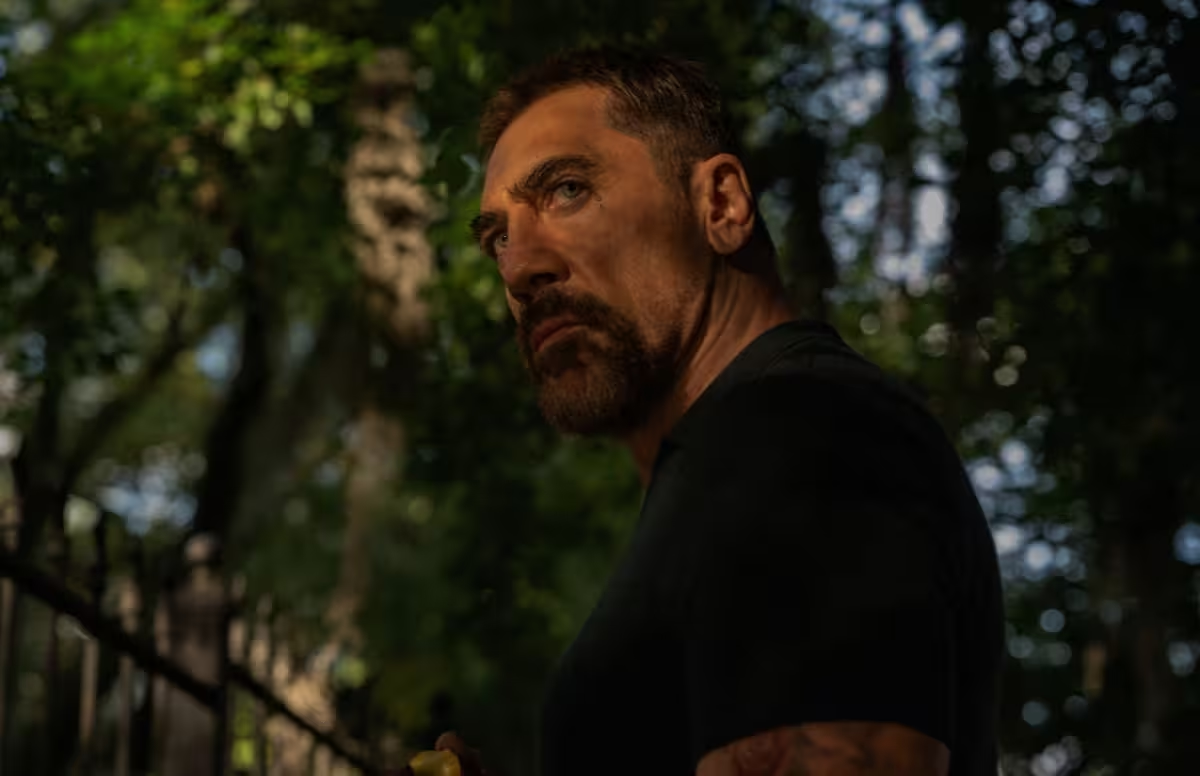

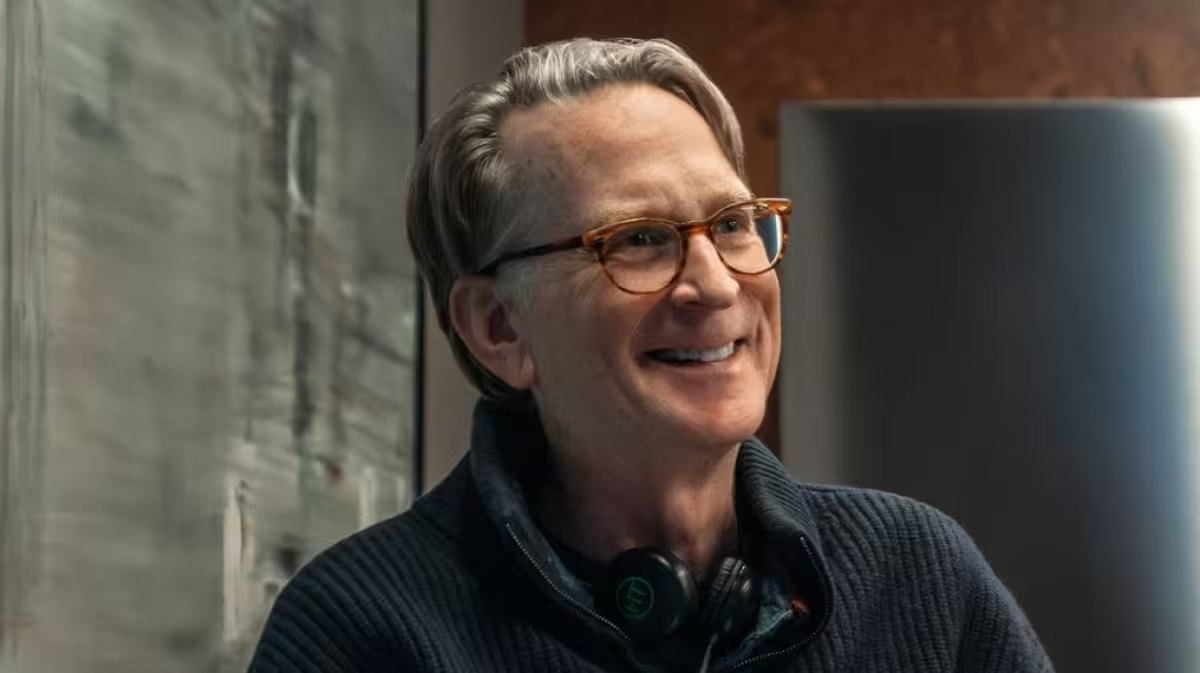
Context matters: Disclosure Day is Spielberg’s first new film since 2022’s The Fabelmans and marks a deliberate return to subjects he helped define in Close Encounters of the Third Kind and E.T. the Extra‑Terrestrial. The film explores what would happen if humanity received proof it was not alone, joining a small group of Spielberg titles that sit squarely in the director’s science‑fiction canon.
Not every voice was absolute in its praise. Polygon’s Jacob Kleinman tempered the chorus: "I regret to inform you that Disclosure Day is not the best Spielberg movie in 20 years or whatever people have been saying. But it is quite good." That pushback sits next to assessments such as Simon Thompson’s, who called the picture "profound and deeply human with a stellar Williams score" and labeled Blunt "wondrous." The friction is specific: some reviewers see a triumphant synthesis of chase, mystery and emotional heft; others see uneven ideas beneath the spectacle. Either way, most agreed the film is rich in ambition and performance.
What follows is practical: the early reaction gives Disclosure Day momentum heading into its limited 70mm run in places including London, New York, Los Angeles, Toronto and Montreal, and it establishes Emily Blunt, Josh O’Connor and the supporting cast — which includes Colman Domingo, Colin Firth, Wyatt Russell and Eve Hewson — as central to the conversation. The technical choices — mixed film and digital capture, anamorphic lenses, and a 70mm six‑channel DTS presentation — position the movie as a theatrical experience built to reward premium screenings and cinephile interest.
These first reactions are not the final verdict for mainstream audiences, but they do sharpen the likely outcome: Disclosure Day is positioned to be both a festival‑style critics’ favorite and a theatrical event, with Emily Blunt’s performance and John Williams’ score already staking out awards‑season attention. Whether that critical momentum converts to broad box‑office strength will hinge on general audiences encountering the film in those premium formats; for now, the critical consensus — even with dissent — hands Spielberg a rare, headline‑worthy return to form.



